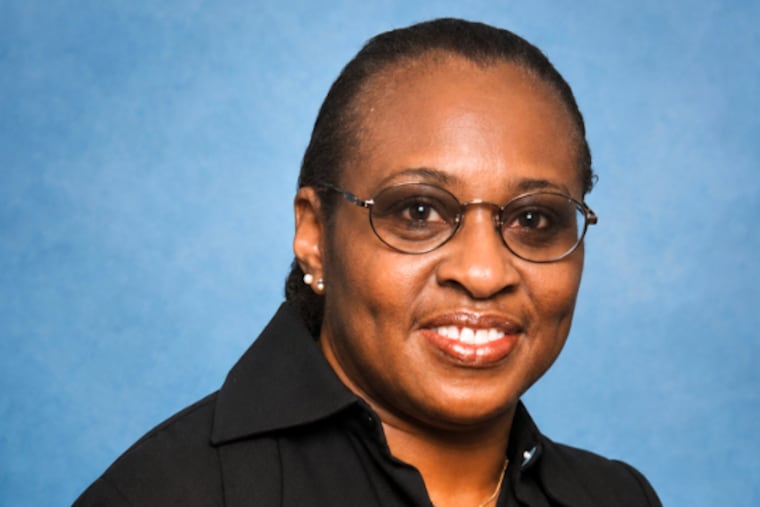
New Philly Fed president Anna Paulson on policy and the people
Philly’s representative on the U.S. central bank applies economic theory to real-world problems.

After the Great Recession of 2008 forced government bailouts of some of the biggest U.S. companies, Federal Reserve leaders turned to Anna Paulson, who headed economic research at the Chicago Federal Reserve Bank. Paulson was tasked with measuring risk in the life insurance business, which was selling fewer policies but attracting new private-equity investors who coveted its customer premiums to fund high-cost loans and retirement plans.
Federal agencies don’t regulate insurers, but Paulson had been studying rapid changes in the business. She built a team, met with insurers and local regulators, and advised on how to head off future shocks to the financial system.
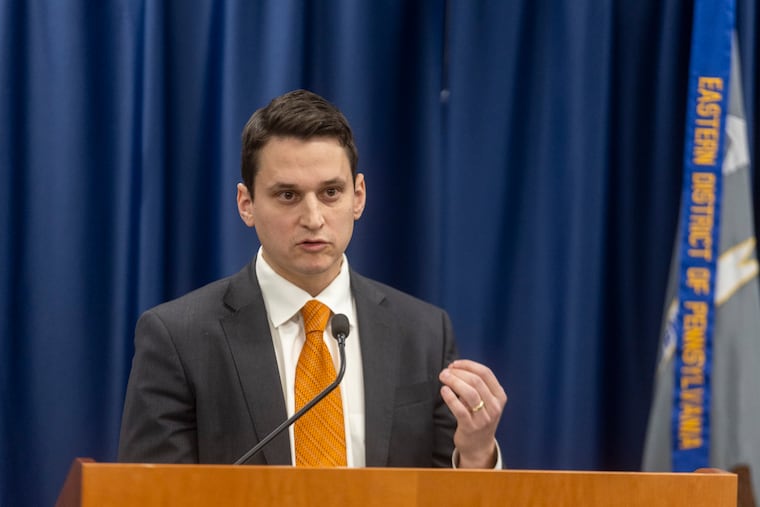
Now Paulson is the new president of the Federal Reserve Bank of Philadelphia, chosen by non-bankers on its unelected board comprising executives at Comcast, Crystal Steel, Culligan water, Temple, Children’s Hospital of Philadelphia, and the Urban Affairs Coalition. She represents eastern Pennsylvania, South Jersey, and Delaware, the smallest of the 12 regions on the Fed’s interest-rate-setting Federal Open Market Committee.
She joined the Committee this year as President Donald Trump has been pressuring his own appointee, Fed Chair Jerome Powell, to cut rates and stimulate hiring, risking inflation in the eyes of many economists.
“The bank is fortunate to have her. She has really strong management skills,” including extracting information and clear talk from economists more used to hedging, said Nellie Liang, a veteran Fed economist who headed the bank’s financial stability division set up during the financial crisis. Liang was later named by Trump and President Joe Biden to top policy jobs and now works at the Brookings Institution, a Washington think tank.
“There are few economists who can bridge what’s relevant to policymakers to what is important to the researchers,” Liang said. “That is Anna Paulson’s specialty.”
The Federal Reserve is a central bank, implementing monetary policy that’s supposed to produce low inflation, high employment, and a stable banking system, said Charles Evans, Paulson’s boss while he led the Chicago Fed from 2007 to 2023. “You need to understand the structure of the economy,” where Americans work, how they spend, what jobs are growing or vanishing with new technologies or trade patterns, what education prepares them best.
“Anna is really an expert in financial modeling,” Evans said. “You need discipline in policymaking, and it’s very important to keep your eye on employment and price stability, and to have all those views expressed around the Federal Open Market Committee table.”
Asked if Paulson is more likely to join the high interest rate “hawks” who fear inflation, or the cheap-money “doves” whom Trump wants to boost, Evans demurred: “That is something we have to learn. We have a very exciting several years ahead of us.”
After a Sept. 3 visit to the emergency medical technician and certified tower inspector programs at the Atlantic Cape Community College Atlantic City campus, Paulson agreed to talk to The Inquirer. Questions and answers have been edited for clarity and brevity.
What do these job simulations in Atlantic City have to do with running a central bank?
It’s a huge priority for me to get out and see things on the ground, to convene people and talk about their lives and the efforts to create opportunities for them. The Philadelphia Fed is rooted in these communities. We want to have both a regional and a national impact. That’s why we convene people in community job programs, and that’s why we do a lot of research on consumer finance: to inform good policy, here and in the country as a whole.
I like to connect the dots between abstract questions researchers are trying to answer and what’s the reality on the ground. What are our financial strengths and weaknesses? What are our risks? We need to understand abstractly, the general lessons, and concretely, what this means for the people.
What’s a concrete example?
One of the earliest projects I worked on in grad school years ago: Why do some small companies grow faster than others? There’s a ton of papers written about this, using cutting-edge tools of research and analysis and data, equations and theories.
My team created a survey and talked to people in rural Thailand. You can’t just ask, “I want to know about your wealth.” You have to ask in a way that fits their lives. Say, “Tell me about your water buffalo. What about getting a pickup? A refrigerator?”
What’s an American example?
There were sociology researchers at DePaul [University in Chicago] trying to understand why people who had limited resources were borrowing on credit cards. On paper it doesn’t look like a good financial decision. One woman had charged her credit card to buy a PlayStation. But they found she wanted it to get her kid and her kid’s friends to hang out in their apartment where it was safe.
And there was a study of why some people carry balances on their credit cards and pay a lot of interest, while they have savings accounts. The researchers found they were young men with good jobs. They felt it was [convenient] to use the cards, and they could afford it.
President Donald Trump wants Fed Chair Jerome Powell, whom he appointed, to cut interest rates and stimulate the economy and is threatening to replace hawkish Fed members. Should the president run the Fed?
We’ve learned that Fed independence is good for the American economy and the American people. We’ve seen countries that have strong independent central banks deliver the kind of outcomes for labor markets and inflation that are consistent with the mandates that Congress has given us and will be good for long-run stability.
The big old Philadelphia banks are gone. Why is there still a regional Fed here?
The role of the Fed evolved with the regional economy. There have been mergers across the country; we still supervise banks here, and some are complex. And we have to get intelligence from the region and bring it [to the Fed Open Market Committee] to set policy. There are really important national players in the local economy here. We learn a lot doing outreach about them and their customers. And they want our research.
Brookings says the Philadelphia area has above-average biotech, business software, and specialty manufacturing. How does the Fed’s work help those employers?
The Third District looks a lot like the country. Not community by community, but all together, our Manufacturing Business Outlook Survey tracks what’s happening nationally.
Our job is to set the table, not drive the conversation.
With rising tariffs, immigration cuts, a hiring slowdown, does the U.S. face a crisis?
It’s always helpful to take a longer view and have a historical perspective. That’s what the Fed was created for. We are supposed to smooth out business cycles to maintain employment even when there are shocks.
The goal is price stability, 2% inflation, and maximum employment, which we are close to. And to bring inflation down, but in a way that we maintain the health of the labor market. If you think of a teeter-totter, if you push on one side, the other goes up. If we set interest rates out of sync with where prices are headed, things won’t go as we want.