Can Pierre Brondeau save FMC, the global pesticide maker he put on Philly’s skyline?
After FMC share prices collapsed, the former CEO is back in charge. Will the Philly pesticide maker rebound or be sold?
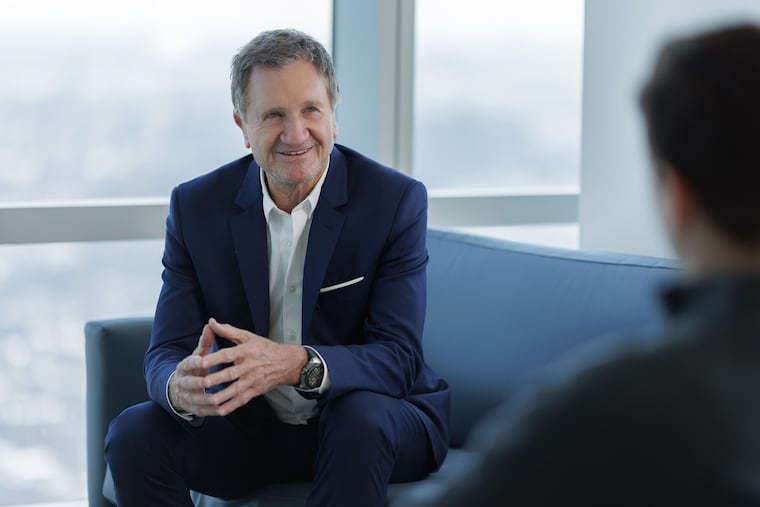
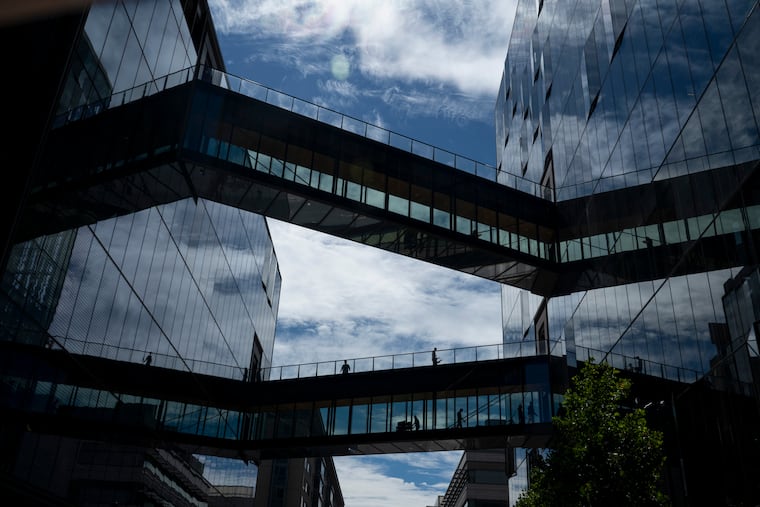
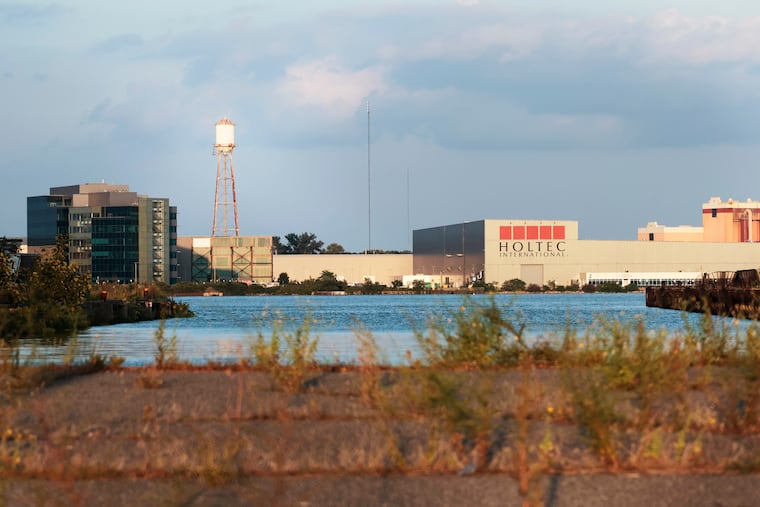
Pierre Brondeau is back in charge at FMC, laboring to keep the global pesticide maker independent and save one of Philadelphia’s last big corporate headquarters as his board weighs a sale.
When Brondeau, a French-born naturalized U.S. citizen, stepped down as FMC’s chief executive in 2019, he had made the road ahead sound not easy, but straight.
His right-hand man, Mark R. Douglas, whom Brondeau called “a little smarter and a little younger,” stepped up to run FMC. He implemented “precision agriculture,” the AI-enhanced application of crop-protecting insect, weed and fungus killers in growing markets such as Brazil and India.
Shares topped $100 for the first time in 2020 and stayed high as sales rose during COVID.
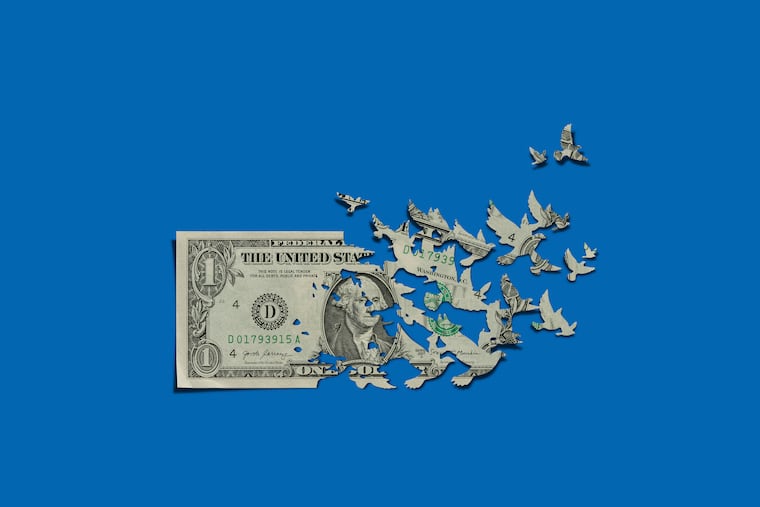
But in 2023, revenues and profits slowed, and the share price fell below $50. In 2024, Douglas left with nearly $6 million in severance. Brondeau, still board chair, came back as day-to-day leader, with a cost-cutting mandate.
This past July, he announced plans to sell FMC’s India commercia business, which FMC expects will fetch less than the company invested. In October, FMC cut its dividend and announced plans to outsource routine production. Brondeau’s second-in-command, Brazil-born Ronaldo Pereira, left the company.
On Feb. 4, FMC warned that it won’t recover fast in 2026. New products are catching on slowly as patents expire and generic competitors target FMC’s best-selling insecticide Rynaxypyr, which selectively kills crop-damaging moths and worms
Moody’s cut FMC’s debt rating to junk-bond status. The stock has been trading below $15. The company is hiring Bank of America and Goldman Sachs to see whether they could attract a good price from potential buyers.
But the global farm slowdown is bigger than FMC.
Shares of larger rivals Bayer, BASF, and Syngenta also are down over the past five years. Among global pesticide makers, only Wilmington-based Corteva, which includes the former Dow and DuPont farm chemical units, has risen in that period.
Brondeau, 68, says FMC has rebounded before and has pesticides “in the pipeline” to grow again. The company employs 5,500 worldwide, including more than 300 at its University City headquarters and 330 at Stine research labs in Delaware.
He took questions from The Inquirer in his FMC tower office in University City before leaving for a Bank of America conference in Florida, then to visit in Southeast Asia, and Latin America.
The conversation has been edited for length and clarity.
You retired, and then you’ve had to come back. What went wrong?
People don’t realize how impactful COVID was. China had shut down their supply chain. So many raw materials came from China it created a period of incredible uncertainty. We were less impacted than some of our competitors; we had moved a lot of manufacturing to India.
But the farmers had so much fear they would not be able to protect crops, they placed a lot of double and triple orders. They put product in storage, which they don’t usually do.
And then we got into a period of incredible cost inflation. By the end of 2023, we were in a mega downturn — maybe the longest since I have been in the industry. We are still very slowly mending. Farm economics is not good. Pricing is a challenge.
We have new products, very good products. But in a situation like this, growers very often make decisions more on prices than technology. And the generic manufacturers now have extra capacity, even though they are also experiencing increased resistance [by pests to older pesticides].
Is it time to sell FMC?
Today my path number one is keeping the company independent.
When we present our very solid 2026 plan to the board, including divesting some assets, they approved the plan as they always do.
They also said any business plan has risks. We need a safety net. We need to explore what would happen if we put the company for sale.
But the main path is the 2026 plan. That’s where I spend most of my time.
What’s your model for FMC’s recovery?
I would look at ourselves — we’ve done this before. 2015 was a low point for the company. We had a few months where we were wondering where the company was going. We did what we had to do commercially and structurally. By 2018, we were back to a top level.
Agriculture is a very cyclical business. 2026 is a very difficult time. The agricultural economy around the world is weak. And FMC has its patent issues. We have the talent we need, the organization we need. The executive team here working with me has a steady hand.
Nobody here is panicking that the board wants us to look at the potential sale of the company. They’d better not!
The biggest challenge a CEO faces is making sure your employees — the people who carry the company despite what we have to announce — have faith. That they stay focused.
Are you cutting across the board, including your U.S. research center at Stine Labs near Newark, Del., and the labs in Europe, Asia, Brazil?
No, we are not touching research. It’s who we are. Research in our field is very expensive; it is critical for a company like us to sustain spending on R&D to renew the market.
The European Commission supported your acquisition of some of DuPont’s product lines. They were glad to have a big pesticide maker that doesn’t depend on genetically modified crops. Won’t this make it hard for a Big Four pesticide company to now purchase FMC?
My gut feel would be to say, yeah, we are in a different world than we were in 2019. But we have not had contact with the regulators in any country [about] the announcement. So I cannot really answer.
Why is this happening now?
2026 is critical for us. Our key molecule Rynaxypyr lost its patent protection in 2025. We have three new molecules which are growing. But they are not yet at the size where they compensate. We believe we are at the bottom the cycle. If we do what our plan says in 2026, we are prepared to grow in 2027, 2028.
You were a famous fan of Philadelphia and its institutions. Are you still?
I’m still a Philadelphia fan. I’ve done way less than I used to because of the situation of the company.
I intend to keep this tower here. What a great location. We’ll be back to growth. That’s my intent; that’s my objective.
It’s very simple. If we do what we have to do in 2026, then 2027 and 2028 will be up. There is no doubt. We just have to get through this year.