Philly’s Fort Robotics raises $19 million to control ‘emerging humanoids’ and other new robots that work with people
Fort’s software platform “is a crucial enabler for the next generation of robotics, including emerging areas like humanoids,” Neman partner Shane Neman said.

Center City-based Fort Robotics says it has raised $18.9 million to grow, from investors led by Tiger Global, a large New York private equity fund that was also an earlier investor in self-driving car pioneer Waymo and ChatGPT developer OpenAI.
Fort will use the new cash to ready its products for export and software integrations, to develop new analysis and robot safety, and to accelerate growth.
“Robotics has grown from an artisanal, cottage industry to an ongoing economic concern. Every worksite is on the road to automation with new AI techniques,” and Fort wants to supply them, said Samuel Reeves, a University of Pennsylvania graduate who founded Fort in 2019.
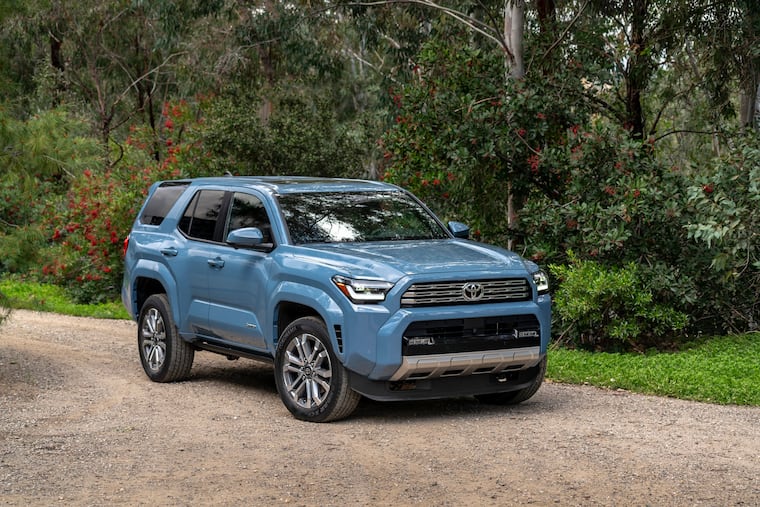
Fort’s 550 customers, including warehouse giant Amazon, vehicle manufacturers Toyota and John Deere, and robot makers Boston Dynamics and Agility Robotics, have deployed 12,000 of Fort’s robotics control programs so far.
Fort systems are designed to oversee robots in warehouses, mines, farms, and construction sites, where they are used to speed production and cut labor costs. They also prevent robots from injuring workers.
Growing “fleets” of robots are working alongside people, boosting demand for “robot functional safety,” Reeves said. The new capital will help Fort grow faster amid a “sharp acceleration” in demand from new and current users.
Reeves said Fort is one of a growing body of Philadelphia robotics start-ups that are making money selling their products to real-world users.
“Philadelphia robotics companies have revenue,” he said. “It separates us from the research outfits coming out of places like Pittsburgh.”
“All the robotics CEOs here are friends,” Reeves said, noting mining robot software maker Exyn, farm robotics software maker Burrow, doglike war robot maker Ghost, and others.
Penn engineering dean Vijay Kumar has made a home for robotics start-ups at Pennovation on Grays Ferry Avenue, he said. Warehouses in the Lehigh Valley and other area markets are major buyers of robotics software and hardware.
Though no single city has emerged as the center of robotics production, Philadelphia could become a “dominant” hub for the industry, Reeves said.
“There’s a growing critical mass of people here who love robotics and artificial intelligence” in and around Philadelphia, he added. “And it’s still early days.” Tariff import taxes “won’t derail us” and could help feed “significant re-shoring and on-shoring” of foreign suppliers, he said.
Reeves predicted that this wave of automation would impact jobs less than the factory consolidations of the 1960s and ’70s.
“This generation is way more collaborative,” he said, seeing robots as “extensions of what makes humans great. Our clients aren’t getting rid of the humans. They are transitioning humans to work that is less dull, less dirty, less dangerous, making the human-machine team safer, more productive, making more money and a better quality of life. Everybody can be part of that. I’m a techno-optimist.“
The company raised more than $30 million in 2019-2022 from investors led by Tiger and including Prime Movers Lab and billionaire tech investor Mark Cuban.
New investors this time include Florida-based Neman Ventures, California-based Mana Ventures, Vermont-based Gaingels, and Ryuu of Japan.
Fort’s software platform “is a crucial enabler for the next generation of robotics, including emerging areas like humanoids,” Neman partner Shane Neman said in a statement.
The company also brought on new board members with experience in building and selling tech companies.
The new directors include Kirk D. Brown, a top officer of SportsMedia Technology and former chief operation officer of Overwatch Geospatial, now part of Textron; Jorge Heraud, chief executive of TerraBlaster and former vice president for automation at tractor maker John Deere; and Benjamin Wolff, chief executive of Palladyne AI, and founder and former CEO at Clearwire, now part of Sprint.