Meet the farmer who helped turn Chesco into Pa.’s richest county
Gary Smith has run Chester County's development council for 50 years, from his Downingtown farm. As he retires, he shares lessons learned.
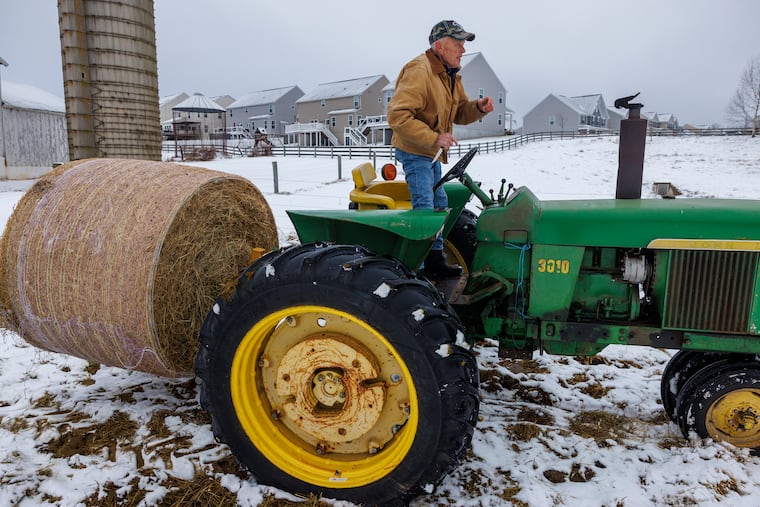
Chester County, with its aging metal plants and rolling cornfields, was the least-wealthy of Philadelphia’s suburban counties in 1970, when Gary Smith was doing chores and thinking up side jobs on his immigrant dad’s dairy farm in the hills above Broad Run Creek.
As a young man, he huckstered sweet corn, shoveled meat, and studied planning at what’s now West Chester University. Then he joined the tiny Chester County Economic Development Council in 1976, and became executive director two years later.
By 1990, booming with financial, tech, and pharma jobs, Chester County was the richest of all 67 Pennsylvania counties, a rank it has retained. Smith, as head of the independent economic development council, was in the middle of that change. He scouted public and private funds, builders and investors, and organized worker-training efforts for growing software, finance, and biotech employers that chose Chester County over the city and its older suburbs.
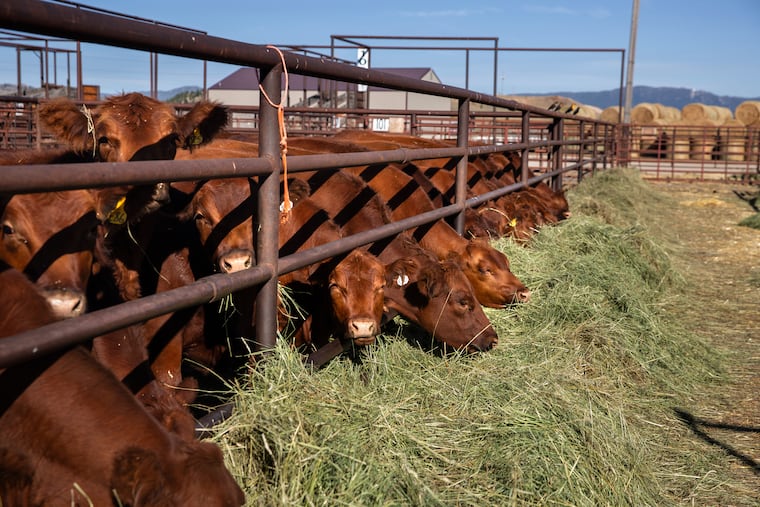
He still heads the agency, still lives on the farm, and raises three hay crops and a handful of calves each year.
But after a 50-year career at the council, Smith is stepping down as CEO on July 1, the agency said this morning. Michael Grigalonis, his longtime deputy, will move into the top job, and Smith will stay on as executive strategist.
On a February morning, after tractoring a hay bale to the snow-covered pasture, Smith sat in his kitchen and spoke about his part in Chester County’s transformation.
This conversation has been edited for clarity and brevity.
How did growing up on this farm shape your choices in life?
I was milking and doing the farm chores while my buddies were getting cars.
My wife, Vicky, I met in high school. Her dad was Abruzzese, he worked at Lukens Steel. He liked that I was a farmer, and that I brought him manure for his hot peppers.
I kept the farm going when Dad died in 1983. I sold [almost half the] property to pay for Mom’s care. They built houses.
How’d you start in business?
I was a huckster. I would drive down to Wilmington and sell 2,000 ears of corn a week on the farm market they had on King Street.
I went to West Chester. I had a B.A. in planning, in 1974. I got cum laude. I wanted to do community planning for the state. But there was a hiring freeze.
There was a company in West Chester, the Gagliardi family, they got a government contract to prepackage hamburgers and minute steaks.
They hired me to be a meat shoveler. My job was to fill two hoppers full of ground beef. Twelve tons a day. You had to get the rhythm so you didn’t break your arms or cut your hand off.
When you work hard, people watch. One day Gene Gagliardi called me up to the office and said, “What are you doing here, college boy?” We became good friends.
Then the council had an ad in the paper. Gene Gagliardi told them good things about me. Their chairman was Ivan Mars, president of the old Chester Valley Bank, and he grew up on a dairy farm, as I did. That’s how I got it.
[The economic development council] was a small agency. I was made executive director in 1978 for $7,200 a year.
Where did these county development agencies come from?
In 1956, Pennsylvania set up Industrial Development Authorities, partnerships between business leaders and municipalities in each county where they want one, to make low-interest loans to incentivize companies. How could we know if these are good projects, or good people? So the authorities set up boards of industry people. By the way, we’ve done small-business loans in 54 counties.
Why didn’t you do like other councils and fold into county government?
What happens is politics. There are a lot of interests, and in these agencies you have information, power, control. It is hard for a nonprofit to survive.
A lot of the counties turned them into departments. They can lose touch. Public officials have to be at the table, but they can’t dominate the process.
How did Chester County pull ahead of the other suburban counties?
Businesses used to locate where natural resources were. Water, iron, limestone, wood for charcoal.
Forty years ago we started to see this transfer from industrial fabrication to information technology. The new industries needed talent; they needed education in math and science.
The people who ran these companies wanted to live out here, in big houses, on acre lots. But we saw that if we don’t prepare people to work at these new industries, they will pass us by. So we invested in the schools.
What one employer really showed the change?
Vanguard Group was huge for us. Jack Bogle came in and said he wanted to start another mutual fund company, somewhere in this area. I put him on Drummers Lane, in Chesterbrook, where they had excess space. Then they bought land from Mr. Clarence Staats, of Staats Oil, where they are today.
What did you change that helped draw more employers?
By the early 1980s, [developer Willard] Rouse was rocking and rolling in Great Valley. There was this mass exodus down U.S. 202 [from the King of Prussia area] of people who wanted these beautiful, new one-acre estates in Chester County, and a very short drive to work. Soon we had speculative office buildings everywhere.
Then you’d go to lunch, and there’d be corporate headhunters in the parking lot, trying to get people to switch employers. Vanguard and [Downington-based IT company] Softmart called us and said, ‘Stop bringing new companies in!’
I called in their executives. I said, ‘Listen, if you stop stealing from each other, if you call off the headhunter searches, we’ll fill those jobs.’ I made people sign it, that they would not compete.
Didn’t that violate antitrust laws?
We didn’t make the workers sign noncompete agreements. It was the employers agreeing not to raid. An agreement of spirit and consciousness.
We formed the Information Technology Action Group. We had all their HR people on this working committee, to define the occupations available — coding, software, electronics. We went to the high schools and the universities. We brought students [in] for night classes. Now we have these partnerships also in agriculture, energy, manufacturing, healthcare, and more.
Are farms still viable here?
Pennsylvania had a policy that farms don’t create jobs. Back when Ed Rendell was governor, I started writing articles in the newspapers, that Pennsylvania has this open-space program, paying people not to develop land, but we weren’t doing anything to preserve the farms that provide most of that space.
That’s why we opened the program AgConnect. We issue tax-exempt bonds for first-time farmers, and the bank gets a savings of about 2%, which is significant over time. I have 465 farm loans in our portfolio, most are Amish. We do the loans in several counties.
Does Chester County still have room to grow?
The county’s goal is 33% open space. We are at 30% today. That’s an area the size of Delaware County.
We enjoy that these areas bring natural pleasure. But they are also part of our economy. We need to help farmers keep farming. And we’ve put together an outdoor economy group: When you put people on trails in conservation areas, when you paddle a kayak up the Schuylkill or down the Brandywine, there are outfitters, there are restaurants, that are part of the trip.
I’m still a planner at heart, my biggest fear is this: Real estate values have gone way up, manufacturing is not as robust as it was, post-pandemic people don’t need so much office space. So our industrial parks are starting to fill with apartments. Where will employers go?
Where should apartments go?
Infill sites. Abandoned properties, where there’s tax liens and nobody to buy. Brownfields. Gas station sites. We could create a land bank and renovate those properties for affordable housing.
We want to create an Industrial Conservation District. Because if we put housing everywhere, we are going to lose our development inventory.

Want to get Inquirer Chester County straight to your inbox every week? Sign up for our guide to the news, stories, and events shaping life countywide.