South Korean president tours Hanwha Philly Shipyard ahead of proposed $5 billion upgrade
The visit to Philadelphia followed a meeting with President Trump on Monday.
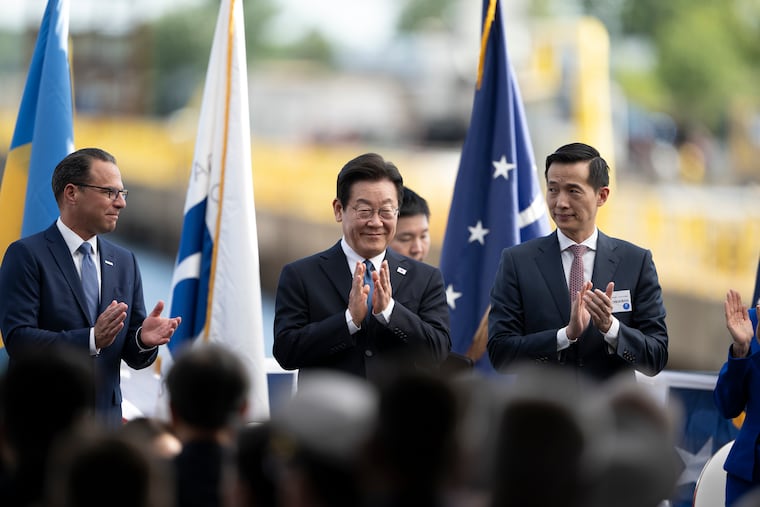
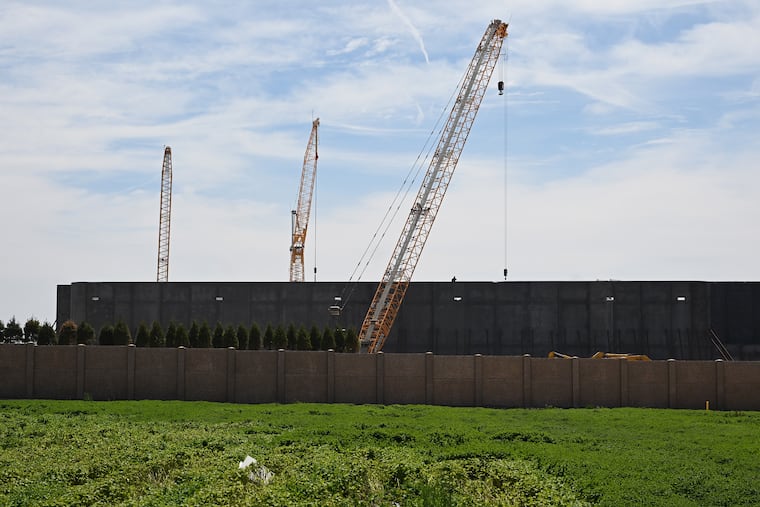
South Korean President Lee Jae Myung visited Hanwha Philly Shipyard Tuesday, joining U.S. officials to promote a trade, investment, and military partnership they said should vastly increase employment and production at the Philadelphia shipyard.
South Korean business leaders said South Korea and its shipbuilders, led by Hanwha and Hyundai, have targeted $150 billion for Korean investments in U.S. shipbuilding, including at least $5 billion for improving the Philly yard.
The trip to Philadelphia followed a meeting Monday between Lee and President Donald Trump in Washington, and culminated with the dedication of the State of Maine, a Korean-designed multipurpose training ship built in Philadelphia.
Hanwha has said it wants to more than double the workforce of 1,700 welders, operators, and contractors it employs locally, and hopes to speed its construction times from the current one ship every eight months to more than one a month.
Gov. Josh Shapiro said at the shipyard Tuesday that the Philly shipyard’s workforce could grow to more than 5,000. Mayor Cherelle L. Parker was also in attendance.
Hanwha has said it wants to turn a nearly 1,000-foot pier at the yard into a dry dock, adding a gate, pumps, and modern cranes that will cost at least $70 million. The company is also recruiting engineers and tradespeople, and shipyard CEO David Kim has said Hanwha plans to add additional robotics, and expand sites within and outside the yard, possibly including neighboring facilities or other sites along the Delaware.
Lee, in his remarks Tuesday, noted that “Philadelphia was the center of American shipbuilding for a long time,” and said “Naval warships that sailed from Philadelphia saved a lot of Korean people” during the Korean War.
“Shipbuilding has been [a source of] hope for countless young Koreans. Philly Shipyard will likewise be remembered by young Philadelphians in the same way,” Lee said.
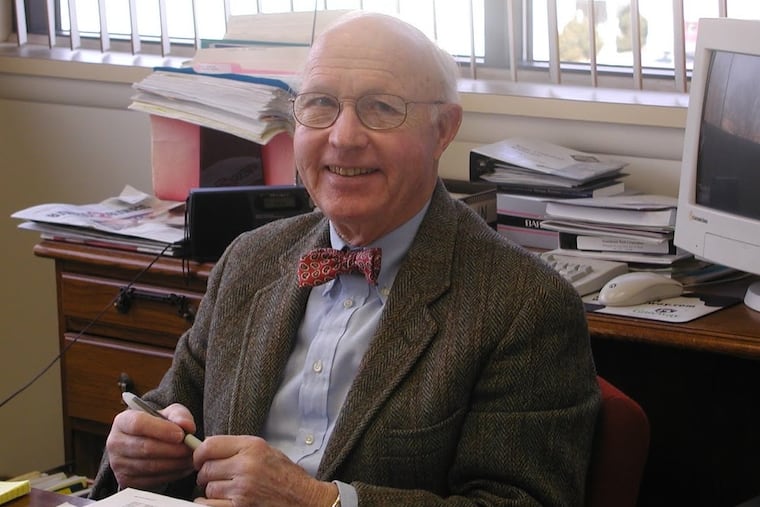
Jeff Vogel, vice president of legal for Tote Services — the ship construction company that hired the Philly shipyard to build ships including State of Maine — said other improvements to Philly Shipyard could include a second Goliath crane, which is used to move ship sections, as well as dredging and constructing larger buildings for ship work.
“Five billion dollars can be invested very quickly,” Vogel said.
Lee was welcomed at the airport Tuesday by Shapiro, who noted state and federal subsidies have supported Hanwha and other port businesses since the Philadelphia Naval Shipyard closed and private development began in the 1990s.
“This city built the American fleets that have protected us around the world since 1776,” Shapiro said at the shipyard Tuesday. “We are now writing the next chapter in American freedom and democracy. … It is fitting that our nations that have such strong ties will write this new chapter together.”
Before traveling to the shipyard, Lee was expected to stop at the Philip Jaisohn Memorial House in Media — Jaisohn, a champion of Korean independence, was exiled to the U.S. in 1883 and made a home in Media.
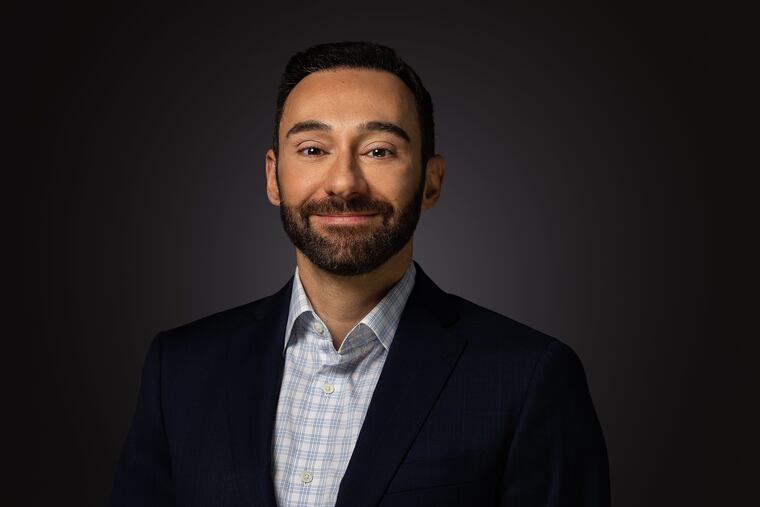
At the shipyard, President Kim was joined by Hanwha Philly Shipyard CEO Kim, as well as local Congress members and other officials. In a late-afternoon gathering by the yard’s Delaware River waterfront, former U.S. Commerce and Labor Secretary Elaine Chao led ceremonies to christen the State of Maine, the latest Korean-designed, Philly-built, U.S. taxpayer-funded ship.
Chao, who had served in Trump’s cabinet, is married to U.S. Sen. Mitch McConnell (R., Ky.), and her family founded the Foremost Group, a shipping company that carries cargoes from China and other East Asian countries. Her role in Tuesday’s event marked an apparent rapprochement with the Trump administration — the president had targeted Chao in racist statements following her resignation.
Investments in Philly shipbuilding
Hanwha has been recruiting and training welders, machine operators, and other staff, and adding cranes and robots to its Philadelphia facilities, which it purchased for $100 million from former operator Aker at the end of 2024.
The sale price was a fraction of federal and state investments in the shipyard since the late 1990s. South Korea is the second-largest shipbuilding nation, behind China, which builds more than half of all new ships. Hanwha’s home yards are many times larger than its Philadelphia outpost.
Local Democratic members of Congress, as well as Republicans, have supported shipbuilding subsidies and government orders for the Philly yard.
Other South Korean companies that work with Hanwha are also investing in the Philadelphia area, said Kevin Kim, the Cheltenham lawyer who serves as president of the Korean American Association of Greater Philadelphia.
He said Hanwha’s larger scale and its emphasis on “partnerships” with federal and state officials, contractors, and education programs makes success for Hanwha more likely than for Hyundai Rotem. The Korean-owned transit railcar manufacturer, which opened a South Philly plant in 2008 and trained Philadelphia workers amid high hopes, closed in 2018 after failing to renew its contracts with SEPTA.
Lee, in office since June, has been addressing tariffs, military cooperation, and hoped-for investments as part of Trump’s MASGA — Making American Shipping Great Again — proposals. In addition to shipyard investments, South Korean government and industrial groups have also agreed to target up to $200 billion more to a wide range of U.S. technology companies, as well as nuclear power expansion.
Lee was accompanied by his wife, first lady Kim Hea Kyung, and members of his government, including foreign affairs minister Cho Hyun; trade, industry and energy minister Kim Jung-kwan; and Lee’s chief of staff, Kang Hoon-sik; national security director Wi Sung-lac; national policy director Kim Yong-beom.
The ship they dedicated, the State of Maine, is the third of five Korean-designed training ships the Philly Shipyard has constructed for the U.S. Maritime Administration, under a 2020 contract that revived the yard.
Since the mid-2000s, Philly Shipyard has built more ships than any other U.S. yard under the Jones Act, which requires U.S.-built ships for use between U.S. ports, despite their higher construction cost. Even with that long-standing protectionist legislation, the yard has had trouble keeping its workforce steadily employed, with demand rising and falling as in the construction industry.
Hanwha, like Aker before it, said a larger yard that could maintain ships and eventually build U.S. Navy vessels, as well as ships for Hanwha’s own merchant fleet, would ensure reliable and growing demand for workers.
According to the Associated Press, Lee told reporters Monday that the South Korean-U.S. relationship was strong enough that he was confident Trump will give it continued support.
The presidents also talked about tariffs. A July agreement, which set high targets for Korean investment in U.S. facilities like the Hanwha Philly Shipyard, set tariffs on South Korean exports to the U.S. at 15%, below Trump’s earlier 25% threat. Korea has a large trade surplus with the U.S.
Besides Hanwha, Hyundai and Samsung have agreed to invest more in U.S. shipbuilding and technologies. Hanwha and Hyundai are also investing in other shipyards in other U.S. and Asian cities.