This Mennonite pastor’s kid made a Wall Street fortune, hired hundreds, and is rebuilding Kennett Square
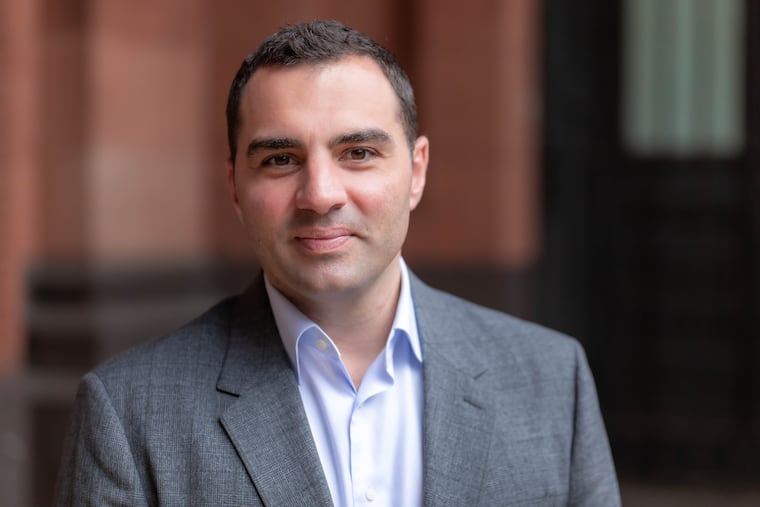
Hedge fund adviser Mike Bontrager's second career is redeveloping the small Chester County town where he made his fortune.
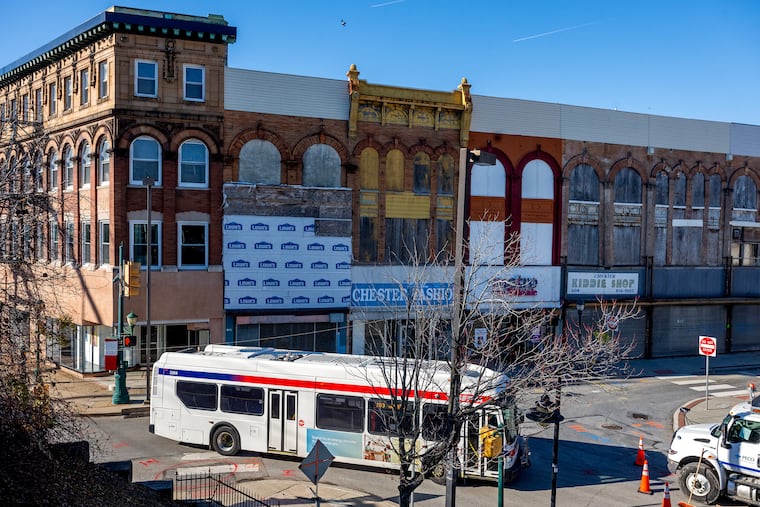
After John Michael Bontrager came home to Pennsylvania from Wall Street to start an advice firm for big investors, he located his company in Kennett Square, “America’s Mushroom Capital” and the most populous of the old factory and farming towns along Old Baltimore Pike in southern Chester County.
Bontrager and those who joined him prospered. In 2018, he stepped down as founding head of investment-risk adviser Chatham Financial, which now employs 850 at its campus just east of the square-mile borough of 7,500.
Now, he’s devoting himself to the redevelopment of Kennett Square and nearby towns.
Using his own fortune, donations, and state and local government funds, Bontrager and his allies have developed a string of projects — restaurants, hotels, and nonprofits — under the loose umbrella of his Square Roots Collective. Their affiliates have purchased 2% of the town’s houses to redevelop as rentals. Their goal: Make the area more attractive to college-educated young people, while also boosting the quality of life for longtime residents and working people.
Last year Bontrager announced his ALS diagnosis. He has recruited staff and allies, including family members, former Chatham employees, and a multi-ethnic group of Southern Chester County professionals to build Square Roots into a movement that can survive him.
In December, the borough council endorsed Bontrager’s “public, cultural, and social impact initiatives,” calling them “key to shaping the inclusive community.” They voted unanimously to ceremonially rename Birch Street, an industrial road Bontrager has visibly transformed, as “Bontrager Walk.”
In local government meetings and town election campaigns, some residents have expressed concerns about Square Roots’ concentration of power and conflicts of interest.
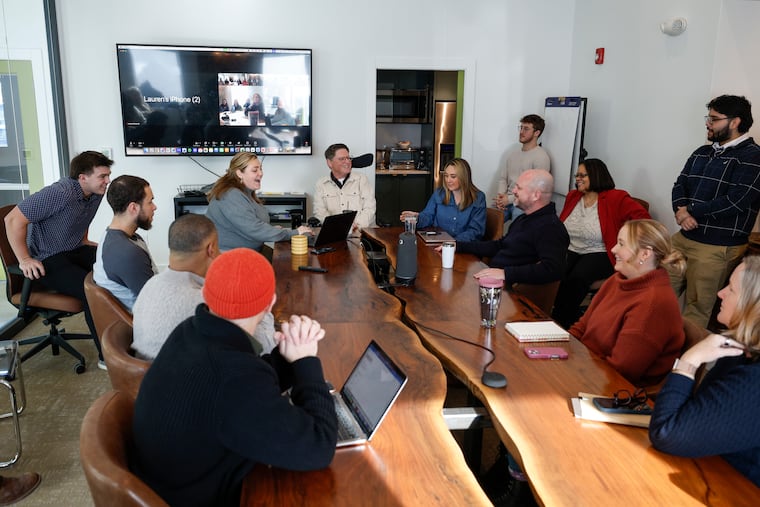
Bontrager agreed to take questions at his Kennett Square office. His daughter, newly designated co-CEO Stephanie Almanza, and his chief of staff, Luke Zubrod, a Chatham Financial alumnus who serves on the borough planning commission, sat in.
The conversation has been edited for length and clarity.
Why did you start local projects while you were still building your company?
[I wanted] to convince people we wanted to hire, between the ages of 25 and 33, that Kennett is a reasonable place for them to live. How do we make this attractive for people to move here and to bring people who grew up here back?
Thirty years ago when I came here, it was a great community for families. But it was harder to convince singles and couples with no kids.
I read sociology, for example Chuck Marohn’s Confessions of a Recovering Engineer; Yoni Appelbaum’s Stuck about zoning; The Logic of Failure by a German neuroscientist [Dietrich Dorner].
The elements I came up with: A community is totally interconnected, people and organizations. All decisions have ripple effects. When communities focus only on solving the near term problem, it’s probably not going to be good.
For example, we have about 30% of Chester County “preserved.” Well, it’s great to have open space. But if you take a third of your land out of commission, without providing for housing, housing prices will go up dramatically. And taxes.
How do you solve issues in concert?
Collaboration, trust, working together. A lot of elected officials are volunteers. It’s easier to focus on one issue at a time and react to the three or four people who show up at your meeting with pitchforks.
Of course you want a say over what happens in your neighborhood. But the consensus favors the status quo, the entrenched interest.
Not everyone loves what we’re doing. Luke, Stephanie, and myself have said, ‘Let’s understand people’s concerns. We’re neighbors.’ We listen; we have a lot of meetings.
What are the institutions you’ve set up?
The Square Roots Collective is our brand for all the activities. It includes Square Roots Community Initiative, a 501(c)4 nonprofit that’s the umbrella group. There’s our for-profit businesses; the profits go to support the nonprofits. We donated more than $1 million last year to nonprofits and projects in the area.
On Birch Street, there’s our offices, and the Creamery [converted from an old condensed-milk plant site], which we started as a beer garden in 2016, it’s now a restaurant, and Artelo, the art hotel.
We are also working on the Francis, an eight-room hotel in the middle of town. And we are opening a really cool cocktail bar, the Star and Lantern [referencing the Underground Railroad and the area’s abolitionist history] in 2027. And we are preparing Opus, a restaurant.
On the nonprofit side, there’s the Kennett Trails Alliance, a 14-mile loop. About half is open, and we have easements for most of the rest, not all. It connects some of the open spaces, the Brandywine Creek, Anson B. Nixon Park, the YMCA.
And there’s Voices Underground, an organization we initiated in partnership with Lincoln University and Longwood Gardens, elevating the stories of the Underground Railroad.
Your groups own about 40 of the 2,000 or so houses in the borough. Is there a shortage of affordable rentals, given demand from mushroom farms and other industry?
Yes. What we have is tenant housing, market rate, including some we rent to area charitable and community groups [for their clients].
How did you decide to start Chatham in 1991?
When I was 13, I worked for an appliance repairman, John Schmucker. He was brilliant at fixing washers, dryers, dishwashers. But he was a disastrous business guy. He never collected. I saw building a business is very different from being smart and an expert.
My father was a Mennonite pastor in Christiana, Lancaster County. I went to Lancaster Mennonite School. I went to Wheaton College in Illinois. I was so naive; I had never met a real professional.
I would sign up for any kind of recruiter interview. I eventually went to see someone who worked for Chemical Bank [predecessor of JPMorgan Chase]. I got a job offer.
I joined this new unit selling these emerging derivatives — interest-rate swaps, currency and commodity hedging — to help clients manage the risks.
There were products that were inappropriate for most investors. Municipalities got in trouble buying things that didn’t need, where the banks took out a lot of money.
People needed advice. I loved helping clients, maybe it was a big company, or maybe an oil distributor in Queens who needed to hedge his fuel-pricing risk.
Why did you return to this area from New York?
My wife wanted to move back to our families. In August 1991, I bought a place in Cochranville. We had a satellite dish that brought in Telerate [a stock-tracking service], which was just a year old. That’s what made it possible to do this work anywhere. I started over the garage, me and my dog.
It turned out to be the best time to start a derivatives advisory business. There were a lot of properties available from [recently failed] savings-and-loans at cents on the dollar, and someone figured out a legal structure that allowed real estate investments trusts to go public. We did their hedging. Same with private equity.
I called a few of my old clients, Milton Cooper at Kimco Realty Trust, we helped him go public, he recommended us. We advised [mortgage-bonds pioneer Ethan Penner] on the first mortgage-backed securities. In 1994, I cold-called a young associate at a firm buying failed S&L loans. He hired us to hedge. That was Jon Gray, who worked his way up and is expected to be the next CEO of Blackstone.
We mastered hedge accounting. We had more derivative hedging experts than anyone. The Big Four accounting firms and their clients found we spoke their language.
By 2000, we had built a real business. We moved to Kennett because it was a larger town [and closer to Philadelphia and its airport].
How did you prepare your work to go on after you left, under your successor Matt Henry?
At Chatham, I wanted us to be internally owned, the people who are joining should reap rewards. I did not want any outside investors. [Employees own most of the stock, and elect top officers.]
I have been diagnosed with ALS, which is a pretty devastating diagnosis. I don’t how long I will be able to be actively involved. I still get to do purposeful work with people I love. Isn’t that what we all want? So I’m going to go until I can’t.

Want to get Inquirer Chester County straight to your inbox every week? Sign up here for our guide to the news, stories, and events shaping life in your community.