Pa.’s ‘explosive’ data center growth is driving this Philly company’s investments in Appalachian natural gas
WhiteHawk Minerals CEO Daniel Herz says data centers are a “phenomenal opportunity for the state of Pennsylvania, if handled properly.”
The U.S. runs on natural gas. As power demand surges, gas supplies more than 40% of the nation’s electricity, more than any other source.
Gas is piped from U.S. wells and storage by big drillers such as Pittsburgh-based EQT and energy giants like ExxonMobil to power plants in Eddystone, Fairless Hills, Grays Ferry, Marcus Hook, West Deptford and more than 1,000 other U.S. communities. More are planned to supply AI data centers and other big industries.
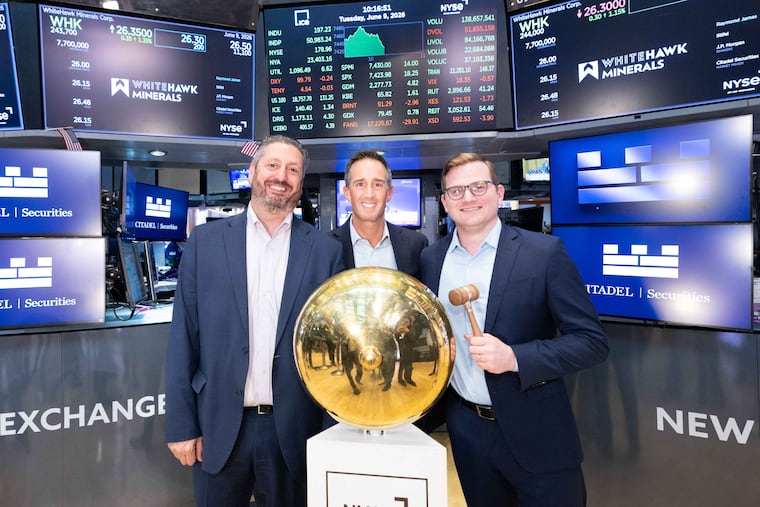
Mineral rights to the gas they drill are owned by investors. Among the biggest gas field investors is Philadelphia-based WhiteHawk Minerals, which raised $200 million Tuesday in its initial public stock offering (IPO), valuing the company at around $700 million and making it the most valuable stock of its kind.
CEO Daniel Herz, a former investment banker who has built WhiteHawk with a string of acquisitions, says WhiteHawk will use proceeds to buy more gas mineral rights on properties in Western Pennsylvania, West Virginia, Texas, and other states.
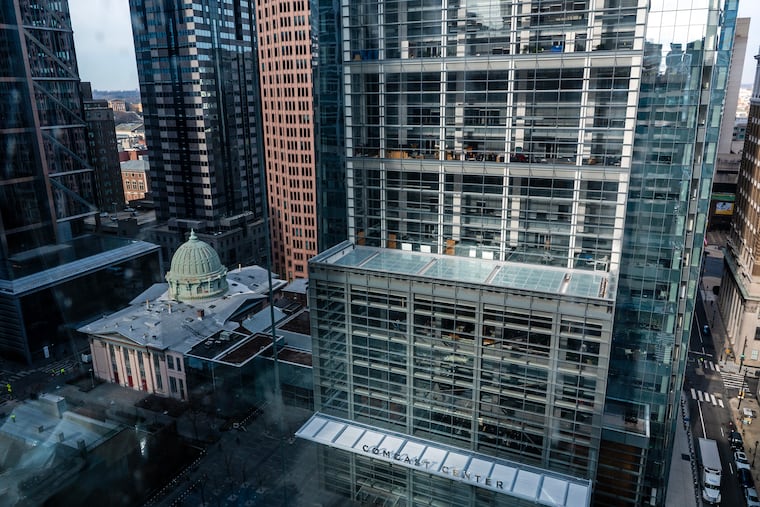
WhiteHawk is based at 2000 Market St. in Philadelphia. That’s two blocks from a former headquarters of the Pew brothers’ Sunoco Inc., which drilled in Canada, North Africa, and Latin America and refined fuels in Marcus Hook, West Deptford, South Philly, and the Midwest before exiting key businesses and selling the remains to Texas-based Energy Transfer in 2012.
WhiteHawk, by contrast, is a virtual company, with just a dozen employees scouting and closing deals and working through contractors. Herz worked for Philadelphia-based fracking investment pioneer Edward D. Cohen’s Atlas gas drilling and transport companies and helped set up, run, and sell the Cohen family-backed Falcon Energy oil-and-gas business, before setting up WhiteHawk just three years ago.
Hours after a ceremonial bell-ringing to mark the first day’s trading in WhiteHawk shares (trading symbol: WHK), Herz took questions from The Inquirer.
Questions and answers have been edited for length and clarity.
With gas demand spiking, will companies try to ship more liquefied natural gas (LNG) from the Philadelphia area, despite local opposition that stalled past attempts?
Our properties in Texas and Louisiana serve LNG ports in that area.
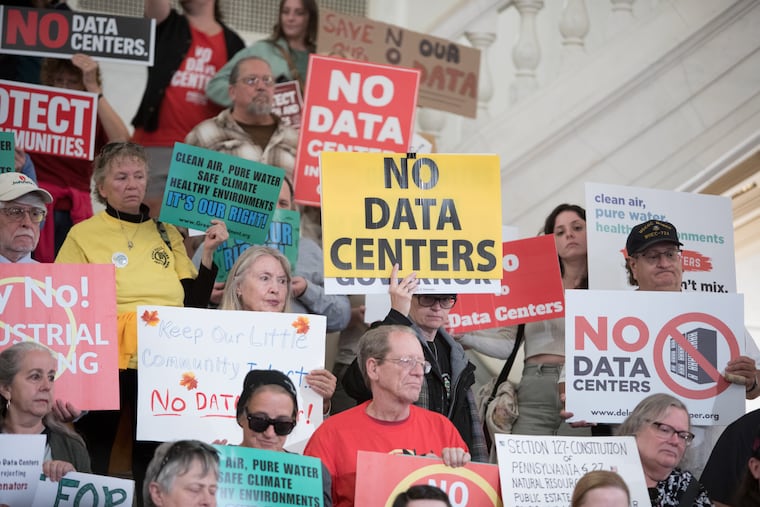
But it’s not my expectation that will happen here because of a huge development: the tremendous construction of AI and high-speed data centers. EQT last week said they are seeing 20% growth in demand in the Marcellus basin just for data centers.
Data centers are another phenomenal opportunity for the state of Pennsylvania, if handled properly.
So I don’t expect our gas will be exported. The AI boom has come to Pennsylvania, Ohio, and Virginia because gas from the Marcellus Shale is the most economic [energy] source in the U.S.
What did you learn working for pioneer investor Ed Cohen as fracking took off in Pennsylvania?
Ed Cohen’s been a mentor, boss, and partner for me. Those experiences taught me to appreciate that [investing in] minerals and royalties is the best way to be involved in the gas business.
The operators, companies like EQT and Range Resources, spend all the capital and send us payments [averaging 17 cents for every dollar’s worth of gas]. We have 11,000 producing wells and 9,500 identified sites for future wells. Our operators are drilling every day. We track them. And we hedge [with futures contracts that limit the impact of sudden price moves].
Then all we have to do is sit back and collect the royalty checks.
It’s a business where, heads you win, tails you win. We like higher gas prices. But we also root for prices to go down, then we have the opportunity to buy more.
If it’s that simple, why aren’t bigger investors buying these gas assets?
Four or five years ago, when we started WhiteHawk, a lot of private-equity firms had the good instinct to be buying up mineral rights. But they have found it harder to sell; private equity has been slowing down. The sellers have been offering generous terms. It shows how little competition there is.
Our first acquisition was in February 2022. The seller gave us an eight-month option to buy an interest in their gas properties. Two weeks after, Russia invaded Ukraine. We immediately exercised the option at a locked-in price [and profited as gas prices rose]. Then another large private equity firm came to us with a six-month option.
More of these private equity funds are nearing the end of their lives, they have to repay investors, but there aren’t a lot of new funds for them to sell to. This business takes specialized knowledge. It seemed to me we could be a natural buyer and build the premier gas royalty business.
In all, 13% of U.S. natural gas production now pays us substantial royalties; 49% of EQT’s production pays us royalties. Antero Resources, one-third. Range Resources, 49%.
We are primarily focused in the Marcellus [Western Pennsylvania, West Virginia] and Haynesville [east Texas, north Louisiana] Shales, which together produce half of U.S. natural gas. And there are many, many more rights owners adjacent to our properties [who can be bought out].
Why are you based in Philadelphia?
There is a longstanding tradition [of energy companies] in Philadelphia, and we have a great finance and accounting team and partners here. Myself, I am based in New York.
Wasn’t it your mentor Cohen who convinced his classmate Pennsylvania Gov. Ed Rendell not to tax natural gas extracted from the Marcellus Shale?
Yes. Ed Rendell should get the credit for manufacturing coming back to Appalachia because now we have natural gas, ethane, propane, butane, while in some other states [such as New York] you can’t do this.
How much time do you spend lobbying for more fossil fuel extraction?
I’ve spent 5% to 7% of my time in the political sphere for 15 years.
There’s moments when politicians will posture. But we need energy. People should recognize that natural gas has driven the U.S. to lower carbon emissions. We can do all that and put money in Pennsylvanians’ pockets.
Does your company have debt?
We’ve been working with EIG [a Washington-based energy lender] for years, and we have a credit facility we haven’t drawn on with a number of banks. But we’re not looking to borrow. We keep leverage low.
You had to restate 2024 earnings and changed accountants. What happened?
We hired Baker Tilly, a national firm, to be public company ready. They said we had to restate [the 2024 earnings report certified by a Texas accountant]. I would call it growing pains. We had a great acquisition last year, the effective date was to be Jan. 1, 2025, but we didn’t close the deal until March 31. We counted that income from the effective date, and it should not have been counted until later.
Why go public?
This is what we did with Atlas Energy, Atlas Pipeline, Falcon Minerals. We’re back with our institutional and individual investors who want to participate in our growth, our cash flow, and our dividends per share.
We are growing through acquisitions. Our playbook is to go out and buy another $150 million or $200 million this year building the premier natural gas mineral and royalty business. There is so much more to buy.