Pacer’s COWZ built a $40 billion fund on rival Vanguard’s doorstep
Pacer founders Sean O’Hara and Joe Thomson are cherry-picking the S&P 500 and other indexes to offer to investors.
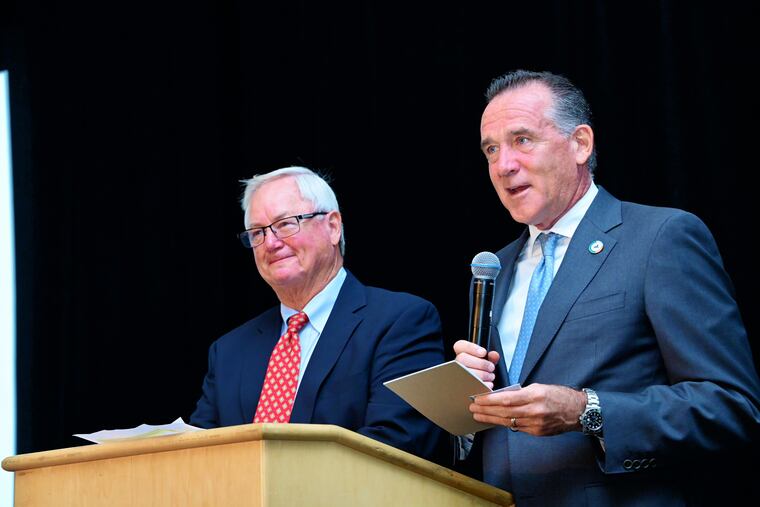
Right across from investment giant Vanguard Group’s Great Valley office park, Sean O’Hara and Joe Thomson have attracted more than $40 billion to their exchange-traded funds, rivaling some of Vanguard’s signature products despite charging higher fees.
ETFs are bundles of securities that are listed and trade on stock exchanges as if they were themselves a company. Investors can use them to make quick bets in market sectors or hold them for years, like mutual funds but with lower tax liability.
Vanguard and rival BlackRock, which sells iShares funds, dominate the ETF market. Each controls ETFs worth more than $3 trillion or around a quarter of all such fund assets.
The average fee at O’Hara and Thomson’s Pacer is nearly half a percentage point — more than six times what low-fee Vanguard charges for its ETFs.
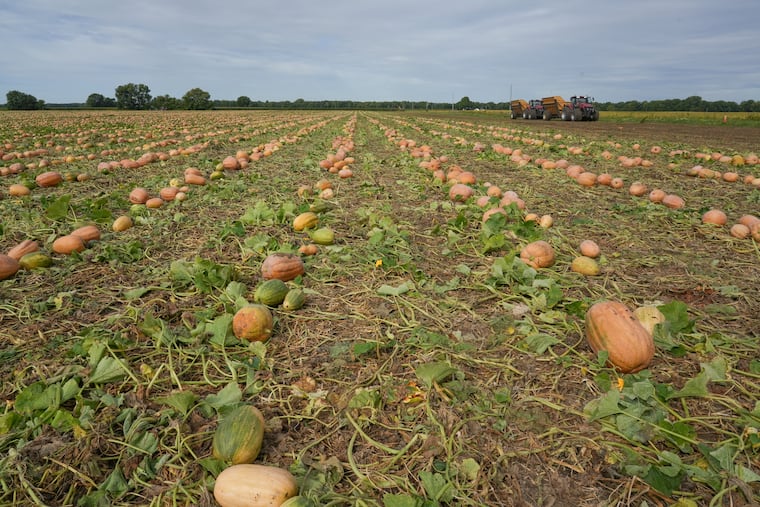
So how do ETF makers like Pacer survive? By offering something different, O’Hara says. The company has dozens of funds, but roughly half its customer assets are in its best-known ETF, Pacer U.S. Cash Cows, ticker symbol COWZ.
The COWZ fund holds stocks from the Russell 1000 big-company stock index that have the highest cash flows, which suggest future profits, not those with the biggest recent profits. Cash Cows favorites in recent years have tended toward energy and healthcare stocks, rather than popular Big Tech stocks such as Tesla or Microsoft, whose share-value growth has slowed.
COWZ beat the S&P 500 by double-digit margins in 2021 and 2022, but trailed more recently.
Pacer has diversified, marking the company’s 10th anniversary with a proliferation of new ETFs, including some focused on growth and tech stocks. Founders Thomson and O’Hara agreed to take questions from The Inquirer at their Malvern offices. Responses have been edited for clarity and brevity.
How did you raise the money to start Pacer?
O’Hara: It was a little bit of a crazy idea. People said, ‘Why? You’re right next to Vanguard.’
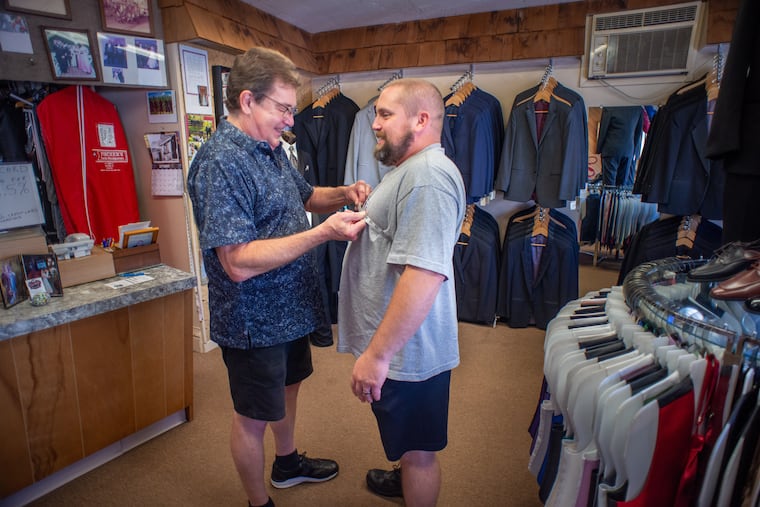
Thomson: We’re reformed annuity salesmen. With my partners, we had a company, Planco, an independent investment wholesaler. We started by finding [sellers] for insurance company annuities. Hartford chose us to be their distributor in 1984. We added mutual funds.
We sold Planco in 1998. [O’Hara became Planco’s boss for its new owners.] In 2004, I started a broker-dealer and investment adviser. Sean came over and joined me. We made a plan to make another wholesaling operation, but with new products. We sold exchange-traded notes for Royal Bank of Scotland, and we set up our first exchange-traded funds in 2015.
We were able to expand the business, selling our funds through the big brokerages and independent broker-dealers, banks, insurers. And we’re now in about 15,000 registered investment advisers.
What do you do differently from the dominant firms?
O’Hara: The vast majority of the ETF business is controlled by just a few entities — Vanguard, BlackRock, State Street. We have to show that what we do is different.
We have to surprise people, to sell something unique. We have to show a higher return and show the financial advisers it makes sense.
Warren Buffett and [the late Wellington Management Co. investor John] Neff had identified cash flow as a super indicator. We were one of the first to offer it in an ETF. We found it has been offering pretty significant returns across markets. No one else was offering this.
We focused COWZ on 100 of the Russell 1000 index companies, the ones with the highest free-cash-flow yield, which is free cash flow divided by enterprise value [equity plus debt]. It has produced pretty significant returns vs. the market. COWG [Pacer US Large Cap Cash Cows Growth Leaders ETF], our growth version, uses free-cash flow, divided by sales.
S&P agreed to a series of indexes using free cash flow [to pick stocks from within popular S&P indexes], such as the LCOW fund [Pacer S&P 500 Quality Free Cash Flow Aristocrats ETF]. We have a close relationship.
Thomson: At Planco we always wanted to land national brands. Now we’re working with the big brands in indexing: Russell, S&P, MSCI, Nasdaq.
Most of our products we build ourselves. We have 65 funds altogether. One of them is focused on data centers.
Vanguard and BlackRock have thousands of employees. How many work for Pacer?
Thomson: We have 165 employees, about half them here, the rest in the field. It’s a good place for us. There’s a lot of financial service people in this area. Vanguard is right across the street.
O’Hara: The thing we are mostly tapped into is blue-collar Philly and Delco, [including] Division 2 or 3 athletes, people who wanted to do better than their parents. We are not going to recruit a lot from the Ivy League here.
What’s your succession plan?
Thomson: My daughter Ashlee heads up marketing; my daughter Kim heads up key accounts. Sean’s son is a wholesaler. His son-in-law is a wholesaler.
What are you going to add next?
O’Hara: We always set insane goals. It’s better not to meet an insane goal than to have a reasonable goal and not hit it.
I don’t think we need to add a lot of people or a ton of new products. I don’t see us adding any financials. They are hard to measure on a free-cash-flow basis.
The big hole in our lineup right now had been fixed income. We’ve developed the ETF we call MILK, the bond version of the cash cow. Pick stocks with high free cash flow and less debt — that’s who we want to be lending money to with the bonds we buy.
Thomson: The ETF business will keep growing. I think we can be at $100 billion in a few years.