Pa. loggers want a bailout for Trump tariff damage. Without it, they say layoffs could be next
Logging industry groups say they would welcome a bailout to ease the impact of import taxes and foreign retaliatory tariffs, which have slowed demand.
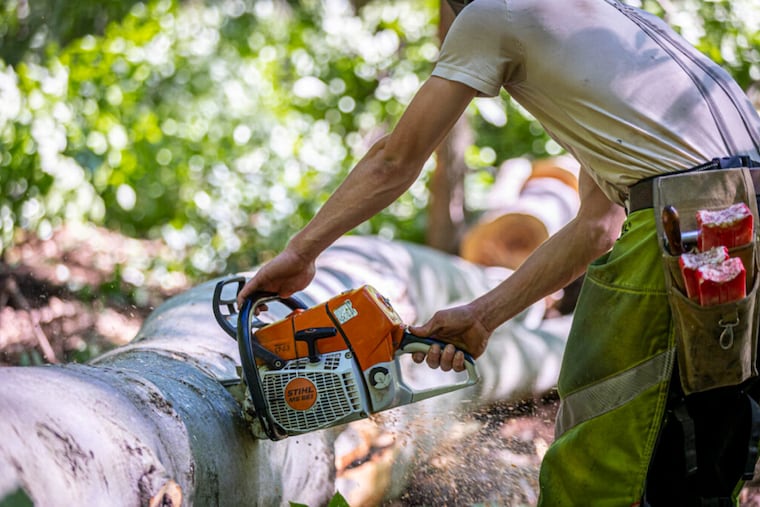
In Pennsylvania — Penn’s Woods — centuries after settlers began cutting native forests, decades after once-thriving furniture makers like Pennsylvania House and Home Line shut or moved away — lumber remains a basic industry. Upstate sawmills send logging crews to buy and cut walnut, cherry, and other hardwoods to export to global flooring and furniture enterprises.
But dozens of the state’s remaining mills, loggers, and industry groups, long accustomed to blights and other natural disasters, say they now face a plague made in Washington, D.C. — and would welcome a government bailout.
Some 48 of the state’s surviving mills, lumber companies, and industry groups joined 400 other U.S. forest-based businesses last month to ask President Donald Trump for relief payments to ease the impact of his U.S. import taxes and foreign retaliatory tariffs, which they say have slowed export demand for their products, while boosting the cost of buying and operating their machinery.
These and other “rural, almost entirely family-owned businesses” and the workers and contractors who depend on them want to be included alongside farmers, whom Trump has promised a $12 billion tariff bailout, according to a statement by the Heartwood Heartland coalition formed to make their case. The U.S. Census counts more than 10,000 logging and sawmill firms, not counting lumber truckers and other related businesses.
Earlier tariffs and foreign competition had already hurt U.S. hardwood exporters, who were excluded from a farm tariff compensation program in the previous Trump administration, according to the coalition.
U.S. hardwood lumber sales dropped 20%, to around $2.7 billion, in 2022-2024, according to the coalition. Log sales fell 11% to around $1.8 billion, and employment in U.S. woods shrunk 10%, to around 360,000, as more sawmills closed, over the same period.
The U.S. remains a leading exporter of hardwoods, but its share of the China market shriveled, from $1.5 billion or a third of the market in 2017, to around $700 million or one-fifth of the market in 2024, since the “trade war” during Trump’s first term drove importers to rival nations.
Chinese manufacturers are buying more wood from Russia, Southeast Asia, and other regions. This threatens a collapse in the U.S. forest industry echoing the earlier “collapse of the U.S. furniture sector,” the coalition said in a December letter to the president and cabinet members.
Further sales losses will result in the U.S. “losing the skilled workforce” and relying on more imports, predicts Dana Lee Cole, the federation’s executive director. That’s the opposite of the president’s stated goal in boosting protective tariffs.
Among the signers were several businesses in Southeastern Pennsylvania, including Stoltzfus Forest Products LLC in Lancaster County. Philip Smith, chief operating officer of business and its affiliate, Stoltzfus Hardwoods, agreed to answer questions about his enterprise and the impact of tariffs. Edited for brevity and clarity.
How old is your company and who works there?
The parent company built a sawmill in 1990. We moved the location when we had a large expansion in 2016. We employ about 65 people at the two companies. We have three of our own logging crews, two mechanized and one that’s hand cutters. We use a subcontractor logger and trucker as well. The owners and a majority of the workers are Amish.
What do you harvest and where?
We take Appalachian hardwoods from up to about 175 miles of our location — white oak, poplar, walnut, hickory, a little soft maple, and cherry. We go down to the Eastern Shore of the Chesapeake, out toward Chambersburg, up into the Lehigh Valley and Schuylkill County.
And the Philadelphia area, we just did a golf course. It got bought [by a developer], and we ended up harvesting the trees.
We bring the trees to the mill [and make boards and trim-sized pieces]. We sell to molding companies, flooring companies, and to companies that make furniture and cabinets.
What would be affecting us with the tariffs, we have material that will go to China and to Germany and [other] EU countries.
Why don’t foreign importers pay the tariffs?
To get an order, we have to agree, if the tariff went above a level, we pay part of the cost.
In China, they made temporary agreements for when our lumber got ready. If it was on the ocean before the tariff dates, we weren’t affected.
So we had a scare last spring [when Trump proposed punishing increases to wood tariffs]. And we had a scare again in the fall.
So the full tariffs haven’t actually been implemented?
The biggest thing we notice with tariffs is the uncertainty. The economy was already crappy. Now the tariffs bring another factor into the way people interpret [costs].
For some reason, the U.S. sells logs to Vietnam, and then Vietnam is [milling] American walnut, selling it as American walnut, and undercutting finished American walnut [from the U.S.]. Vietnam is paying their people almost nothing. Add the tariffs, we are less competitive.
Has that uncertainty cost you orders?
It has affected how people perceive costs. It has affected cash flow. Some items are moving slower.
There’s another thing: Equipment in the forest industry, a lot of it comes out of Canada. Log trucks. Specialty trailers.
With the uncertainty, truckers that focus on logging tell us they have canceled stuff on order.
And we use Leadermac wood-moulder machines that come out of Taiwan. There’s a tariff there, too. We were told there’s a 24% increase in price.
Have you canceled equipment orders as a result?
We have put the brakes on making some decisions.
Despite the squeeze you are in today, can tariffs help move wood industry to the U.S. over time?
With the tariffs, it’s not so much we are against the idea of leveling the playing field. There’s definitely countries abusing America. We are pro trying to fix this stuff.
But there is pain in doing it. We are paying the tariff on equipment, but I don’t see any tax break. They are just adding another tax on us. You need to give us a break that we can recoup that money.