Remote work is on the decline in 2025, but these Philadelphia business leaders are sticking with it
“An empty building is not a problem,” one leader says. Several local employers share how the remote setup works for their companies.
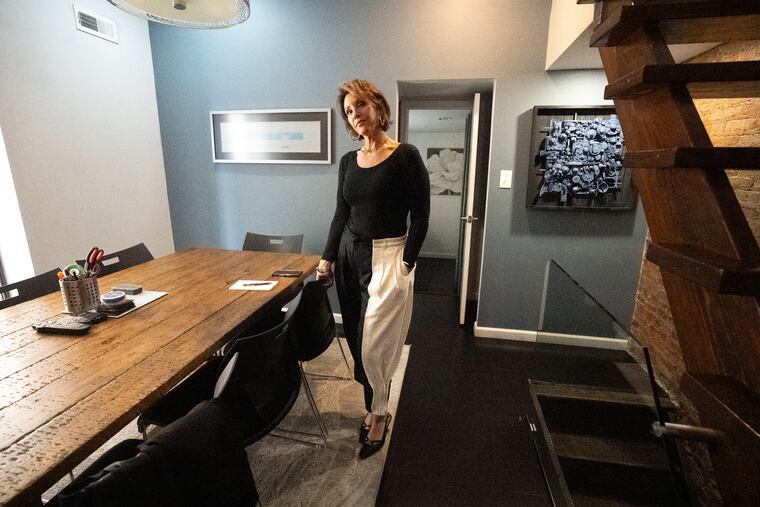
Debra Andrews’ marketing firm, Marketri, gets mail and phone calls out of a Market Street address in Center City. But none of her employees work in the Philadelphia area. Neither does she.
When she started the business in 2004, having a small office in Doylestown gave the new firm a feeling of “legitimacy,” she says. But she gave up the space in 2008 when she learned the building would be converted into homes.
“I only really at that time had one employee based in Philly and decided, well, let’s just do this remote,” said Andrews. Now she has 15 employees working across 11 states.
The share of employees working remotely in Philadelphia has declined, according to U.S Census data, and several large employers in the region have been pushing for more in-office time. But for employers that have remained remote, some are finding that it can provide positive returns.
For Andrews, offering remote work has allowed her to hire the best person for a role regardless of where they live, but it doesn’t mean workers get to set their own hours — they’re expected to be on from roughly 8:30 a.m. to 4:30 p.m. in their time zones, she says.
“We run very much like a normal business, we just happen to work from our homes,” said Andrews.
‘An empty building is not a problem’
Coming out of the pandemic, some businesses in the area have downsized their leased office space. Both Philadelphia and the suburbs are experiencing high office vacancy rates.
The National Board of Medical Examiners (NBME), which has been based in Philadelphia for over 100 years and owns a building on Market Street, redesigned its space to have more collaborative areas and fewer offices, as the organization committed to allowing more remote work. It’s also leased part of the building.
“An empty building is not a problem — it’s a challenge to solve. It’s not a reason to bring people back,” said Janelle Endres, NBME’s vice president of human resources.
The nonprofit creates tests for healthcare professionals, and employs about 575 people, most of whom are in Pennsylvania, Delaware, New Jersey, and Maryland. Prior to the pandemic, NBME offered a hybrid work model to most employees, and it has since “doubled down” on remote work, said Endres, adopting a “remote first” approach in 2024 — as many other employers were stiffening or increasing their requirements for in-office work.
Staff was as productive or more so when working remotely during the pandemic, and employees appreciated the setup, Endres said. Going back to pre-pandemic work norms could have created “an employee satisfaction problem,” she said.
» READ MORE: Philadelphia has strong job growth – but not in industries that help fill office vacancies
Some 60% of NBME employees are eligible for remote positions and choose to work remotely. Others chose to be hybrid.
“Nobody’s raking in big bonuses here, so we have to think about: What are the things that really set us apart and make us a unique employer?” said Endres. “Work-life balance and flexible schedules [are among] those things.”
In exchange for flexibility, Endres said, “We expect that you will contribute in really strong ways, that you’ll perform well, that you’ll give back just as much as we’re giving.”
“Give the people what they want, and they’re going to be like, ‘I better do a good job. I don’t want to lose this job,’” Endres said.
But committing to a remote workplace didn’t mean “everyone’s just automatically happy,” said Endres. The organization plans some in-person days throughout the year as well as digital programming to foster culture, said Jenna Mierzejewski, manager of employee experience.
» READ MORE: Philly office workers have settled into hybrid ways, but the office evolution isn’t over yet.
Endres acknowledged that NBME has encountered some instances where an employee seems underproductive or distracted: “We say that’s a management challenge. That’s not a remote-work challenge.”
Remote work ‘before it was cool’
Casey Benedict, CEO and founder of Maverick Mindshare, says her agency has been remote since “before it was cool.”
She has a P.O. Box in Malvern so she doesn’t have to list her home address as her business location. Beyond privacy, it’s also for professionalism, she said.
“It’s to create a little bit of a buffer between home life and business life,” said Benedict, who leads an agency focused on influencer marketing that has been remote since it launched in 2010.
She wants her staff to feel like they can attend to their personal needs, whether that’s picking up a child from the bus stop or going to a doctor’s appointment, says Benedict. She has three employees who are “core to the organization.”
“They can fully show up when they have more ownership and more control over the other parts of their lives that may pull them away from their desk,” she said.
Allowing that kind of flexibility avoids conflict, she says. And, it pays off for the company.
“The result is my team really does overdeliver and they enjoy what they do,” said Benedict. “They bring so much of themselves into it because they know that the structure is set up in a way to support them fully.”
Losing the commute
Three years before the pandemic started, three of Wendy Verna’s employees asked if they could work remotely. They told her there wasn’t enough in-person collaboration to make the commute to their South Street office worthwhile, she said.
Verna, president and founder of marketing firm Octo Design Group, initially said no. But six months later, they started trying out remote work.
“It wasn’t working for me,” said Verna, a self-ascribed “type A” person who likes to get out of the house and go to work. But she stuck with it because her employees were happy, and the remote setup worked for the company.
Ultimately she figured out why she was miserable leading a remote team. “It was a control thing for sure,” she said. “I felt like, if I don’t know where you are, what are you doing?”
She has established clear expectations for what remote work should look like at her firm. Cameras should be on for video calls, and employees should be ready to work during business hours, she says. And if employees plan to be out of town, they should let Verna know so she can determine how in-person tasks get done.
“They’re at home, but they cannot look like they rolled out of bed, because it’s just not my brand,” said Verna.
Verna is in the office three to four days a week, but 98% of the time, her five full-time employees, who live in the Philadelphia area, work remotely.
While she and her company have adjusted, Verna is still concerned about what employees lose by working remotely.
A commute can be useful to prepare for the workday in the morning or process the day in the evening, she says. During pandemic-related office closures she would walk around the block a few times before and after work to get a similar effect.
“When they sign off and you’re working from home, you run downstairs, well, all of a sudden, you’ve got chicken in the oven,” said Verna. “You don’t have time for that kind of debrief to yourself.”
She’s also concerned about how the remote lifestyle will affect young people looking for jobs, saying, “You’re only as good as your network.”
“This remote work is eliminating role models, and is eliminating mentors,” Verna said, “because I can’t mentor you behind a screen.”