As restaurants struggle with costs, a major food supplier deal raises new fears
Restaurant Depot is a lifeline for small businesses. Many hope its sale to industry giant Sysco falls through.
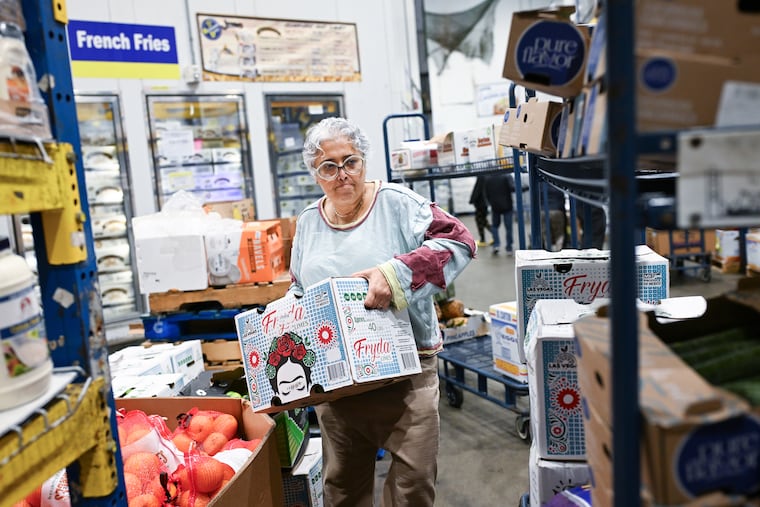
About two months ago, Dina Daniel made the difficult decision to raise prices on about 70% of the dishes at Fava Pot, her small chain of Egyptian restaurants. The chef and owner worried about alienating customers but felt she had no other choice after seeing the cost of ingredients skyrocket at the Jetro Restaurant Depot in Alexandria, Va., adding hundreds of dollars to the weekly shopping bill for her three shops in the Washington area.
Daniel is among the countless independent operators who rely on Restaurant Depot’s 167 low-cost warehouses to stock their pantries and walk-ins every week. But since the Iran war started in February, Daniel has experienced sticker shock at the wholesaler: She paid 63% more for ground halal lamb compared with last year, according to receipts forwarded to the Washington Post. She saw a similar percentage increase in the price of canola oil. The cost of fresh tomatoes soared from $17.94 for a case in April 2025 to $76.92 a year later, a more than 400% surge.
Further complicating her future costs: In March, food service distributing giant Sysco announced plans to buy Restaurant Depot for $29.1 billion in cash and stock. Like many small-restaurant owners, Daniel is dubious that Sysco, which controls about 18% of the market and relies on high-volume accounts, will have her best interests at heart. She expects further wholesale increases — with ripple effects on restaurant prices and budget-conscious diners who ultimately pay those costs.
Daniel’s dire forecast is based in a kind of contemporary cynicism: The Egyptian native has listened to President Donald Trump’s promises to lower costs, only to face continued rising gas prices. She’s lost trust in a system where the big just get bigger.
“I don’t believe promises anymore from big people,” she told the Washington Post. “Of course they’re not buying it to help small businesses.”
But in an interview with the Post, Kevin Hourican, chief executive of Sysco, said these kinds of worries are misplaced. “I can’t possibly be more clear about this. We will not raise prices at Restaurant Depot, hard stop,” Hourican said.
The purchase still faces federal regulatory approval, but just the prospect of it has fractured the hospitality ecosystem into two distinct worlds. One is a group of independent operators, antitrust reformers, and at least one state agriculture commissioner who say the purchase could decrease product choices at Restaurant Depot, lead to higher prices for chefs and in turn diners, narrow sales opportunities for U.S. farmers, cause more restaurants to close, and potentially flatten America’s restaurant culture into some Sysco-branded monolith.
The other contingent is more bullish on the deal. This group includes some analysts and business executives — including those at Sysco and Restaurant Depot — who say the sale could be a boon for the industry. They say that it could greatly increase the number of Restaurant Depot locations, especially in smaller markets not currently serviced by the company, and that it could expand, not limit, product choices. They say the purchase could generate thousands of new jobs across the country.
Relying on purchasing efficiencies, the Sysco sale “could lead to lower prices,” David Henkes, senior principal at Technomic research firm, said recently on the “A Deeper Dive” podcast. “Lower prices are good for operators. It may not be good for other members of the distribution business or even manufacturers.”
Yet many independent restaurant owners are worried the deal may alter the way Restaurant Depot conducts business. The Post talked to seven such operators. None expressed enthusiasm for the deal. “It’s a consolidation of distribution, right?” said Gus May, co-founder of La Tejana, a breakfast taco shop in Washington. “So then basically they’ll have a monopoly and raise the prices.”
Founded in 1976 by Nathan “Natie” Kirsh as Jetro Cash & Carry, Restaurant Depot has become a major supplier for small operators who don’t have the purchasing power to negotiate better prices from large food service distributors, such as Sysco, known as “broadliners” in the industry because they carry a broad line of products. Restaurant Depot’s prices are significantly lower than those at Sysco, multiple people say, up to 20% cheaper.
But there’s a reason Restaurant Depot and similar companies are known as “cash and carry” businesses. Unlike with Sysco, which delivers goods directly to a restaurant or hotel, operators must wander the sprawling Restaurant Depot warehouses to track down their own products, stacking each one onto a two-tiered metal cart for checkout. They then have to use their own vehicles to haul the goods back to their restaurants. It’s a time- and labor-intensive process, and the scene inside a Restaurant Depot can often be chaotic, as operators push around their carts, barely pausing to let others pass.
The hassle, however, is worth it to many small operators who are already dealing with inflated costs across the board that contributed to the closure of nearly 10,000 independent restaurants last year. (Washington alone saw more than 200 restaurants and taverns return their liquor licenses in 2025, which usually signals a closure). The savings offered by Restaurant Depot — routinely $10,000 or more a year for operators — can mean the difference between staying open and closing for good, said Erika Polmar, executive director of the Independent Restaurant Coalition.
Operators’ “panic is very real, and that is the message that we’re taking to the [Federal Trade Commission]: These restaurants, these incredible businesses that are cornerstones of their local economies, are thinking about closing because they just can’t bear one more increased expense,” Polmar told the Post in an interview.
The IRC has been soliciting its 54,000 members about their relationships with Restaurant Depot, and the organization plans to submit its findings to the FTC in hopes of scuttling Sysco’s planned purchase. The coalition argues the deal is the “largest proposed merger in U.S. food service distribution history,” creating a combined company that will dominate both the broadline delivery and cash-and-carry wholesale channels, according to a draft fact sheet shared with the Post. The group argues that the purchase would violate Section 7 of the Clayton Antitrust Act of 1914, which prohibits any acquisition that “may substantially lessen competition.”
The combined company, the IRC says, would be larger than the 2013 proposed merger of Sysco and US Foods, which the FTC argued would violate antitrust laws. After a U.S. district court granted the FTC’s request for a preliminary injunction, Sysco and US Foods withdrew their plans to merge. Both Sysco and US Foods are broadline delivery companies that compete for market share.
Federal regulators will have to determine whether Sysco’s proposed purchase of Restaurant Depot would limit competition, even though the companies operate in different supply channels. The IRC argues that many of its members use Restaurant Depot as leverage to negotiate lower prices from Sysco.
But Hourican said there is only about a 10% overlap between Sysco and Restaurant Depot customers. More to the point, Sysco wants to keep Restaurant Depot as it is, he said. The company is a cash cow: Restaurant Depot generated about $16 billion in revenue last year, according to Sysco’s acquisition announcement, with nearly $2 billion in “free cash flow,” or the amount of money on hand after covering operating expenses. That will help Sysco cover the $21 billion that the company will have to raise to finance the purchase, Hourican said.
The business will be run separately from Sysco, he said. Restaurant Depot’s leadership team will remain under the guidance of Richard Kirschner, its chief executive. They will make the decisions, including store locations and prices. Sysco doesn’t plan to even add its name to Restaurant Depot.
“It would hurt our business if we raised prices,” Hourican told the Post. “That customer would go to BJ’s, Costco, Sam’s Club, Walmart, other cash-and-carry choices that are out there. There’s no financial benefit to us in doing that.”
Stanley Fleishman, executive chairman of Jetro Restaurant Depot, said he was “superconfident” that Sysco would not mess with the company’s product line or its pricing structure. “There’s no way they would pay this full price if they were going to destroy the business,” Fleishman said about raising prices. “It would be such a bad thing for them to screw with our model. We’ve been so successful on every level.”
This corporate optimism, however, is not shared by everyone. Sysco stock dropped $12 per share to $69.30 on the day the acquisition was announced. (The stock has partially rebound to around $74 per share.)
Some operators said recent history may not bode well for the acquisition. They pointed to US Foods buying Smart Foodservice Warehouse Stores in 2020 and renaming it Chef’Store, only to try to sell the cash-and-carry company four years later so that it could focus on its broadline business. (In a statement to the Post, US Foods said the company still believes it is not the “right long-term owner” for Chef’Store. “For the foreseeable future, however, we plan to retain and continue to grow and improve the business while serving our customers well.”)
But other operators talked about their previous experiences with Sysco: During the pandemic, Rebecca Masson, the founder and chef behind Fluff Bake Bar in Houston, said Sysco trucks would frequently show up hours late with deliveries, showing no remorse. Thomas Costa, chef and owner of the North Plank Road Tavern in Newburgh, N.Y., recalled a conversation in which his then-Sysco sales representative suggested the representative was wasting his time because the tavern’s account was so tiny compared with, say, a hotel. Others mentioned they can’t work with Sysco because the company requires minimum orders, which can be too large for mom-and-pop restaurants that may not have the storage or volume of customers to handle so much product.
Their experiences reinforced an idea expressed by Costa: It’s easy for small, independent restaurateurs to feel sidelined by a corporate giant such as Sysco. “They do not care about the little guy,” he said.
Yet Hourican said Sysco is already thinking of ways to help customers who rely on Restaurant Depot. Sysco wants to lower costs, through the company’s purchasing efficiencies, he said, and create loyalty programs for frequent users of the warehouses. “It’s bringing more affordability to more consumers, to more restaurants, and growing our business profitably as a result of doing those things,” the executive said.
On a recent Friday, as Daniel and her Fava Pot business partner, Chris Samuels, pushed around four carts at the Restaurant Depot in Alexandria, she noticed that the price of fresh tomatoes had dropped to $29.95 a case. It was still $12 higher than a year ago but well below the price tag from earlier this spring. It was a small victory for a chef and owner who’s watching every penny. At 57, Daniel is looking to retire in the next 12 months or so and hand over her business to Samuels and his brother, Stephen. Whatever happens with Restaurant Depot would probably fall on them.
Daniel held out little hope that if the sale is approved by regulators, Sysco would leave Restaurant Depot alone. Sysco only cares about the money, she said. “They are not a charity.”