Main Street is doing better than the headlines suggest | Expert Opinion
Despite tariffs, inflation, labor shortages, and other challenges, small businesses are doing pretty well this year, and many are expanding, Gene Marks writes.
Wars. Inflation. Tariffs. Labor shortages. High interest rates. Political uncertainty. If you only read the headlines, you’d think America’s small businesses are on life support. They’re not.
The sentiment I’ve been hearing and seeing from dozens of industry groups and clients about this year is “so far, so good.” This comes from businesses that do everything from distributing industrial equipment to installing commercial doors. With few exceptions, most have not only been holding their own in 2026, but they’ve been growing.
Anecdotal? Hardly. The data supports these claims.
Manufacturing in the U.S. has expanded for the past five months, reaching its highest level since 2022, according to the closely watched Purchasing Managers Index from the Institute for Supply Management. Service industry companies, according to a similar index, have seen expansion since 2024.
In June, small-business revenue increased in 11 of 12 sectors and in all eight U.S. regions, according to a small-business index published monthly and based on real-life data from hundreds of thousands of customers using Intuit QuickBooks. Payment processing firm Fiserv found that small-business sales showed steady short-term expansion in June, with both nominal sales and transaction volume increasing. Last quarter’s national GDP was just revised from 1.6% to 2.1%.
The U.S. Census Bureau reported that new business applications continue to come in at all-time highs. Even LinkedIn said that there’s been a 69% year-over-year increase in the number of U.S. members adding founder to their profile.
Want more proof?
Despite lower levels of optimism, over half of Main Street owners rated the health of their business as “excellent or good,” the National Federation of Independent Business reported this month. A recent survey from financing firm OnDeck said 93% of small businesses expect growth in 2026, and marketing firm Vistaprint said this month that 84% of small-business owners report being happy operating their businesses, despite ongoing economic and operational challenges.
Bank of America’s June 2026 Small Business Checkpoint said the small-business sector remains “financially healthy and operationally resilient.” MetLife and the U.S. Chamber of Commerce found strong confidence in business health, cash flow, and future growth prospects despite ongoing concerns about inflation, labor costs, and economic uncertainty.
Three out of four U.S. small-business owners expressed “high confidence” in their business’ future, according to new research from Capital One. TD Bank’s recent survey said that small-business owners also remained highly optimistic about future growth.
Economist Mark Zandi recently wrote that among the 25 largest metropolitan areas in the country with populations of more than 3 million, Philly enjoyed the strongest job growth last year. Payroll firm ADP reported that the private businesses in the U.S. added 122,000 jobs in May and 98,000 in June. HR giant Paychex said small-business hiring increased over the past four months.
Job openings among small businesses are rising, an indicator of demand for employees.
“Main Street job openings in New Jersey and nationwide are starting to pick up after a decline in May,” National Federation of Independent Business New Jersey state director Eileen Kean told ROI-NJ.
Center City, which represents 42% of all Philadelphia employment, has seen office leasing activity reach its highest level in six years, according to Center City District’s State of Center City 2026 report. The report also highlighted development projects topping $2 billion; projected Convention Center attendance exceeding 1 million in 2026; and retail, restaurants, and cultural institutions that “continue to rebound strongly.”
There are always news reports about how this business is “struggling” and that business is “barely holding on.” There’s no denying that this happens. How could it not? There are more than 34 million small businesses in the United States operating in hundreds of different industries and localities. Some are bound to be doing better than others.
But other things happening right now are underscoring small-business growth and optimism.
Tariffs (that aren’t being refunded) may have increased costs for some, but many manufacturers are reporting increased domestic demand as global firms move more operations here.
Inflation is sticky, but at less than 3% excluding energy, most business owners have found ways to pass these costs down to their customers or find other savings internally.
Labor shortages persist but most company owners are getting their work done regardless.
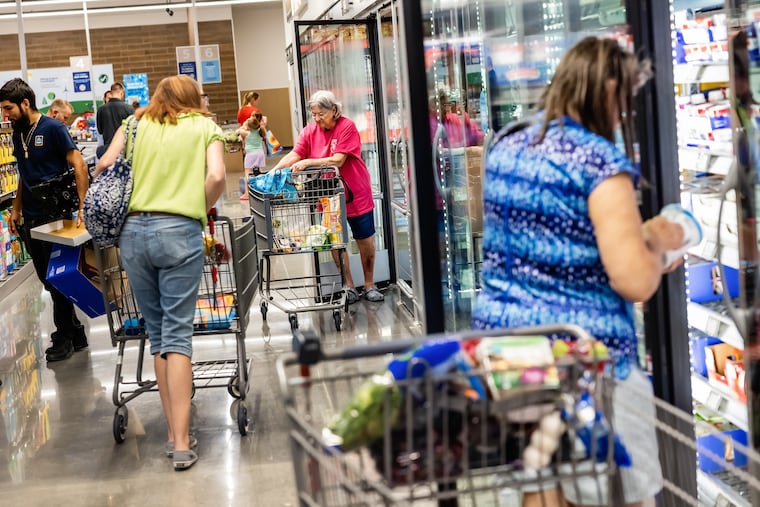
And consumer spending is strong, according to recent data from the National Retail Federation.
Oil prices are now back down to prewar levels.
Many owners are also benefiting from a lighter federal regulatory environment and friendlier tax policies. Capital is more expensive than in years past, but available for those who can measure return on investment. The stock market is up over 20% over the past year, providing more financial security. And for entrepreneurs and small-business owners, government aid and other resources, education, tools, and support proliferate like never before.
Small businesses employ half of the country’s workers and make up half of our GDP. Their success is critical for the U.S. economy.
They aren’t ignoring the challenges. They’re simply finding ways around them. And that’s why, despite all the doom and gloom, many are having a surprisingly good year.