Are European supermarkets actually better and cheaper than American?
Prices, food variety, disposable income, and shopping habits all play into the differences between stores on either side of the Atlantic.
There’s a 16th-century fort perched on the harbor in A Coruña, Spain, along with miles of mosaic-tiled pedestrian streets and charming glass-enclosed balconies, called galerías, fronting the city’s 18th-century apartment buildings. Yet, during a visit last summer, I found myself in Gadis Supermercado perusing shelves stacked with dozens of varieties of hyperlocal extra-virgin olive oil and potato chips in myriad flavors, from ham and cheese to caviar.
Just like the tourists gushing over their overseas grocery store finds in viral TikTok videos, I was struck by the high quality of the food and seemingly low prices. Four hundred grams of the biggest oyster mushrooms I’d ever seen for just over two euros, or about $2.50. Almond milk for less than two euros per liter (about one quart). Cans of locally produced craft beer for 65 cents each.
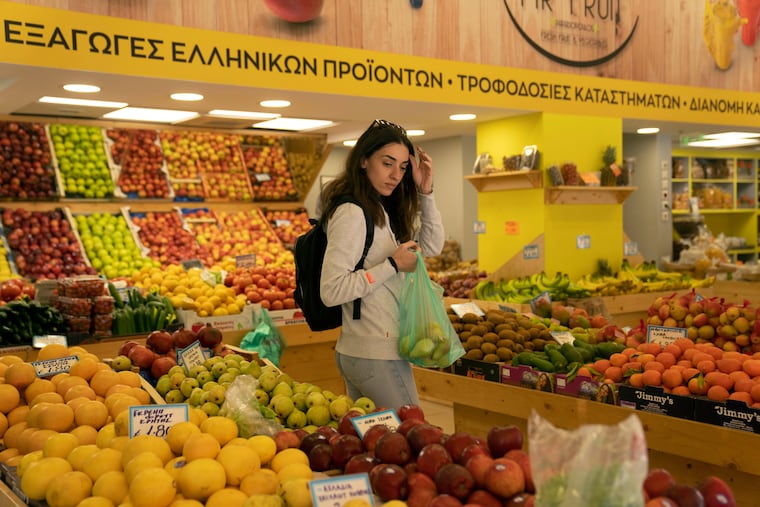
But it wasn’t just the prices — or the piles of fresh globe artichokes, as big as cabbages, winking at me insouciantly (six for two euros) — it was the sheer joy that Europeans proudly expressed for their food. At Carrefour Market, a large French food retail chain, signs proclaimed “C’est locale!” on hundreds of items across all departments. In Portugal, shoppers disdainfully ignored a crate of shiny fresh cucumbers grown just a few kilometers away in Spain. At every stop on my journey, food felt like a cause for national pride, not just a source of caloric intake.
Jessica van Dop DeJesus, an American expat living in Brussels, concurs. “Compared to the U.S.,” she says, “the relationship people have with food in Europe is completely different. When it’s white asparagus season, the supermarkets advertise like Beyoncé is in town. It’s like, ‘White asparagus is here!’ and everyone lines up to buy it.”
But is the European Union’s food actually of better quality, and cheaper, than what is available in the United States, where high food costs remain a political flash point? It’s complicated.
“Comparing the cost of anything across countries is a tricky business,” says Ricky Volpe, a professor at California Polytechnic State University specializing in the economics of food retailing. “The U.S. is the world leader in disposable income, so if you go by that measurement, then technically food is cheaper in the United States. The devil is in the details.”
The grocery geography gap
Those details are often dictated by commerce as well as culture. “We really rely on a global food system in the U.S.,” notes Heather Garlich, senior vice president of communications at FMI, The Food Industry Association, “so we have a different experience here than in Europe.”
The difference in prices, however, can go either way. For instance, bananas grown in the Canary Islands might be selling in a Spanish supermarket for about $3.50 per kilo (about two pounds), while bananas in the U.S., usually grown in Central or South America, clock in at a little over $2 for the same amount. In the U.S., where shoppers have come to expect an upcharge for certain types of meat, two antibiotic-free, boneless, skinless chicken breasts may cost nearly $9 in a big-box store, while they’re priced for the equivalent of less than $5 in France, where you’re also more likely to come across locally sourced products.
Free trade in the E.U. allows for a single market among its 27 member states, meaning that San Marzano tomatoes, Seville oranges, and Swedish lingonberries can be sent across borders without being subject to tariffs. The shorter shipping distances and emphasis on local producers can sometimes add up to lower prices and fresher products, especially seasonal produce and regional dairy, eggs, and proteins.
For American shoppers, the vast majority of fresh produce available in supermarkets may have been shipped thousands of miles, even within the country. Whether it’s broccoli, eggplant, grapes, parsley, strawberries, or walnuts, California grows nearly 50% of all the vegetables in the U.S. and more than three-quarters of its fruits and nuts, according to the California Department of Food and Agriculture’s statistics for 2024. Americans are accustomed to having access to pretty much any kind of food year-round, and with a higher disposable income per capita, they are often willing to pay for it, even when the prices go up — though they might buy just one avocado instead of two.
The disposable income factor
The role that the gap in disposable income plays doesn’t ring true to Ashton Schottler, who grew up on a farm in Illinois and now lives in southern Germany’s Black Forest region. Using her Ph.D. in human geography, Schottler explores how governments and politics affect culture, society, and the economy, posting social media videos on topics such as the “Big Mac index” and, yes, whether Europe has better food than the U.S.
“I often get comments from people saying that Americans have the highest disposable income,” Schottler says, “but the funny thing about it is that, on paper, Germans do have lower disposable income — but Americans still have to use their disposable income to pay for things that Germans have already paid for [through federal social programs], like healthcare, childcare, and long-term care.”
Expats Sue Reddel and Diana Laskaris learned after moving to Portugal four years ago that their perception of food in Europe being cheaper was tied to the larger purchasing power of an American income compared with the local cost of living. The average annual salary in Portugal is about 20,000 euros, or about $23,000, while the U.S. average income is over $63,000, according to the Bureau of Labor Statistics.
“There was a myth propagated years ago that people should move to Portugal because it’s so cheap,” quips Laskaris, “but the truth is that if you drink a lot of wine, then you’ll basically just save enough on the cost of wine to pay for the exorbitant rent.” Some foods may indeed be less expensive, but a lower salary means that groceries eat up more of a family’s budget.
The prices and shopping experience are by no means universal across Europe. This was painfully evident in the E.U.’s poorer Balkan countries in early 2025, when activists called for boycotts of large grocery retailers to protest rising prices, resulting in millions of euros in retail losses and forcing supermarkets to woo back customers by cutting prices on common food items, including dairy and meat.
“The price of food has increased dramatically in all countries of Europe in recent months,” says Rose Costello, editor of European Supermarket Magazine in Dublin. “For those of us in the wealthier E.U. countries, we grumble but absorb the costs by cutting down on extras and buying more store brands.”
How culture shapes shopping habits
Where Schottler lives, in Freiburg, a town of about 250,000, locals shop daily for freshly baked bread, and the surrounding region produces so many apples, eggs, and other basic food commodities that prices remain affordable, even with recent upswings in inflation. With smaller houses and, therefore, smaller refrigerators, people shop for food every day or two as they need it. At farmers markets, it’s often possible to purchase a single stalk of celery rather than an entire bunch.
Back in the United States, there are signs that American shopping habits are taking on more of a European influence, according to Laurie Demeritt, CEO of the Hartman Group, a market research firm. “At a high level, Europeans shop more often, and we’re starting to see that evolution in American society as well; there’s less of an insistence on one-stop shopping. Fresh food is a big opportunity and also a big Achilles’ heel — people want food that hasn’t traveled as far, and there’s a regionalistic component of wanting to support producers in their local area. At the same time, only a small percentage of American shoppers are truly willing to eat with the seasons.”
Even van Dop DeJesus is not completely immune to her American upbringing, despite having lived in Europe for years. When she’s missing some of the international products that she’d commonly find in U.S. supermarkets, or craves fresh fruit in winter, she’ll drive with her family from Northern Europe to Spain for the weekend — with a cooler in the trunk of the car. “I did a lot of grocery shopping there,” she says.