South Korea’s president and Trump aides to visit Philly Shipyard as Hanwha seeks U.S. work
The visit is set to take place as Hanwha aims to get more shipbuilding work in Philadelphia and increase employment.
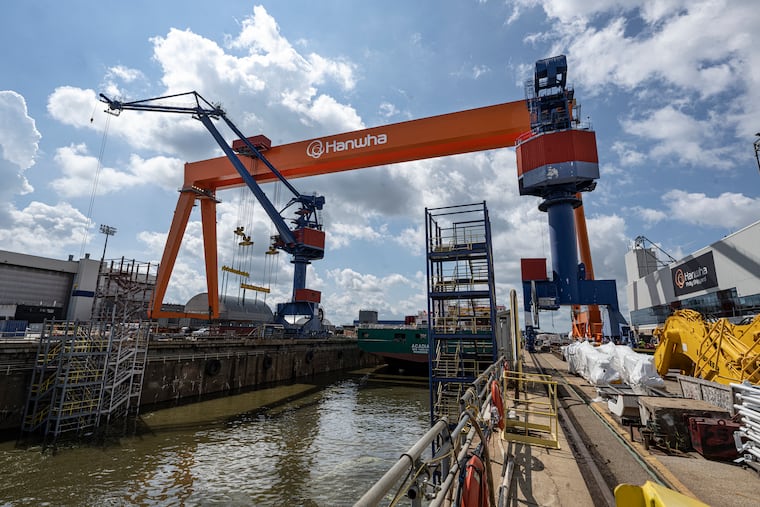
South Korea’s new president, Lee Jae Myung, and two of President Donald Trump’s cabinet secretaries will visit Hanwha Philly Shipyard next week as the two nations negotiate trade, investment, and military contracts that Hanwha hopes will help more than double employment at the nation’s busiest commercial shipyard.
The visit is set to follow a Monday meeting between Lee and Trump in Washington, the Transportation Department and Hanwha confirmed.
In Philadelphia, Lee is expected to be joined by U.S. Transportation Secretary Sean P. Duffy, Labor Secretary Lori Chavez-DeRemer, and Sang H. Yi, acting boss of the U.S. Maritime Administration, as they help christen the State of Maine.
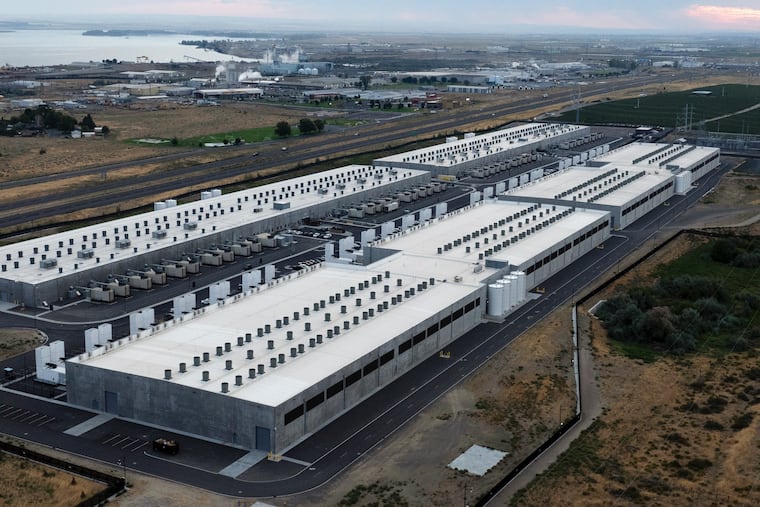
The multiuse ship was based on Korean plans, built in Philadelphia, and destined for a New England merchant marine academy that prepares cargo-ship officers. It is the fourth of five ships that Maritime Administration contractors ordered from what was then Aker Philly Shipyard in 2020. That work helped boost employment from near zero to the current 1,700, the most since the Navy closed the Philadelphia Naval Shipyard on the site in 1996 amid post-Cold War cost-cutting.
The Philadelphia yard has built more ships than any other for use between U.S. ports under the Jones Act, which requires U.S.-built ships for those cargoes. But a lack of steady orders has made it tough to keep workers busy.
Hanwha officials say their company hopes to expand the Philly yard, so it can build and maintain its own fleet of cargo ships while outside orders are slack, and help guarantee new trainees permanent employment, reducing the instability that has plagued the industry and made recruiting a challenge.
The planned visit “is a symbol of economic cooperation and strong trust between Korea and the United States” and will help cement the “MASGA project,” Joong Keun Song, former head of the Korean Association of Greater Philadelphia, wrote Friday in a social media post, in Korean.
MASGA stands for “Make American Shipbuilding Great Again,” a Trump-administration initiative that includes billions in South Korean investment commitments for U.S. ships.
Pressure to appeal to Trump
China is the world’s leading shipbuilder, which has concerned U.S. policymakers amid the nations’ growing economic and military rivalry. South Korea is second largest.
Hanwha’s yard in Ulsan, South Korea, was built by predecessor Daewoo and is one of the world’s biggest, with four giant Goliath cranes, compared with one in Philadelphia. It has many more dry-docks for simultaneous ship construction.
Analysts expect Trump this week will pressure Lee to pay more for the upkeep of U.S. forces in his nation, a longtime U.S. ally. When he was elected in June, Lee was seen as less close to the U.S. and more open to China than many of his predecessors. But trade talks last month and South Korean industry’s pursuit of U.S. business have pressured Lee to strengthen his appeal to Trump.
Increasing production
The Hanwha industrial group, which in 2024 purchased what is now the Hanwha Philly Shipyard, is aiming to increase production from 1½ ships a year to at least 10 a year by 2034. To that end, Hanwha Philly hopes to boost its staff, currently 1,700, to over 4,000, and expand its facilities beyond the heart of the former Navy Yard by winning U.S. government, military, and civilian shipbuilding contracts.
To do this, Hanwha leaders also hope to get federal government funding for facilities and training, under programs Trump has championed to resurrect U.S. shipbuilding.
Hanwha, meanwhile, is training a new generation of young and second-career welders, shipfitters, and other skilled laborers.
Workers at Hanwha and the neighboring Rhoads Industries and Navy propeller facilities are represented by a council of metal trades unions. The largest at Hanwha include the Boilermakers and Operating Engineers.
Last spring, Hanwha said it plans to spend more than $70 million rebuilding a former dry dock, currently used as a pier. David Kim, who runs the shipyard for Hanwha, says the company is also considering other Delaware River properties where it could expand.
The company wants to do work on Navy submarines, drones, and other craft. Hanwha also wants to eventually build liquid natural gas (LNG) carriers in Philadelphia.
Overall, the hoped-for expansion of the yard would boost sales of Philly-built ships to $4 billion annually from less than $400 million in 2024, Hanwha told analysts earlier this year.
Rejuvenating shipbuilding
Hanwha also hopes to build unmanned vessels for the U.S. Navy and has been updating Sealift fuel and ammunition transports. The U.S. Navy has encouraged seagoing drone development, as the Ukrainian Navy’s success using drones against ships in Russia’s Black Sea fleet feeds worries that U.S. aircraft carriers and other expensive surface ships have become much more vulnerable, even obsolete.
Hanwha, its Washington allies, and lobbyists have approached the Navy about moving ships in its “mothball fleet” out of the Reserve Basin at the center of the former base to another U.S. location, so adjoining docks and sheds could be used for shipbuilding.
Shipbuilding in most countries has been a money-losing business that requires government contracts and subsidies to compete with low-cost, high-volume, China-based shipbuilders, which in recent years have accounted for more than half of world ship construction.
Worried about U.S. dependence on ships built and managed by China, a bipartisan group of Congress members earlier this year reintroduced the Shipbuilding and Harbor Infrastructure for Prosperity and Security (SHIPS) Act.
SHIPS and Trump’s Executive Order 14269 would set up a government Maritime Security Board to implement a federal strategy coordinating U.S. ship construction and subsidies. A Maritime Trust Fund would use tariffs, plus fines on Russian and Chinese vessels used to ship U.S. cargoes, to pay for shipyard improvements. The Coast Guard would take charge of imposing fees designed to drive trade to U.S. cargo ships.
SHIPS would also allow tax breaks for U.S. shipyard improvements and ship construction, subsidize training for maritime workers and students entering Merchant Marine schools to serve as U.S. cargo ship officers, and use Department of Defense funds to repair Navy and Coast Guard ships in commercial yards.