Judge orders contractor to pay $175 million for the W hotel’s construction going ‘off the rails’
The same judge previously found that Tutor Perini Building Corp., one of the country's largest building contractors, caused yearslong delays to the construction of the Center City hotels.
Some delays are longer, and more expensive, than others.
A Philadelphia judge ordered one of the country’s largest building contractors to pay $174.7 million for delaying the construction of the W and Elements hotels by more than 2,797 days.
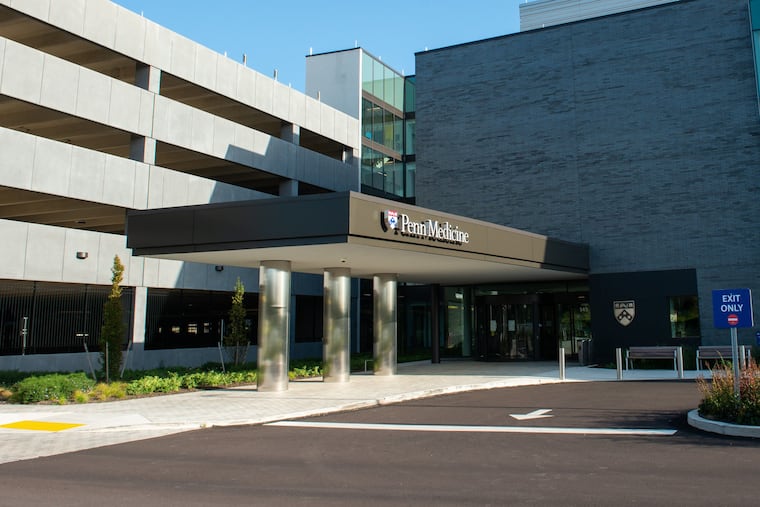
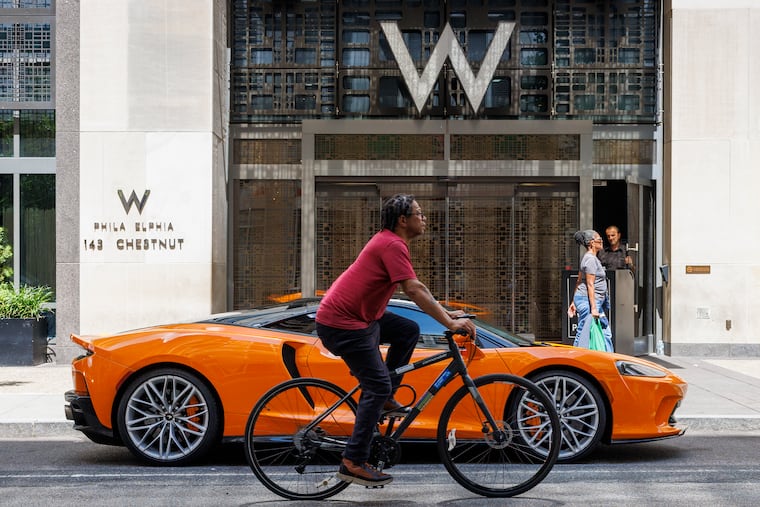
The W hotel opened in 2021 at 15th and Chestnut Streets, three years after its intended opening date, and it still cannot be fully occupied because some window vents are inoperable.
But when Chestlen Development LP, the owner of the site, retained California-based Tutor Perini Building Corp. as the development’s construction manager in 2015, the agreement required the contractor to obtain a certificate of completion for the project within 1,017 days initially, a deadline later extended to August 2018.
Each day of delay came with a $35,000 penalty plus interest.
“To date Tutor Perini has not obtained a Certificate of Substantial Completion for the W/Element Hotels, and no evidence was submitted to the contrary — that Tutor ever achieved Substantial Completion as contractually required," Philadelphia Judge James Crumlish wrote last week.
» READ MORE: W hotel set to open, joining hospitality sibling Element in Center City highrise
The judgment against Tutor Perini comes nearly five months after Crumlish ruled that the company caused the project to go “off the rails,” and brings 25 lawsuits that the judge earlier called “a challenging behemoth that made any effort at resolution impossible” closer to an end.
Chestlen was awarded $125.5 million for the delays with interest, $18.2 million for out-of-pocket construction costs, and $31 million in damages.
The judgment “should teach a lesson to contractors who think they can act like Tutor Perini and run over the top of a owner,” said Peter C. Sheridan, chair of the construction practice at the Los Angeles-based law firm Glaser Weil, which helped represent Chestlen.
“Contracts are not guidelines, they’re contracts,” Sheridan said. “It’s not pirate law. It’s actually what the parties have agreed to, and so they should abide by it.”
An attorney for Tutor Perini did not respond to a request for comment.
Botched concrete job
The agreement between Chelten and Tutor Perini capped the cost of construction of the W at $239 million and required completion within 1,017 days after April 2015.
From the outset, Tutor suffered “chronic turnover of its personnel,” Crumlish’s 2025 opinion said, resulting in the loss of “institutional knowledge of key decisions.”
When it was time for a different subcontractor to install the hotel’s wall-window systems, they immediately noticed a “big problem,” according to the judge’s memo. In many places, the concrete wasn’t level or did not meet the elevation requirements in the design.
Tutor pushed back, denying that there was a problem, while quietly attempting to grind the edges of the concrete slabs to address the issue.
While denying the issue, Tutor hired outside advisers to evaluate the concrete work. But they confirmed the problem, too.
As summer 2018 began, it was clear that the project would not be completed by the extended August deadline.
In September 2018, Tutor asked Chestlen for an extension, which the owner rejected, saying the request came “months if not years after some of the concrete issues started to become apparent,” according to Crumlish’s memo.
The remediation of the floor began in April 2019 and was completed that October.
The building finally obtained a certificate of occupancy in April 2021. But Marriott couldn’t open the W until that August because more than 100 window vents were inoperable because Tutor failed to follow the design.
Crumlish concluded in November that Tutor breached its contract when it failed to oversee the concrete work and the window-wall installation and generally didn’t fulfill its obligations.
“What I think distinguishes this case is the magnitude of the bad faith of the contractor,” Sheridan said. “I really have not seen this level of hidden information and old-fashioned misrepresentation conduct by a contractor on this scale.”
The award does not mean the case is over, however.
There will be a trial in May, where Tutor will have an opportunity to argue that the burden should be shared with, or shouldered by, its concrete subcontractor, Bucks County-based Thomas P. Carney Inc. Construction.
The judge has indicated that he would hold off on entering a final judgment until that trial. After that, Tutor will still have the option to appeal the decision. If the company does, the case would go to Superior Court.
“From my experience, at least in the Philadelphia market, this has got to be one of the highest construction awards ever,” said Blank Rome’s Jonathan Korn, who also helped represent Chestlen.
The project was developed by Brook Lenfest, son of former Inquirer owner H.F. “Gerry” Lenfest, whose foundation continues to own the newspaper today.