Do-it-yourself founder built Gentell into a global wound-care maker
Gentell has plants in the U.S., Canada, Brazil, Paraguay, England, China, and New Zealand and expects to sell around $300 million in wound dressings this year.
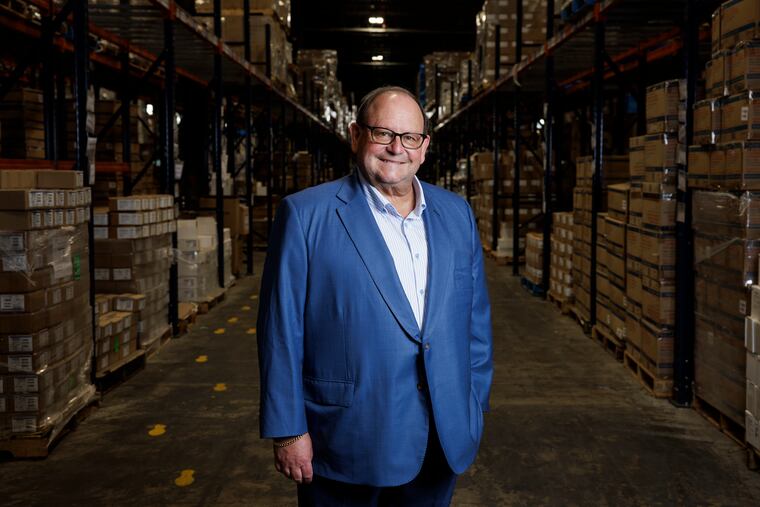
David Navazio didn’t get far with his accounting studies at La Salle University: He dropped out in 1982. Then he found a job selling medical equipment and started scouting products he could make and sell himself.
Gentell, the Newtown, Bucks County-based firm he set up, now employs around 1,000 at plants in the U.S., Canada, Brazil, Paraguay, England, China, and New Zealand and expects to sell around $300 million in wound dressings and services this year. That’s roughly 10% of the value of similar products sold by the world’s pharmacies.
Customers include a third of the 15,000 U.S. nursing homes, according to the privately owned company’s lead outside investor, Steve Fishman, of Philadelphia-based ZAC Management Group.
While a salesperson, Navazio was intrigued by a wave of then-new wound dressings based on plant cellulose, animal gelatins, fruit pectins, and algae, as well as traditional woven bandages, for the fast-growing population in U.S. nursing homes to treat bedsores, cancer-scar infections, and limb wounds that afflict diabetics.
He noticed that big medical-products companies were leaving small specialty producers to develop products and treatment plans and decided he could do that, too.
In 1994, Navazio bottled a product called Odor Eeze, with the antimicrobial hydantoin, in his Bucks County garage. He paid a marketing agency to come up with the name Gentell, suggesting “gentle” healing, with a variant spelling Navazio saw as an asset in what was then the new world of internet searches. He added blister treatments, gel inserts, and wound cleansers.
Gentell has grown as Navazio expands a sales force and clinical service staff to serve nursing homes, hospitals, and other manufacturers and distributors. Backed by $39 million from Fishman and his investor group, who own 70% of Gentell, and lately by Regions Bank, Gentell has built a global network via acquisitions:
On July 14, Gentell said it bought ManukaMed, which makes honey-based wound dressings — approved for payment by Medicare and U.S. insurers — and ManukaMed’s New Zealand export plant, Kansas City warehouse, and Franklin, Tenn., offices.
On June 5, Gentell said it bought Casex, a maker of ostomy and wound-care products, and its factories in Brazil and Paraguay, serving clients in Latin America and other regions.
In 2022, Gentell bought Integra LifeSciences’ Dermasciences factories in Toronto, Canada, and Nantong, China, along with many of Integra’s wound product lines, and its agreements to make dressings for hospital and nursing distributors, and for Integra. Gentell then moved its U.S. manufacturing from its smaller Bristol, Bucks County, plant to Integra’s larger Canada complex. It operates warehouses in Bristol and 17 other locations.
Gentell combines fabrics and liquids into wound dressings for its clients and as a contract manufacturer for drug distributor Cardinal Health and other major brands. Lately, the company has expanded into enterals — liquid nourishment delivered through feeding tubes.
“I like David. He’s hired great people, and they’re making money,” Fishman said. “If you make money, there will always be people interested in you.”
The role of wound data
But Navazio says Gentell’s special value isn’t manufacturing commodities: It’s collecting wound data and using it to recommend treatments to frontline healthcare workers.
“There’s not one magical dressing. It doesn’t need to be expensive,” Navazio said. “The characteristics of the wound should determine your treatment. You need to choose efficiently and apply it simply.”
To “choose efficiently,” Gentell has collected software records of millions of wounds at the 5,000 nursing homes and 177 hospital and doctors’ practices it serves and incorporated the information into its in-house query and order system, now marketed as Gentell Fastcare 2.0.
Wound records are updated “till it heals,” Navazio said. Data is collected, with patient names stripped, and outcomes recorded to guide future treatments.
Gentell’s customer base and records are “larger than any hospital system or insurance company wound database,” Navazio said. “You can ask our data, ‘I have a wound in my left thigh, bleeding, what should I do?’” It will pair the wound to products that have healed similar wounds.
“I’d like to make this system available outside the company” in dozens of languages and currencies, he said.
Why nursing home chains work with Gentell
“Wounds are one of the biggest areas of concern in nursing homes,” said Kimberly Biegasiwicz, a former floor nurse who is now chief executive at Avante Group, a family-owned Florida chain of 11 skilled-nursing homes that uses Gentell dressings and services. “Cancer patients, diabetics, chronic-respirator patients, come in with substantial wounds. They can have five or 10 diagnoses.”
“The nurse has to assess a wound and determine the best course of treatment,” she said. “So we need good partners.”
Gentell “is multifaceted. They are an extra set of eyes. They provide supplies — and clinicians that round our centers on a monthly basis, meeting with our wound-care physicians, teaching our nurses how to treat the wounds, and helping identify better treatment plans."
Navazio’s company bills individual patients’ insurance, including Medicare, for some of the cost, a help to the nursing homes, which have small profit margins, she added.
“Wounds, along with falls, are high litigation pain points,” Biegasiwicz said. “When you have good outcomes, you reduce regulatory [complaints], and you reduce litigation. I can see why he’s growing by leaps and bounds.“
Expanding abroad
After more 30 years in the business, instead of slowing down, Navazio has expanded his travel schedule with the acquisitions.
“I never saw a CEO travel so much to watch the investments,” said Roberto Schahin, a medical-products veteran hired to head Gentell Brazil in 2023.
In July, Navazio convened top managers, including country heads, at Ristorante Lucca, his Italian restaurant in Bordentown Township.
Schahin was sent to Brazil to develop exports to Latin America’s largest country. Licensing was slow. Casex was already making products for Gentell, so Schahin and then Navazio met with the owners and bought the company.
“They were the only company in the field, and the market for technology education for wound care was untapped” in Brazil, Schahin said. “We saw the opportunity. Gentell is a very fast company in terms of making decisions. David’s vitality is amazing, and the team he has built. That is why we are growing rapidly.”
In the United Kingdom, Gentell has been awarded a series of wound supply and staff education contracts for division of the National Health Service, said Rupinder Singh, the former NHS official whom Navazio hired to run Gentell in the U.K.
He said Gentell’s wound education program has helped reduce infections, filling a gap for the cash-strapped NHS.
Focused private partners like Gentell can stretch resources and improve treatment, Singh said. The company started with 1,000 patients at two locations and will be at six places by the end of the year and 25 in the near future.
How big can Gentell get? Investor Fishman says he’s looking at potential acquirers — maybe one of the medical-supply giants, maybe a private investment firm.
After 40 years, Navazio says he isn’t planning his comfortable retirement: “My dream is to help make Gentell the wound supplier to the world.”