2026 Kia K4 Hatchback: Bigger and better than you’d think
Readers hearing about a small, under-$30,000 Kia could be forgiven for thinking “cheap, boring, and slow.” But the K4 GT-Line Turbo offers some space and power all while not leaving much out.
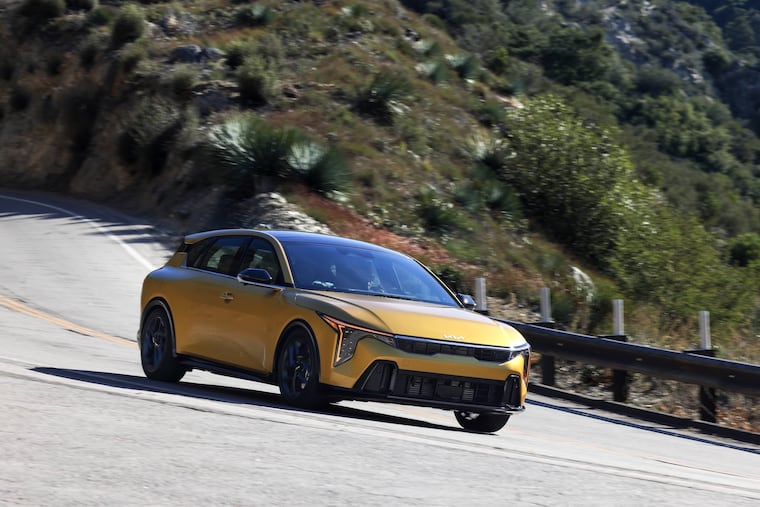
2026 Chevrolet Trax 1LT vs. 2026 Kia K4 Hatchback GT-Line Turbo: Battle of the low(ish)-payment models.
This week: Kia K4 Hatchback
Price: $32,770 as tested. A GT-Line tech package adds ventilated front seats, various collision avoidance features, surround-view camera, and more for $2,395. Heated front seats come standard.
What others are saying: “Highs: Attractively modern styling, adult-friendly back seat, high-value standard features list. Lows: Ho-hum handling, base engine lacks oomph,” says Car and Driver.
What Kia is saying: “Sculpted, sophisticated, and made to be seen.”
Reality: It’s attractive and does many things quite well, but does it beat the Trax?
What’s new: After the introduction of the K4 sedan for 2025, the hatchback joins the lineup this year.
The GT-Line has a turbocharged engine available that we tested here.
Competition: A surprising number of contenders still ride in the small-car club. In addition to the Trax, there’s the Buick Envista, Honda Civic, Hyundai Elantra, Kia Niro, Mazda3, Nissan Versa, Subaru Impreza, Toyota Corolla, and Toyota Prius.
Safety equipment: While the Trax offers forward collision alert, lane keeper with departure warning, automatic emergency braking, and following distance indicator, the K4 website only mentions the last three. It does note rear cross-traffic collision avoidance, so both are well stocked with features.
Up to speed: In lieu of the 2.0-liter four-cylinder engine in the standard GT-Line, this version gets a 1.6-liter four married to a turbocharger, giving the little hatchback 190 horsepower, 43 more than standard.
A 2025 model reached 60 mph in 7.3 seconds, according to Car and Driver. This is 1.5 seconds faster than the Trax.
But life on the road was quite nice, at least when minding your own business. The little hatchback kept up over hill and dale. But in passing maneuvers and in pulling into traffic, the K4 still fell a little short.
Shifty: Instead of the CVT in the basic model, this one gets an eight-speed shiftable automatic. It can be a little balky before the vehicle is warmed up, hanging onto lower gears for a concerning amount of time at first. Use that snazzy T-bar shifter if needed. Score one for Kia.
On the road: The K4 was bright and cheerful on country roads, nice even for a small front-wheel-drive car. It didn’t offer the kind of zig you might get from a Mazda or a Volkswagen, but it’s easy to go where you point it. This is a tie with the Trax.
Set speed: Kia and Hyundai cruise-control systems can occasionally have a mind of their own. On highways with concrete barriers and some traffic, the sensors hallucinate reasons to slow down, likely as annoying to other drivers as to Mr. Driver’s Seat. I’d be requesting a long demonstration with a salesman on this topic before I signed the papers.
Driver’s Seat: The seat feels a little on the small side. At about 5-foot-10, I’m fairly average, and I’ve driven a lot of small cars over the years, so the fact that I noticed this one is telling. Otherwise it’s quite comfortable and supportive, surprisingly so for the price point.
The dashboard is standard Kia, easy to use the steering wheel controls to scroll through your choices. This I’d call a tie as well.
Friends and stuff: Rear passengers get a comfortable seat that’s perfectly angled (but no recline). Headroom is good, legroom is really good for the size, and only foot room is a little snug. Strong advantage Kia.
Cargo space is 22.2 and 59.3 cubic feet, putting the Trax’s numbers in the middle of that. Kia wisely gives more space to the rear passengers.
In and out: It’s a bit of a step down into the K4, almost to sports car levels, so be prepared when you sit.
Play some tunes: The standard 12.3-inch touchscreen is a generous size for a small car, about half an inch bigger than the Chevrolet, and has the added bonus of a row of buttons across the dashboard underneath, allowing for easy maneuvering. A side row of icons and the home screen’s large icons help the process.
Sound from the Harman Kardon system (standard in the GT-Line) is OK, about a B+ or an A-. Kia would do well to put some more effort into their sound systems. A tie; Kia for size and usability, Chevy for sound.
Keeping warm and cool: The controls are a combination of simplistic and advanced that kind of works when you figure it out. A row of cheap-feeling plastic toggles blends into the cheap-feeling dashboard curves and those toggles adjust the temperature, fan speed, and blower setting.
Except … if you want all defroster, you have to hit the nifty, premium touch pad next to the infotainment screen. Same for the rear defroster. This extra touch pad pushes the dashboard blower down a bit, interfering with cooling. Trax wins this category.
Fuel economy: The K4 Turbo reported about 26 mpg in a mix of highway and secondary road trips, about par for the small-fast-car course. I thought this would beat the Trax by more than one tick, but alas, there’s a turbo to feed.
Where it’s built: Pesqueria, Mexico
How it’s built: Consumer Reports predicts the K4 reliability to be a 3 out of 5, a notch lower than the Trax.
In the end: Really, with two models that actually get you from point A to point B for under $30,000, either of these is a real winner. And even though the two mostly tied, the K4 does so many things better.
In the category, though, a little more scratch gets you a Corolla or a Prius, which are probably better bets in the long run.