March Madness is the best thing going in sports, still. Enjoy it.
The true draw and drama of the tournament, though, is not how the games are played but how they, and most teams’ seasons, end. The word that defines March Madness is abrupt.
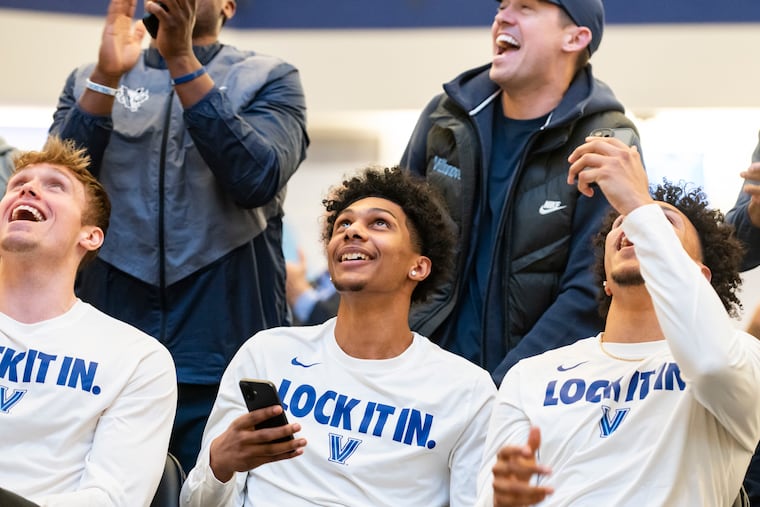
Kevin Willard, Villanova’s men’s basketball coach, described the NCAA Tournament on Tuesday as “the best tournament arguably in all of sports,” which is the sort of assertion that, especially at this time of year, passes through your mind without a second thought. Yes. Of course. This is March. This is the month during which college basketball goes from a niche sport to the biggest and best thing going in America — sports, culture, the whole schmear.
March Madness is a three-week, 68-team, single-elimination miracle. Everyone loves it. No one dislikes it. People might complain about the Super Bowl — the lousy, unfunny commercials, for example, or a particularly boring matchup, like in this year’s game — but you never hear anyone say, Man, March Madness just stinks. We don’t agree on anything anymore, yet we can agree that the NCAA Tournament kicks tail and always does, even when all the giants win and all the plucky would-be Cinderellas bite the dust early. March Madness is like pizza or sex or an Al Pacino movie. Even when it’s bad, it’s still good.
But why?
» READ MORE: Villanova has spent the last two days studying Utah State. What have the Wildcats learned?
It would seem an easy question with an obvious answer, but it’s really not. Sure, basketball fans all over the country get to gorge on those 32 first-round games on the tournament’s first Thursday and Friday. And a mid-major and lesser-known school that happens to pull off an upset or two, especially over a blue-blood program, becomes a national darling for a while: St. Peter’s knocking off Kentucky on its way to the Elite Eight in 2022, George Mason beating UConn to reach the Final Four in 2006, Eastern Michigan over Duke, Mercer over Duke, Lehigh over Duke. And there are always those players who excel in the tournament and, in doing so, either enjoy a few days of widespread fame or reveal themselves as true superstars. (Anyone who watched Stephen Curry lead Davidson to the regional final in 2008 knows what I’m talking about here.)
The true draw and drama of the tournament, though, is not how the games are played but how they, and most teams’ seasons, end. The word that defines March Madness is abrupt. There’s no best-of-seven series, like in the NBA or NHL or Major League Baseball, and there’s a pace, a quickening drumbeat, to a college basketball season that college football and the NFL don’t have. You play twice a week. You play one night after another over 72 or even 96 hours in a conference tournament. Then the NCAA Tournament starts, and it doesn’t matter if you’re a No. 1 seed or a No. 8 seed or any team just happy to be there. One lousy performance, one off night for your leading scorer, one random day when a No. 14 seed happens to play like the best team in America, and it’s all over.
It’s a fascinating psychological test for these relatively young athletes, and the new reality of college sports — that most of these relatively young athletes are now relatively young professional athletes — doesn’t change the test’s difficulty. How do you remain loose and relaxed and capable of playing at the top of your game all the while preventing yourself from letting the pressure overwhelm you?
“The lights are on; everyone’s watching,” Villanova center Duke Brennan said. “You can’t be scared of the moment. If you’re scared for a second in the moment, that’s where the ship could turn.”

Mike Sielski alerts
Villanova, the No. 8 seed in the West Regional of this year’s tournament, will play No. 9 Utah State on Friday (4:10 p.m., TNT). Those 8-9 games, to the casual observer, might seem the least interesting of the first round; they’re always between two teams presumed to be evenly matched. No big upset possible. But the dynamic that makes March Madness thrilling is still at play for the teams and the coaches and the players. You think you have a shot to make a deep run if things just break right for you, and maybe you do. And just as easily, everything could end on that first night under the lights. And when it does, it’s crushing.
“Losing is a deathlike experience,” UConn coach Dan Hurley said last week during the Big East tournament. “You can’t breathe. There’s no oxygen. You can’t stop replaying plays that caused the loss. Every time you lose, you just lost something. …
» READ MORE: Fran McCaffery, TJ Power, and the Penn Quakers are now the coolest story in Philly hoops
“I’ve heard Coach [Rick] Pitino say, ‘If we lose, I’m going to jump off a bridge.’ That’s what we feel like when we lose. It’s so personal. We work so hard. It feels like somebody died, even though we’re still alive. It’s so hard to bounce back from when you care so much, put so much of yourself into it.”
To put it a different way, you can’t have the glory without the grief, and you can’t have the best event in sports without both. Have a great month. It gets no better. It never does.