2026 Genesis GV80 Coupe: Fast and fun but not that comfortable
The sport-styled SUV with the V-6 turbo plus the e-supercharger is a jump from the regular GV80’s base price under $60K. Whether it’s worth it depends on your feelings about the cabin comfort.
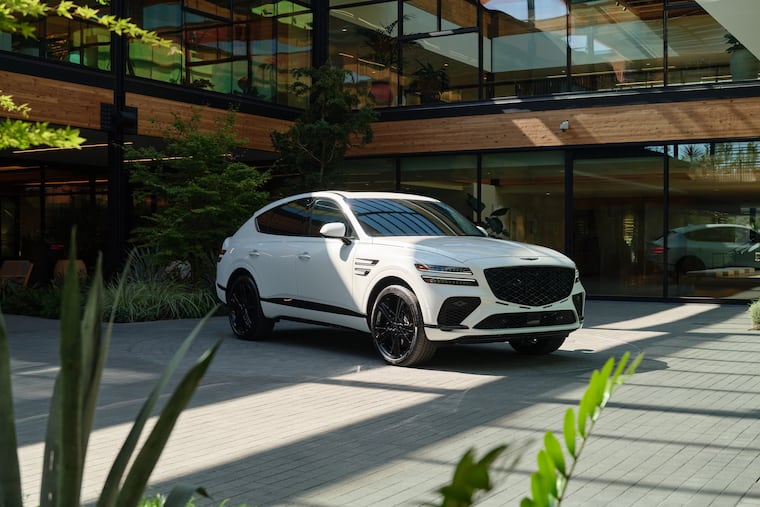
2026 Genesis GV80 Coupe 3.5T E-supercharger vs. 2026 Land Rover Defender 130 V-8 vs. 2026 Mercedes Benz GLE 450 4Matic SUV: Off-roading in high style.
This week: Genesis GV80 Coupe
Price: $87,780 as tested.
Conventional wisdom: Motor Trend likes the “gorgeous interior,” that it “retains rear headroom” and is “more luxurious than ever.” Reviewers panned that it’s “not actually sporty,” has a “confused personality” and “reduced cargo space.”
Marketer’s pitch: “The pinnacle of comfort.”
Reality: It has some high points, but comfort isn’t what I would market.
What’s new: The GV80 Coupe — essentially an SUV with some of the cargo capacity lopped off — joined the GV80 lineup for the 2025 model year. Some color changes and new trim levels have been added for 2026.
Competition: In addition to the Defender and the GLE 450, there are the BMW X5, Lexus RX, Lincoln Nautilus, and Toyota Land Cruiser.
Up to speed: Woohoo, that e-supercharger really works, dialing up the horsepower from the 3.5-liter turbo up to 409. Turn the dial to Sport+ and this baby gets off the ground; 0-60 takes 5.2 seconds, according to Car and Driver. It seemed faster.
Shifty: The eight-speed automatic transmission operates through the dial on the console — twist counterclockwise for Reverse or clockwise for Drive. It’s a nice setup that’s easy for back-and-forth motions when parking.
There’s no corresponding move for shift mode, though. Just use the paddles on the steering wheel and keep fighting the vehicle for control. I usually blinked first and just let it do the shifting for me.
On the road: The handling in the GV80 Coupe is almost as impressive as the acceleration. The sporty shaped SUV does nice on the slalom and has a lot of good road feel. The steering is nice as well.
The only drawback for me came on cornering. The GV80 had a lot of drift, and I had to slow down for the sharper movements.
Off the road: The GV80 gets a new terrain mode for 2026, with settings for snow, mud, and sand.
Driver’s Seat: The seat seemed quite hard, and the lumbar support seemed more like a kidney punch than a feature. I’m not sure I could live with this seat day to day. It really seemed as uncomfortable as the old Hyundai basic seats and not quite worthy of this fancy a vehicle, even covered in Nappa leather.
The fancy digital dashboard also leaves a bit to be desired. So many of the features are hidden by the steering wheel that it could be hard to know what was going on. The gauges are fine, though, and everything sure is attractive.
Friends and stuff: The rear seats offer nice amenities — power fold and lift, and power recline that provides quite a bit of choice.
Unfortunately, the low ceiling means headroom is less than plentiful — I still have a little space above my head but not much — and foot room is kind of snug.
Cargo space is 61.1 cubic feet with the rear seat folded and 29.3 when it’s upright, both numbers down about 15% from the regular GV80.
The GV80 Coupe can tow up to 6,000 pounds.
In and out: There’s a bit of a climb into the GV80, naturally, but you must have been expecting that.
Play some tunes: Sound from the system is delightful, an A+.
Operation uses either a dial or the touchscreen. A home screen shows all the possible places you can go and swiping to the right shows even more. It’s easy to use and to follow, even through the layers of nested elements.
Keeping warm and cool: Would that the HVAC were so easy to operate. It features simple dials for temperature but then the source, fan speed, and seat heater and ventilator icons are so tiny in their handsome little ebony touch pad, and it offers zero feedback. So there’s a lot of potential vehicle drift just to keep the air at the right temperature. I’ve been panning Hyundai for this left and right and will continue to do so.
There also seems to be a lot of thrust in the airflow, so it might not be everyone’s cup of tea. The Lovely Mrs. Passenger Seat was having none of it, lest her perfect hair get blown about.
Fuel economy: I averaged about 16 mpg, which is pretty pitiful.
Where it’s built: Ulsan, South Korea. The vehicle is made up of 85% Korean parts and 3% from the U.S. and Canada.
How it’s built: Consumer Reports predicts the GV80 reliability to be a 2 out of 5.
Next week: Land Rover Defender 130.