With every Iron Hill Brewery closed, what happens to all of the beer?
When Iron Hill abruptly shut its doors last month and filed for liquidation bankruptcy, some restaurants’ inventories included thousands of dollars’ worth of beer.
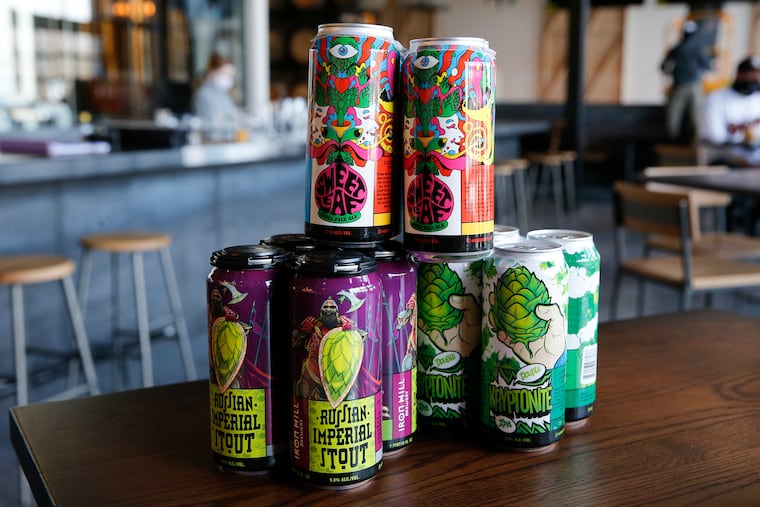
Matt Czapla has been stopping at Philly-area Acme and Giant stores, looking for Iron Hill beer.
But in the weeks since the regional chain closed all stores and filed for liquidation bankruptcy, he has had no luck getting his hands on their cans.
“I’ve been trying to track it down,” said Czapla, 42, of Springfield, Delaware County. “There is really nothing on the shelves.”
On Thanksgiving he’d like to drink Iron Hill beers with his dad one last time, he said.
Czapla is among the local consumers who have posed a version of this question in neighborhood Facebook groups and other online forums: Now that Iron Hill is bankrupt, what happens to all the beer?
When Iron Hill restaurants shut their doors on Sept. 26, some locations’ inventories included thousands of dollars’ worth of beer, according to documents filed in U.S. Bankruptcy Court in New Jersey. The Newtown, Bucks County, location alone listed as an asset more than $11,000 worth of beer, including more than $4,000 in cans, according to the filings.
» READ MORE: Iron Hill Brewery has officially filed for bankruptcy, saying it has $125,000 in cash and owes creditors $20 million
“I would hope they don’t just dump it. It’s not Prohibition,” said James Yoakum, an attorney with Philly’s Kleinbard firm who regularly represents clients in the craft beverage industry (but does not represent Iron Hill). “Where it shows up would be the question.”
Given that some front-of-house employees said they received no notice of Iron Hill’s closures, brewers likely did not get a heads up to wind down production, said Yoakum, who once owned Cooper River Distillers, a Camden distillery and cocktail bar that closed in 2018.
Iron Hill breweries “probably have beer at all stages. They probably have beer ready in kegs. They probably have some beer that is still fermenting,” Yoakum said. “It’s not their most valuable asset. … [But] I would hope that it gets sold to other bars that can put it on tap before it goes bad.”
The canned beer that Iron Hill produced in Exton has a longer shelf life, Yoakum said, and would be easier to get on the market if there is any staff left to physically distribute it. However, each state has its own third-party distribution rules, he added, and any sale of remaining cans now has to be approved by a bankruptcy judge. If OKd, the proceeds of any beer sales would go toward paying the company’s debts.
All of this will play out during the bankruptcy process, which Yoakum said could take anywhere from several months to just over a year.
What happens to Iron Hill’s food?
There’s probably much less food laying around, Yoakum said, since most restaurants get regular deliveries.
Former employees at several local Iron Hill restaurants said perishable food was taken home by employees, donated, or thrown away. One Center City worker said they were told the nonperishable items would be auctioned to other restaurants.
Jennifer Mondoro, who worked as a server at the Hershey location, noted that her former coworkers were able to donate some food to an organization that feeds children facing food insecurity. Former staff at that restaurant told local TV stations that they gave away a few thousand dollars’ worth of perishable food, which had been prepped the day prior, but had to throw away almost twice as much.
Jayson Shipp, who was a sous chef at the Voorhees and Maple Shade locations, told The Inquirer last month that he was concerned about the amount of food waste.
When the Voorhees restaurant closed, weeks before all locations shuttered, he said staff transferred some proteins, such as steak and fish, to other Iron Hill locations, and were instructed to toss the rest.
During the clean-out, Shipp said he filled two large dumpsters to the brim: “I threw out thousands of dollars’ worth of food.”