How to prepare your taxes for free and avoid identity theft
Warning: Don’t search the internet using terms such as “file my taxes for free”— you could end up on the website of a scammer.
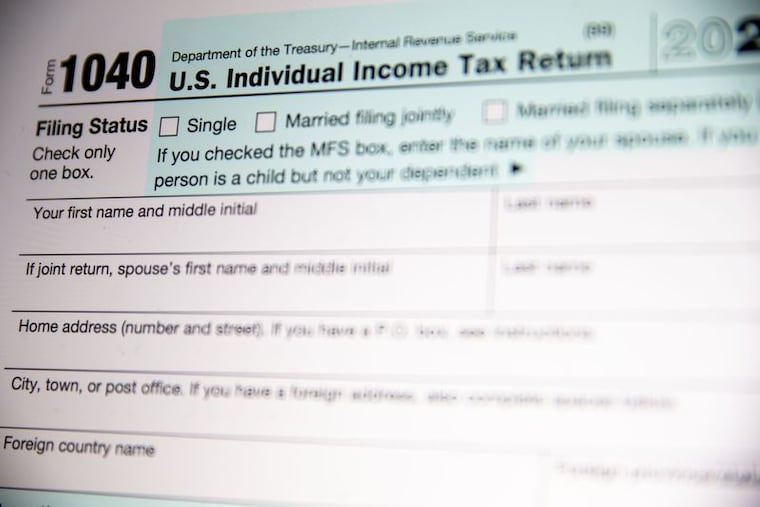
Each year, Americans spend an average of $240 to prepare and file their tax returns, according to the IRS Taxpayer Advocate Service. And the process is so complicated that about a million taxpayers who could get money back don’t file returns, allowing the U.S. Treasury to keep more than $1 billion of their money.
Many taxpayers can get free assistance preparing and filing their returns. Below is a rundown of available services, who is eligible, and how to avoid scams.
All these prep-and-filing options require you to track down documents and then enter or verify data. Fortunately, most websites are easy to navigate. Instead of filling out complicated forms and instructions, you answer simple questions, such as “Do you have children living with you?” and “Did you have interest income from a bank, savings, or investment account?”
Warning: Don’t search the internet using terms such as “file my taxes for free” — you could end up on the website of a scammer, or even a well-known tax-prep brand that will charge you hefty fees. Instead, use the links provided in this article, or go to irs.gov.
Free services from tax-prep companies
Several tax-prep companies provide free online resources for those with low- or moderate-low incomes.
“Free File” is a partnership between the IRS and eight companies (the IRS calls them “trusted partners”) to provide free tax preparation and filing services for individuals and families with adjusted gross incomes of $89,000 or less.
This year, the participating companies are: 1040.com, 1040NOW.net, ezTaxReturn.com, FileYourTaxes.com, FreeTaxUSA.com, OLT.com, TaxAct.com, and TaxSlayer.com.
In addition to the income threshold requirement, each company sets its own eligibility rules based on age, state residency, and other factors. Some companies charge fees to prepare and/or file state income tax returns. Click here for a list of participating companies and links to their eligibility requirements.
Although H&R Block and TurboTax, the most popular tax-prep software companies, do not participate in the IRS’s Free File program, they do offer free online prep-and-filing services to those with relatively simple tax returns. In general, you can use these two companies’ free options if you had wages reported on a W-2, had only one job, take the standard deduction, and are entitled to the most common credits, such as the child tax credit or earned income credit. H&R Block says 55% of taxpayers can use its free option; TurboTax estimates 37% can use its free online software.
Free tax-prep help for low-income taxpayers
The Volunteer Income Tax Assistance (VITA) program helps community organizations offer free basic tax preparation help, using IRS-certified volunteers, generally to households with adjusted gross incomes of $67,000 or less or to those with disabilities. Some programs specialize in assisting those who speak limited English. Selected help centers also have workstations where taxpayers can input info and electronically file their own tax returns with or without the assistance of an IRS-certified volunteer. Click here for a searchable database of VITA in-person-help sites.
VITA also operates GetYourRefund.org, a website offering free tax-prep software. It was built by Code for America, a nonprofit organization, with help from the IRS. To qualify, you must meet income requirements (in general, it’s limited to individuals and families with adjusted gross incomes under $89,000 per year).
Instead of meeting in person with a tax-prep volunteer, with GetYourRefund.org you upload your tax documents to its website and provide basic information. A VITA volunteer completes your return and then a second volunteer reviews it; you likely will be contacted several times with questions. It usually takes two or three weeks to complete the process.
If you don’t need any help, you can also use the website to file your return for free.
Free tax-prep help for older taxpayers
Similar to VITA, the Tax Counseling for the Elderly (TCE) program helps community nonprofits provide free tax help to older adults. In general, you must be 60 or older, but some sites will help those in their 50s with low-to-moderate incomes. The AARP Foundation’s Tax Aide program staffs most sites, and many advisers specialize in pension and retirement issues unique to seniors. Between now and April 15, use the AARP’s “Tax-Aide Site Locator” webpage to find nearby help.
At some TCE locations, you can prepare and file your own return on-site for free using tax-prep software and with help from a volunteer. This option is available only at locations that list “Self-Prep” in the AARP online site finder tool.
Free tax-prep help for military and recent veterans
MilTax is a free resource backed by the Department of Defense for service members, eligible family members, survivors, and recent veterans (up to 365 days from their separation or retirement date).
It includes tax preparation and electronic filing software, as well as personalized support from military tax experts. MilTax assists with issues involving deployments, combat and training pay, housing, and multistate filings. Eligible service members (and some veterans) can use MilTax to electronically file a federal tax return and up to three state returns for free. Get free one-on-one tax help from MilTax experts over the phone by calling 800-342-9647, use the live chat feature, or visit a VITA location for in-person help.
Protect against fraud
There are several steps you can take to protect yourself against tax-related identity theft.
First, don’t answer phone calls or respond to texts or emails that say they’re from the IRS. Its agents send all notices via mail; they won’t ever call you out of the blue.
Also, be on the lookout for warning signs of fraud. Monitor your mail. Most victims don’t realize they’ve been targeted until they send in their tax return and receive a warning letter from the IRS that more than one return was filed with their Social Security number, or that they didn’t declare all their income from a company they didn’t work for. Other IRS notifications that could indicate a problem: an online account that you didn’t open was created in your name, or you were assigned an employee identification number that you didn’t request.
A simple but effective way to prevent tax identity theft is to request an identity protection PIN (IP PIN) from the IRS. This unique six-digit number prevents anyone else from using your Social Security Number or individual taxpayer identification number (ITIN) to file a return in your name. It’s like freezing your credit files to lock out the bad guys. (Note: The IP PIN is different from the five-digit PIN you may use to sign your return electronically.)
It takes only minutes to create an IP PIN. You will first need to have or create an online IRS account or visit an IRS Tax Assistance Center. And you’ll need to obtain a new number each year.
Hundreds of thousands of Americans become victims of tax-related identity theft each year. Committing the crime has become easier because so much personal information has been exposed through massive data breaches. The average time to resolve tax-return-theft claims is nearly two years.
Delaware Valley Consumers’ Checkbook magazine and Checkbook.org is a nonprofit organization with a mission to help consumers get the best service and lowest prices. It is supported by consumers and takes no money from the service providers it evaluates. Until March 5, Inquirer readers can access Checkbook’s ratings and advice free at Checkbook.org/Inquirer/taxes.