A longtime Philly judge dying of cancer reflects on her career, the courts under DA Larry Krasner’s tenure
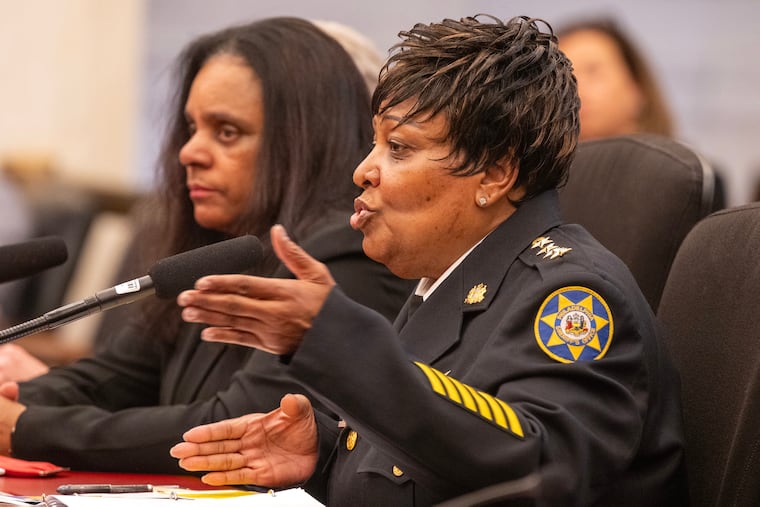
Common Pleas Court Judge Barbara McDermott, 70, retired this year after 17 years on the bench, mostly hearing homicide cases. She spoke about her life and career.
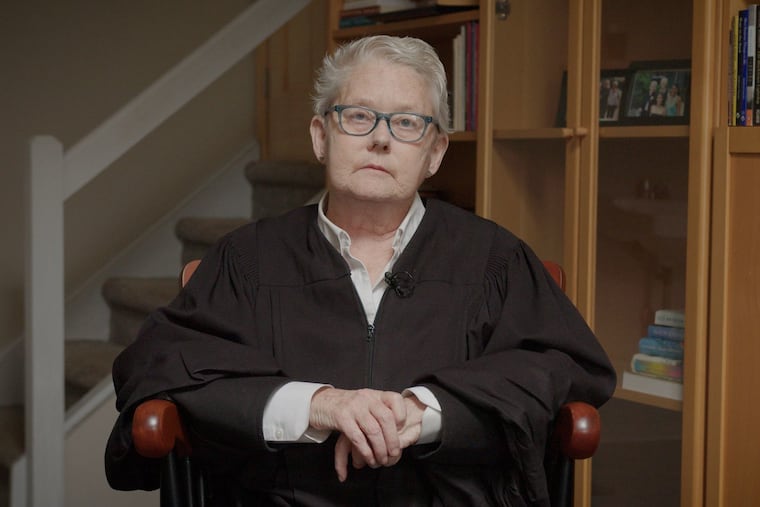
Over the last four decades, Barbara McDermott had spent nearly every workday inside the Philadelphia courthouse — first as a prosecutor, then as a defense attorney, and, finally, as a Common Pleas Court judge hearing homicide cases.
McDermott retired earlier this year after spending 14 years on the bench. She is battling a rare, terminal form of uterine cancer.
During her long career, she prosecuted, defended, and presided over hundreds of high-profile cases — killers, rapists, police officers accused of shooting fleeing men, and, most recently, the teens who killed a 14-year-old outside Roxborough High School.
She was known for running a tough and orderly courtroom, reprimanding — in an even-keeled, raspy voice — prosecutors, defense lawyers, homicide detectives, witnesses, and defendants alike.
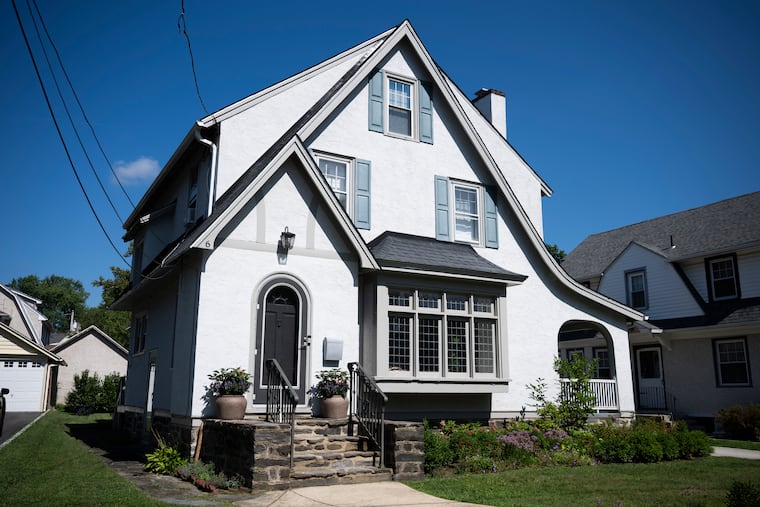
In an interview at her Northwest Philadelphia home, McDermott, 70, reflected on growing up poor in a steel mill town, then navigating the legal world as a gay woman. She spoke of the mentors who inspired her, and of watching the courts shift over the years as District Attorney Larry Krasner challenged the status quo. And she talked about motherhood, forgiveness, and preparing for her life to end.
This interview has been edited for length and clarity.
Tell me about your childhood.
I grew up in Aliquippa, a steel mill town in Beaver County. I was one of seven children. My dad worked in the steel mills, and my mother, one of few women in town with a college degree, worked at our Catholic school. I didn’t know we were that poor until I went to college.
I went to the Catholic regional high school, and everything they kept telling you was to find a husband or be a teacher or a nurse. This was the ’60s, when girls were starting to go to college. I always felt angry as a kid; I was just dismissed as a tomboy. I was never allowed to do anything. There were no sports programs, and I was fairly athletically coordinated. Girls could not play full-court basketball — only half-court. We weren’t allowed because we “weren’t strong enough.”
I ended up going to Seton Hill College, then an all-women university outside of Pittsburgh. This is where I learned about pastoral theology, about social justice. I was in charge of student government.
I went in thinking I was going to be a teacher and establish a chain of daycares — I’d probably be a lot richer now if I did — but then I realized, no, I’ve been gifted with a brain. I want to do something more than the tradition.
I ended up going to Georgetown Law.
When did you decide to pursue criminal law?
I learned quickly that criminal law was something I was good at. But basically, what it boiled down to was you have so much more power as a DA through prosecutorial discretion. I learned I’m not a really good beggar — I’m just not. I didn’t think I was as well suited to be a defense attorney.
I went to work for the attorney general’s office in a unit investigating toxic waste, and quickly learned the legal system was mostly an old males club.
There were very few women judges across the state. But there were women judges in Philadelphia’s Court of Common Pleas who were advocating for women and children, like Lois Forer and Lisa Richette. Lois was writing against mandatory sentences for crack possession before anyone else. There was Juanita Kidd Stout, Carolyn Engel Temin, Frederica Massiah-Jackson.
I wanted to practice around lawyers that were better, and I wanted to practice around a diverse bench.
I joined the Philly DA’s office in 1984.
But then I got to the homicide unit as a DA, and I didn’t believe in the death penalty. This was when Ron Castille ran the office, and I had some disagreements, so I left to become a defense attorney and started my own practice.
Which cases stick with you?
I defended a man who killed a Philadelphia police officer in a death penalty case, and had to argue for his life. The judge ended up preventing him from getting sentenced to death. But it taught me a philosophy, which is no matter how bad some of the things that we have done in our lives, there are very, very, very few people that do not have good in them, and most of the time when you see that evil, it’s mental health.
You mentioned raising kids during this time — how did that shape your work?
I adopted two biracial daughters in the ’90s, and raised them largely on my own.
Having kids in the Philadelphia public schools opened my eyes. It was too late by the time the kids came to me in a courtroom — I didn’t understand my clients when I first became a criminal defense lawyer, but I did after that.
You go into the school building, the fountains are turned off. They can’t get water. You listen to the aides hollering at them before school starts. These kids were treated so poorly. I’m like, I now understand this 14-year-old kid that’s been beaten down.
We beat those kids up, that generation, and then we expect them to be different.
You joined the Court of Common Pleas in 2012. How was that transition?
I didn’t want to do homicides because I had spent so much time doing homicides as a defense lawyer, and I felt like if you wanted to have an impact on someone’s life, it was in the lower levels of the courts.
But I was asked to become a homicide judge within the first six months.
I worked to develop a curriculum for the courts on how to treat transgender witnesses and victims, and I worked to get more women judges into supervisory roles.
I also worked to better educate and support jurors. We got money to give them breakfast, created a lactation booth, and mental health resources. Even the furniture in the jury rooms was so beat up. One week I was out of trial and I couldn’t stand it anymore, so I brought a sander in, and I said, my jurors are not going to sit in this. I sanded all the tables down, then stained and shellacked them.
Then someone complained to the administrative judge about the smell, which did linger longer than I thought.
What do you make of District Attorney Larry Krasner?
Look, Krasner had to make a decision: Did he want to be a reformer or a destroyer?
When he fired so many people, he lost institutional knowledge that could have helped him understand the history.
There’s a big difference in attorney quality now. There are fewer prosecutors with jury trial experience.
Do you have a piece of advice for Krasner, or for aspiring lawyers?
Krasner has to work on legislative change. He needs to eat some humble pie with the state legislators. There is room for a healthier relationship to get some of his reform provisions passed. That’s where I think his focus should be right now.
To young lawyers, if it’s not your passion, get out. Figure out if it’s a job or a career for you, and know the difference.
You have gotten some criticism from juvenile justice advocates who say you’ve given harsh sentences to young offenders. What do you make of that?
When there are cases in which the crime calls for a more severe sentence, the DAs under Krasner almost always leave it up to the discretion of the judge, rather than asking for a specific number of years. Like a case with multiple victims that calls for something more than the standard 20- to 40-year sentence, they usually won’t put something on the record.
Like OK, Larry, I’m gonna do what I’m gonna do. But you wuss.
Advocates don’t see a lot of what I see that I can’t put on the record, like juvenile arrests. Any time Krasner thought I was too harsh, he had the right to appeal, but he didn’t, so he’s agreeing with my sentences.
I’ll take the heat.
Are there any sentences you’ve second-guessed?
No. Well, every now and then you wonder, but there’s just no way of telling. I mean, part of it is you have to have a consistent judicial philosophy. I really tried hard to give the same type of sentence throughout my career.
After the U.S. Supreme Court ruled that juveniles couldn’t be sentenced to life without parole, you worked on resentencing many of the defendants. How was that?
Resentencing juvenile lifers was one of the most meaningful parts of my career. It exposed me to a tremendous amount of grace demonstrated by victims’ families. It also reminded me of the trauma to some victims, and we have to be mindful of how their lives were ruined. It showed the capacity for people to forgive.
I was a small part of that. I was just the listener. So, you know, the criminal justice system isn’t perfect. No one ever said it was. And I would like to believe that we’re better at knowing our vices, our racism, our homophobia.
Still, our bench is a pretty strong bench. It is reflective of our city.
We’re not perfect. We try.
Most of your career has been handling very challenging cases that deal with death and the worst things that happen to a person. Has that affected how you come to terms with your own mortality? Did the diagnosis affect how you approached cases?
No, the diagnosis gave me an appreciation for what I had. It made me realize you had a gift. You’ve had 70 years. You’ve had a life. Since my diagnosis, I’ve had two grandsons born, with the third one on the way that I’ll probably see.
I’m jokingly calling it my World Tour, where I get to see people and say thank you to those people that have made an impact on my life, and I have been exceedingly grateful to the people who have reached out to me. You just never know what you did that made an impact on someone.