A dark web drug trafficker was forced to forfeit nearly $25 million in Bitcoin after a Bucks County sale helped unravel his scheme
Zhengcheng Huang, who ran the dark web marketplace dubbed "Chinodrug," was also sentenced to 15 years in prison.
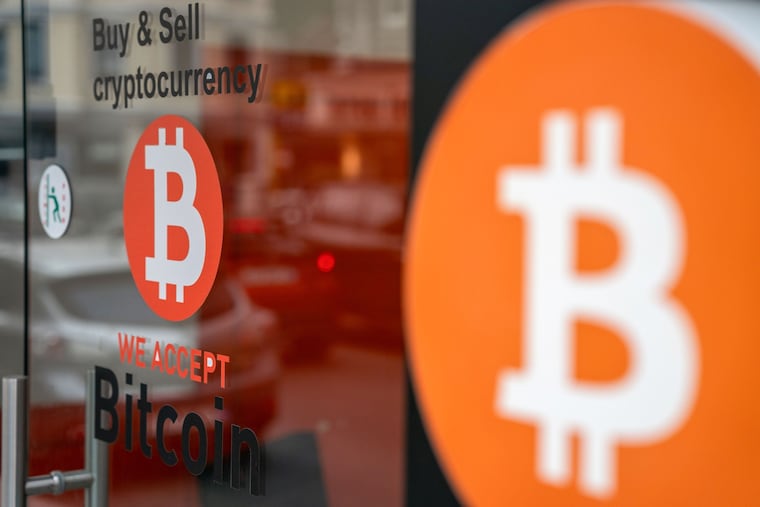
Zhengcheng Huang’s scheme was relatively straightforward, federal prosecutors said: Using the moniker “Chinodrug” on the dark web, Huang made illegal shipments of oxycodone to buyers across the United States, and typically asked to be paid in Bitcoin, which made the digital transactions harder to trace.
But after Huang pleaded guilty earlier this year to conspiracy to distribute oxycodone, federal prosecutors in Philadelphia moved to seize his illicit proceeds — and that kicked off a unique legal battle.
The typical fine for a defendant found guilty of the crime to which Huang admitted ranges between $500,000 and $1 million, prosecutors and Huang’s lawyers agreed.
And had Huang been paid in cash for his drugs, his lawyers said, the shipments he would have been responsible for overseeing would have generated about $1.7 million.
But because buyers paid in Bitcoin, and because the currency has been skyrocketing in value in recent years, the nearly 200 Bitcoins found in Huang’s digital accounts are now worth almost $25 million.
And the government moved to seize all of it.
His lawyers took a variety of steps to try to prevent Huang from having to forfeit his crypto fortune — arguing in court documents that he purchased some of the Bitcoins with legitimate money, that the value of the seizure was significantly higher than the amount of drugs he sold, and that the government’s actions amounted to a violation of his Eighth Amendment protection against excessive fines or punishments.
U.S. District Judge Michael Baylson disagreed and allowed the seizure to move forward.
In an opinion explaining his reasoning, Baylson compared Huang’s plight to that of characters in the 19th-century German operas from the Ring cycle, composed by Richard Wagner.
In the musical epics, Baylson wrote, characters obsess and compete over a magical ring forged from Rhine gold, which is ultimately used to help build a castle, dubbed Valhalla, that is destroyed in flames.
“Indeed, the great quantities of Bitcoin have neither been seen, touched, or held,” Baylson wrote. “No one knows for sure what will be the outcome of adventures in Bitcoin … and it may someday go up in flames just as Valhalla in Wagner’s opera.”
In court Tuesday, Huang apologized for his actions, telling Baylson: “I shouldn’t use people’s addiction to exploit [them] for financial earnings. I am sorry.”
Still, Baylson — a veteran judge and, before that, the region’s top federal prosecutor — said the case was “one of the most serious drug cases, in terms of quantity of drugs, that I’ve ever come across.”
In addition to approving the multimillion-dollar forfeiture, Baylson sentenced Huang to 15 years in federal prison.
“It is simply inexcusable for anyone … to conduct a drug enterprise of this size and over a lengthy period of time," Baylson said.
Huang’s oxycodone scheme began to unravel in 2022, court documents said, when investigators discovered that someone from Bucks County had been sending tens of thousands of dollars in virtual currency to a dark web marketplace, which the buyer later identified as Chinodrug.
On its vendor page, court documents said, Chinodrug advertised different quantities of Percocet and oxycodone for sale, saying products were shipped directly to customers using the U.S. Postal Service.
“Stealth packaging is always provided,” the Chinodrug page said, according to court documents. “Products are hidden inside a decoy item.”
Prosecutors said that Huang, a native of China and legal permanent resident of the United States, maintained his supply of pills near his home in northwestern Washington, outside Seattle, but that his shipments reached buyers in states including Pennsylvania, California, Michigan, New Hampshire, and Florida.
After speaking with the Bucks County buyer, prosecutors said, investigators found a Stamps.com account linked to Chinodrug that was responsible for about 15,000 shipments.
And later, court documents said, a witness gave a federal agent information about a Bitcoin account that Chinodrug had used to make a payment. That allowed authorities to trace the crypto trail back to Chinodrug, and ultimately to Huang, who they discovered possessed about 200 Bitcoins.
Prosecutors contend that all of Huang’s digital currency came from his time working with Chinodrug — a six-year time frame they said spanned from 2018 until his arrest in 2024.
But Huang’s attorneys said he joined the operation only in 2021, when he bought the Chinodrug online marketplace and began overseeing its shipments.
As a result, his lawyers said, he was responsible for only about $1.7 million worth of gross receipts — the equivalent of about 25 Bitcoins in today’s value.
In addition, they said, some of his 200 Bitcoins had been purchased with family money or cash he generated from income unrelated to drugs.
And they said seizing all of his crypto investments would be an improperly excessive punishment — one that would result in the government receiving nearly 25 times the amount Huang would have been subject to even if he faced the maximum fine for his crimes.
“No matter how one tries to justify it, that is grossly disproportionate,” his lawyers wrote.
But Baylson, in his opinion, said he was “not inclined to accept the premise” that he needed to accept what Bitcoin is worth in U.S. dollars, calling its value “highly speculative” and saying Congress has not recognized it as a currency of value.
“199.47 bitcoin could be worthless tomorrow, whereas $20 million of legal tender currency is much less likely to become worthless,” he wrote.
He also said prosecutors had demonstrated that Huang received the currency as part of his drug trafficking, and said its forfeiture was therefore “not ‘grossly disproportional’ to the considerable gravity of the offense.”
In court Tuesday, Huang’s attorney, Susan M. Lin, said Huang may seek to appeal Baylson’s forfeiture order, while prosecutors said that if it is upheld, they might move to liquidate Huang’s crypto holdings.
Baylson, however, seemed nonplussed by all the legal wrangling over the burgeoning currency’s potential value.
“It’s purely hypothetical based on chatter on the internet,” he said, “and I really can’t give it any credibility.”