Dozens more drug, gun cases tied to cops who defenders say ‘lied’ are thrown out. Some sent people to prison for years.
Prosecutors and defense attorneys are reviewing nearly 1,000 cases built on the testimony of three narcotics officers who officials say repeatedly gave false statements.

More than 40 drug and gun convictions were vacated Wednesday, the latest batch in what could grow to 1,000 cases tied to three narcotics officers who prosecutors say repeatedly gave false testimony in court.
Common Pleas Court Judge Rose Marie DeFino-Nastasi dismissed 47 cases — most involving defendants jailed because of their convictions — after prosecutors conceded that the testimony of three officers on the Philadelphia Police Department’s Narcotics Strike Force could no longer be trusted.
In December, the district attorney’s office said that Officers Ricardo Rosa, Eugene Roher, and Jeffrey Holden were found to have repeatedly given false statements in drug-related cases after attorneys with the Defender Association of Philadelphia uncovered video evidence that contradicted their accounts.
The defenders said the officers regularly watched live surveillance footage to monitor suspects in drug investigations, then did not disclose it to prosecutors or defense attorneys in court. The video footage showed they also testified to things that did not happen or that they could not have seen from where they were positioned, according to court filings.
Prosecutors later said that they could no longer vouch for the officers’ credibility and are expected to dismiss scores of cases built on their testimony in the coming months.
Nearly all the defendants at the center of the cases dismissed Wednesday were in custody, including several serving years in prison tied to their drug convictions.
Among them is Hamid Yillah, 34, serving four to nine years in state prison, plus two years’ probation, on gun and drug charges based on the testimony of Roher and Rosa, prosecutors said.
And Juan Lopez, 38, serving five to 10 years in prison on drug possession and conspiracy charges.
DeFino-Nastasi vacated their convictions and sentences.
Not everyone whose conviction was overturned will walk free. Some are also serving time for unrelated serious crimes, including murder and aggravated assault.
But many without additional arrests could be released as a result of Wednesday’s ruling.
The dismissals follow more than 130 convictions that were thrown out in December after prosecutors and defenders identified more than 900 cases built almost entirely on the officers’ word. Approximately 200 cases have been resolved so far.
The officers at the center of the case remain on active duty, but have been temporarily reassigned from narcotics amid an ongoing internal affairs investigation, said police spokesperson Sgt. Eric Gripp.
That investigation, which began in early 2024, remains incomplete because the district attorney’s office has not provided the department with the information necessary to complete it, he said.
The district attorney’s office previously said it provided internal affairs with details of the officers’ false statements last March. But Gripp said the records and evidence offered did not appear to show wrongdoing.
(Paula Sen, of the Defender Association’s Police Accountability Unit, said she and her colleagues have also provided internal affairs with a few dozen cases where the officers’ testimony did not match surveillance footage.)
Since the first batch of cases was thrown out in December, Gripp said, the department has followed up with the district attorney’s office for more information about the alleged wrongdoing, including the nine cases identified in court records in which the officers were said to have given false statements.
“To date, we have not been provided with those cases,” he said.
Gripp said that some of the cases discharged Wednesday involved dangerous drug dealers carrying weapons, and that narcotics officers risk their lives to make arrests.
“This work matters, and repeated dismissals without providing the department the information necessary to review and address the concerns does not advance officer accountability or public safety,” he said. “We continue to expect good faith cooperation from all partners in the criminal justice system. We remain ready to act immediately upon receipt of any substantiated information.”
The district attorney’s office did not immediately respond to a request for comment.
Prosecutors have stopped short of accusing the officers of lying, but said “there’s enough of a pattern of inconsistencies across testimony that we can’t rely on them as critical witnesses in court.”
Sen and Michael Mellon, of the defenders’ Police Accountability Unit, disagreed, and said the officers “straight up lied.”
Sen and Mellon said they first spotted a pattern of testimony discrepancies in 2019 while reviewing surveillance footage that conflicted with statements Rosa had made in drug cases. Over time, they said, they continued scrutinizing his narcotics squad and identified similar issues with testimony from Holden and Roher.
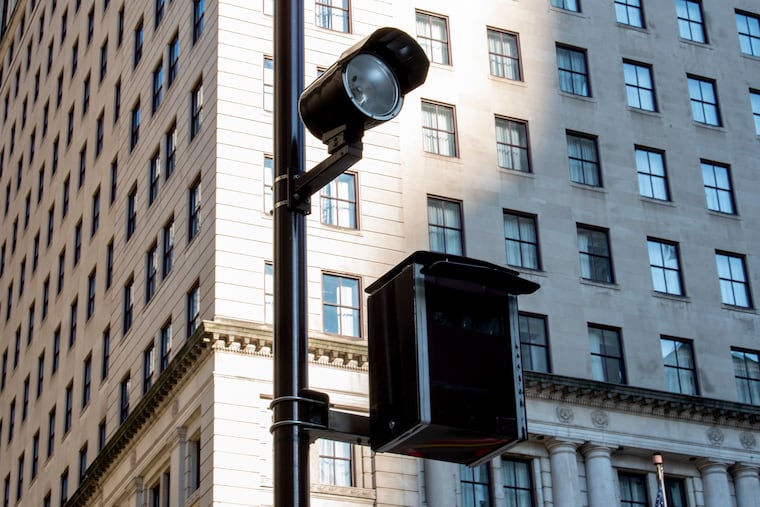
According to the defenders, the officers relied on the city’s surveillance camera network to watch suspected drug activity in real time but did not disclose that investigative method — withholding evidence that should have been turned over to the defense.
In court, Mellon said, the officers denied using the cameras and frequently testified that they personally observed hand-to-hand drug transactions. Video later showed those exchanges either did not occur or would have been impossible for the officers to see because the suspects were out of view.
Sen said her office sent letters to all of the defendants whose cases were being reviewed to let them know they might be eligible for relief.
Still, she said, the convictions often resulted in years of peoples’ lives spent incarcerated and on court supervision — time they cannot get back.
“We are not talking about big drug busts. We are talking about the lowest of the low cases, hand-to-hand drug sales … within a quarter of a mile radius of Kensington,” she said. “That’s what makes this especially egregious.”