Juror in the trial of Mark Dial speaks of how panel decided to convict officer of voluntary manslaughter
Mark Dial was convicted of voluntary manslaughter for killing Eddie Irizarry. The jury foreman said there were holes in the former officer’s story.

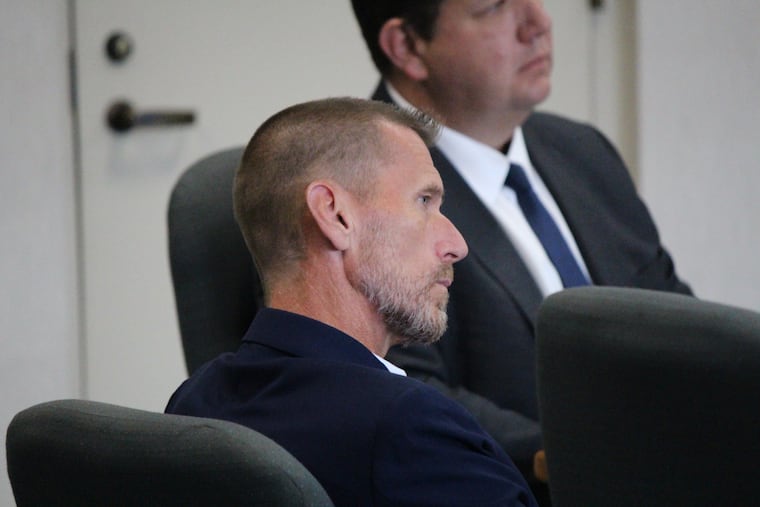
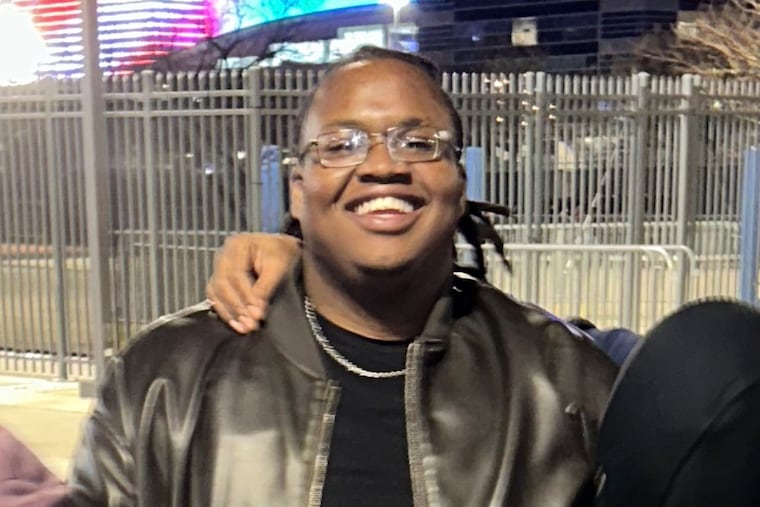
In the end, Mark Dial’s own testimony helped convict him of voluntary manslaughter for killing Eddie Irizarry in 2023, the foreman of the jury that delivered the verdict said in an interview Tuesday.
The former Philadelphia police officer took the stand on the third day of his trial, charged with third-degree murder for shooting Irizarry six times during a botched traffic stop in Kensington, and spoke of what he said he saw as he ran around the front of Irizarry’s car the afternoon of Aug. 14, 2023.
“I couldn’t see what he was grabbing at,” Dial said of looking through Irizarry’s windshield. “There was a glare on the window, but he was reaching around his body.”
Dial went on to say that as he reached the driver’s-side window, he saw Irizarry lift his arm and point something “black and metallic” at him. Dial said he thought it was a gun, and shot him.
To the jury, that was a bit of a contradiction, according to the foreman of the 12-member panel, and spoke to the officer’s recklessness when he opened fire within six seconds of encountering Irizarry as he sat in his parked, locked car, with the windows rolled up.
“He said, ‘There was a glare. I couldn’t see much,’ but then he said … ‘I thought there was a gun.’ OK, well, those are two different things,” said the juror, who spoke on the condition of anonymity to discuss the closed-door deliberations.
In an interview, the juror, a father of three who lives in Fairmount, offered a rare glimpse inside how the panel of 10 women and two men came to convict a Philadelphia police officer of a crime for an on-duty shooting — only the second jury in the city’s history to do so.
The 45-year-old said he was among nine jurors who, in a vote at the start of deliberations, believed Dial’s behavior was criminal. Three panelists initially thought the officer’s use of force was justified and wanted to acquit him, the juror said, but over more than eight hours of discussions, they changed their minds.
The group agreed fairly quickly not to convict the officer of third-degree murder, he said, because they did not believe he acted with malice, in part because of his emotional testimony, which the juror said “presented him as human and real.”
“He doesn’t wake up and decide to shoot someone,” he said. “We believed he was decent and trying his best.”
Still, he said, Dial’s actions amounted to a crime, the final act in a series of mistakes he and his partner made that day. Among the most convincing evidence, he said, was the body-camera footage of the shooting, which he called “shocking,” and the testimony of Dial and the sergeant he spoke with immediately afterward.
Sgt. Michael Bernard, who interviewed Dial at the hospital moments after the gunfire, said Dial told him that “he saw the door open, he saw the weapon, and then he fired.” That made the jury cast doubt on Dial’s belief that he saw a gun, the juror said.
“If this is the first time you discharged your weapon in the line of duty and you thought it was because there was a gun, wouldn’t you maybe say the word firearm, gun?” he asked. “No, he told his lieutenant that there was a ‘weapon.’ I’m pretty sure, if you asked me 20 minutes after someone held a gun to my face, I would say he had a gun.”
The juror’s account also provided new insight into how everyday Philadelphians have come to view police officers’ responsibilities to their communities. He said the jurors were troubled by how they felt Dial’s defense attorneys characterized the sections of West Philadelphia and North Philadelphia where the officer had worked as dangerous “war zones,” as if that justified his decision to shoot.
“These are neighborhoods where we all live in,” he said, noting that one of the jurors works in a public school in Kensington. “We almost took offense to that as a jury, I would say.”
And, he said, they were struck by what he called a “system of protection” around Dial — how his body camera appeared to show that he waved off other officers approaching him, or noted he was being recorded. It made Dial seem less trustworthy, he said.
The panel was left wanting for additional context from prosecutors, he said, and was surprised they did not ask more questions of Dial when he was on the stand.
He said the prosecution’s expert witness, a professor from the University of South Carolina, was convincing in explaining how Dial’s actions were the result of his own missteps, not Irizarry’s. They were not swayed by the professor’s unfamiliarity with the state’s use-of-force laws, which he said he had not reviewed before forming his opinion or testifying.
Ultimately, the jury foreman said, the video of the shooting itself was the most moving. After jurors asked to review the body-camera footage for a second time, he said, he could see “the shock in people’s eyes when we got back to the room.” They wrote the time stamps of the interaction on the white board in the room, and let it sink in just how quickly — within six seconds — that the officer opened fire.
“At what point did he do anything in his training?” he said. “How is any of this reasonable?”
And Dial’s attorneys, he said, told them the officer had made a mistake — a word that is included in the definition of voluntary manslaughter.
“If it’s a mistake,” he said, “then there’s accountability to be had.”