Philly DA’s Office says it was a mistake to withdraw earlier kidnapping case against the man charged with abducting Kada Scott
The district attorney’s office now says it was a mistake to withdraw kidnapping charges filed against Keon King six months ago.
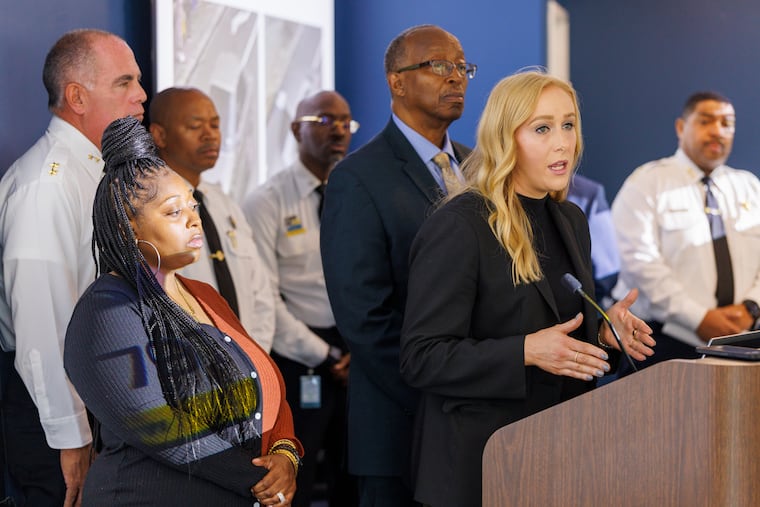
Keon King, who police say abducted Kada Scott, had been charged with violently assaulting an ex-girlfriend twice in the last year, including kidnapping her and choking her in his car.
But in both cases, the victim did not show up for court, so prosecutors withdrew the charges.
After Scott’s disappearance, and as investigators race to find her, the Philadelphia District Attorney’s Office now says that was a mistake.
One of those cases — King’s alleged assault and abduction of the woman in January — was largely captured on video, prosecutors say, so the case could have moved forward even without the woman’s testimony.
“Everyone involved at this point, including the [initial prosecutor], agrees that we wish this happened differently,” Assistant District Attorney Ashley Toczylowski said in an interview Thursday.
Toczylowski — a veteran homicide prosecutor who is now overseeing King’s prosecution in the abduction of Scott, but did not handle his earlier cases — has since refiled charges in the kidnapping case involving his ex.
The admission by prosecutors and an Inquirer review of court records shed light on what law enforcement officials described as King’s pattern of violence against women.
Scott, a graduate of Pennsylvania State University who lived in Mount Airy, has been missing since Oct. 4. Local and federal investigators have been working around the clock — surveying parks and wooded areas, combing through King’s phone records and car, and chasing down tips from the public — in hopes of finding her alive.
Scott had told friends and family that someone had been harassing her, police said, and King was the last person she was in contact with before she walked out of work and disappeared.
“Could we have stopped him from doing what he was doing? I don’t think so,” Toczylowski said of King. “But do we all wish we could pursued it in a different way? Yes.”
Hindsight, she added, is 20/20 — and domestic violence cases are challenging to prosecute without a cooperating witness.
“It’s easy for me to sit here as a prosecutor for 12 years and say what I would have done,” she said.
But the reality was, it was a younger, less-experienced prosecutor facing an uncooperative witness.
King’s previous arrests
Most cases — except for homicides — are initially assigned to prosecutors in the Municipal Court unit, which is typically staffed by younger attorneys who are often fresh out of law school and handling dozens of cases at once.
That’s what happened in King’s cases.
On Nov. 15, 2024, prosecutors say, King broke into the Strawberry Mansion home of his ex-girlfriend through her window and refused to leave for two hours. When the woman refused to lie on the bed with him, he grabbed her by the neck and tried to strangle her, according to the affidavit of probable cause for his arrest.
He threw a rock through her window as he left, the document said.
About a month later, King was arrested and charged with burglary, strangulation, and related crimes.
Prosecutors were in touch with the woman, Toczylowski said, but she stopped returning their calls.
The case would have been challenging to pursue without the alleged victim’s testimony, she said. So after the woman failed to appear at three court hearings, prosecutors withdrew the case in February.
The woman’s hesitation, Toczylowski said, may have been because King’s harassment continued — and escalated — after his arrest.
On Jan. 13, King tried to break into the woman’s home again shortly after midnight, according to the affidavit of probable cause for his arrest. He fled before police arrived, and officers didn’t find him. Later that day, around 3:30 p.m., the document said, King returned and appeared to have a gun in his waistband. He threatened the woman through the window, the records said, but again fled before police arrived.
An hour later, when the woman walked outside with a friend, according to the filing, King was there waiting in his gold Toyota Camry — with his 2-year-old daughter in the back seat. He dragged the woman by her hair, threw her into his car, then threatened to kill her friend if she intervened, the records said. He drove four miles east, assaulting her along the way, then dropped her off on the side of a road in Fishtown, the filing said.
The woman and her friend had taken a video of King trying to get into the home earlier that day, moving between windows and peering inside, according to footage shared online. Police also had body-worn camera footage of their interviews with the victim and the friend who witnessed it, Toczylowski said.
King was arrested again in April and charged with kidnapping, strangulation, and related crimes. He immediately posted $20,000 bail and was released from custody.
But as the case went forward, Toczylowski said, neither the victim nor her friend would cooperate with prosecutors. After the witnesses didn’t show up for two hearings, the assigned prosecutor withdrew the charges in May.
Toczylowski said she believes the case could have moved forward without the witnesses, using the video footage — and she intends to proceed with the case with that evidence now. She is also hoping that the victim will agree to testify this time around because King is in custody, held on $2.5 million bail.
“It’s easy for me to sit here and say, sure, I would have done it, but in the moment, I don’t know if that’s such an easy call,” she said. Proceeding with a case in the absence of a key witness, she said, “is not an easy thing to do for a new DA.”
Reluctant witnesses
It’s not unusual for victims in domestic violence cases to decide not to cooperate in a criminal case. Researchers with the University of Pennsylvania who monitored Philadelphia’s courts between 2010 and 2020 found that 70% of victims in such cases failed to appear in court.
In some cases, the reason is as simple as not having a reliable ride to the courthouse or the ability to take off work. But many fear that speaking out could escalate the harm against them, said Leigh Goodmark, director of the Gender, Prison, and Trauma Clinic at the University of Maryland Carey School of Law.
Even if a victim declines to testify, she said, prosecutors have other tools — 911 calls, video interviews, and crime scene evidence — and can proceed with a case much as they would approach a homicide case with no living victim or witness.
“This is something that prosecutors who do domestic violence work should be routinely trained in,” Goodmark said.
Toczylowski said that’s how the district attorney’s office will move forward with the cases against King — both in his alleged kidnapping of Scott and in the case involving his ex-girlfriend.
Staff writers Brett Sholtis and Chris Palmer contributed to this article.