Citizens Police Oversight Commission sees progress with ‘live audits,’ but independent authority remains elusive
Since the commission's launch in 2022, the Philadelphia Fraternal Order of Police Lodge 5 has strongly opposed giving it power to conduct independent investigations of officer misconduct.
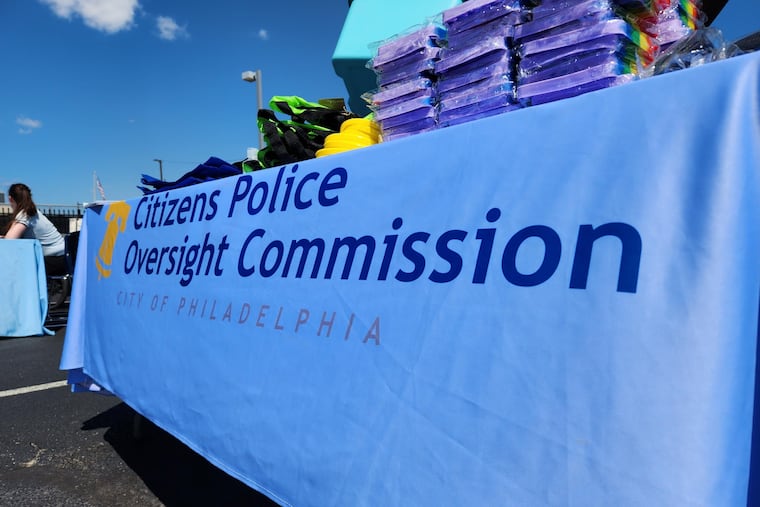
As protests raged after the police killing of George Floyd in Minneapolis, Philadelphia officials created an agency with sweeping power to investigate police misconduct.
The Philadelphia Citizens Police Oversight Commission, approved by voters and launched in 2022, was tasked with conducting independent investigations into alleged wrongdoing by police officers.
But it has yet to achieve that goal.
The Philadelphia Fraternal Order of Police Lodge 5, the city’s powerful police union, strongly opposes CPOC’s push for such reviews and has stalled the commission’s efforts to investigate police misconduct on its own.
And the police department, while taking a collaborative stance with the commission, insists that its internal affairs division (IAD) is better suited to lead such investigations.
While the City Council legislation that established the commission made clear that it should work independently, the FOP has the power to reject outside investigations.
“Our legislation enables us to do it,” Tonya McClary, CPOC’s executive director, said of independent reviews. And yet, she said, “at the end of the day it’s kind of complicated, because it has to be bargained with the FOP.”
FOP Lodge 5 president Roosevelt Poplar has previously threatened legal action to bar the commission from pursuing its own investigations. During the FOP’s labor contract arbitration process last year, union representatives warded off calls from CPOC and its allies to give the commission more authority.
That came despite hopes from CPOC and its supporters that Mayor Cherelle L. Parker’s administration would secure independent investigations for the commission during arbitration.
City Councilmember Curtis Jones Jr., whose legislation founded CPOC, said the commission had made progress in the four years since its launch, even if the police contract had stymied its central purpose.
“FOP’s mission is to protect their members at all costs,” Jones said. “Our mission is to protect the public.”
Still, Jones said, the way forward was to find compromise between CPOC and the police union.
“Over the next few years, as the public becomes more comfortable with the roles of the commission, the administration, and the FOP, we will see a more collaborative approach,” Jones said. “These things take time.”
FOP officials did not respond to multiple requests for comment.
CPOC leaders, for their part, say they have nonetheless made progress.
Janine Zajec, CPOC’s director of auditing, policy, and research, said the commission’s new “live audit” process has given the agency a more active role in reviewing police investigations of officer misconduct.
In a first for CPOC, the commission in February released a review of complaints made against officers in 2024 that incorporated such input.
Live auditing allows commission staff to offer IAD investigators recommendations on how to better handle misconduct complaints before cases are closed.
The process gives the commission 11 days to offer recommendations to IAD investigators before their reports are completed. It is a development from CPOC’s earlier audit of 2022 cases, when its access was limited to reviewing internal affairs investigations that were already completed.
In the latest audit, CPOC reviewed more than 350 cases accusing officers of physical or verbal abuse, lack of service, or department violations, among other allegations. In about 40% of cases, IAD sustained the allegations, many of which were administrative violations.
CPOC’s recommendations called for improvements in the police department’s efforts to contact witnesses of alleged officer misconduct to allow for fuller investigations, the audit said. In other cases, CPOC urged investigators to adjust their conclusions to address additional “missing allegations” revealed during their inquiries.
In all, IAD accepted CPOC’s recommendations in nearly 40% of cases, the audit said.
“We’re serving as a check on their own policies,” Zajec said, “and making sure they comply.”
A push for independent oversight
Born amid the racial justice protests that followed Floyd’s murder in 2020, CPOC was designed as a watchdog organization to replace the Philadelphia Police Advisory Commission, which critics viewed as ineffective and lacking authority.
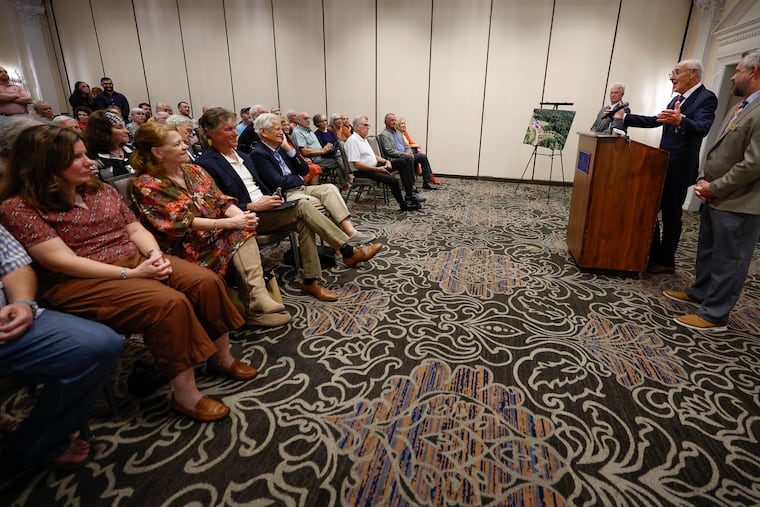
Led by nine commissioners with backgrounds from law to community activism, CPOC holds monthly meetings to discuss police misconduct and reviews officer-involved shootings, in addition to its periodic audits of the department.
Last year, the commission released a report on how police in the 18th District used their body-worn cameras, finding widespread compliance among officers but also room for improvement.
CPOC’s early days, however, were marred by staff infighting and employee turnover.
As recently as December, the commission lost its chief investigator to the city’s law department.
And CPOC is again seeking an outside consultant, city records show. That person will help draft an “inaugural strategic plan” for the commission, coach leadership, and help expand staffing over the next three to five years, according to the proposal.
Meanwhile, with the FOP contract set to expire in 2027, CPOC advocates see a renewed opportunity to advocate for the commission’s independent authority.
Councilmember Nicholas O’Rourke, a Working Families Party member who championed CPOC’s founding, said contract arbitration hearings this fall are the best chance to make that argument.
“It takes a very, very, very strong executive to be willing to increase oversight into the departments they have oversight over,” O’Rourke said of the Parker administration’s role in negotiations.
A spokesperson from Parker’s office did not return a request for comment.
McClary, of CPOC, said she, too, hopes independent oversight for the commission will come out of contract negotiations.
“We will be trying to work with the administration to see if we will be able to do it,” McClary said. “If not, we’ll have to start to look at other alternatives to enable us to do what our legislation says.”