The first assistant to DA Larry Krasner is retiring. He has some advice for his boss.
Robert Listenbee's departure is the first shift in Krasner’s leadership team as the top prosecutor begins his third term.
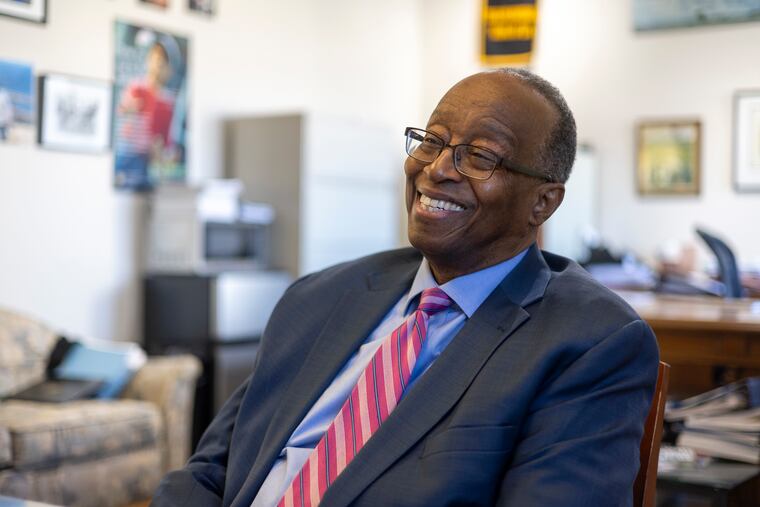
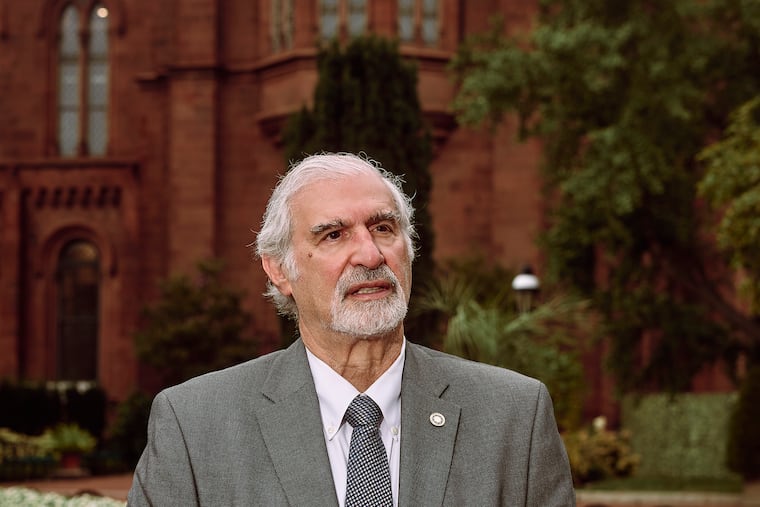
Robert Listenbee, the first assistant district attorney under Larry Krasner and a largely behind-the-scenes enforcer of the office’s progressive agenda, is retiring after nearly eight years as the office’s second-in-command.
Listenbee, 77, is expected to announce Friday that he is stepping down, marking the first shift in Krasner’s leadership team as the top prosecutor begins his third term.
A longtime public defender and juvenile justice advocate, Listenbee joined the administration at the outset of Krasner’s first term in 2018 — even as Krasner openly questioned whether the role of first assistant was necessary beyond its statutory requirement.
Over the course of Krasner’s tenure, Listenbee rarely served as the public face of the office on major cases, focusing instead on juvenile work, recruitment, and personnel matters.
Some prosecutors in the office said that often translated into a lack of visible management compared to previous first assistants, and that he served more as an internal messenger of Krasner’s often controversial agenda than the traditional day-to-day overseer of the office.
Listenbee has said his role was never set up to operate traditionally, and his goal was to carry out Krasner’s vision and reform the office.
Krasner declined to say who might replace him but he said he was evaluating candidates.
Before joining the district attorney’s office, Listenbee spent decades as a public defender, including 16 years as chief of the juvenile unit at the Defender Association of Philadelphia. He later led the U.S. Department of Justice’s Office of Juvenile Justice and Delinquency Prevention during the Obama administration, and worked at Drexel University before returning to Philadelphia to join Krasner’s team.
We spoke with Listenbee about his unconventional path to the law, his years reshaping juvenile justice, internal tensions within the DA’s office, and his advice for Krasner’s third term.
This interview has been edited for length and clarity.
Tell me about your life growing up.
I was raised in Mount Clemens, just north of Detroit. My father worked in the auto industry. We were poor and lived in the projects. I went to a public high school, and was the first in my family to go to college.
I came from a small African American community where people look out for one another. This community saw something in me very early. When I was only planning to go to Kalamazoo College, a mom at my school decided my life was going to be different. She contacted the recruiter at Harvard University, and they visited me out in my little home in the projects when I hadn’t even applied. I got a full ride to Harvard.
I was among the first large group of African Americans at Harvard. It was 1966. We were in the middle of the Civil Rights Movement and the Vietnam War.
How was that?
There was total upheaval in this nation. Demonstrations everywhere, college campuses being taken over.
I worked on the committee that helped establish the African American Studies Department at Harvard, one of the first in the nation.
This was also at a time when African countries were becoming independent. I spent 16 months as a teacher in the rural area in western Kenya.
Instead of coming back from Africa, I decided to hitchhike around the world. I spent six months in Asia — Thailand, Laos, even as the war was going on. I rode a motorcycle into the Mekong Delta in Vietnam and had experiences that make me grateful to be alive. I hitchhiked across Africa and traveled 8,000 miles by train across India. I did all of this on about $600.
After a two-year gap year, I returned to Harvard and finished my degree.
I ended up getting a full-ride scholarship to Berkeley law school.
Where did you go after law school?
I had job offers but I had this crazy idea that I wanted to build a road across Africa, from Nairobi to Lagos, but I was broke and needed money to do it.
This was when the pipeline was being built across the North Slope of Alaska, and you could make gobs of money in a short period of time. So in 1976, I went to Anchorage without a job and lived in the YMCA. I shoveled snow, washed dishes, and worked at McDonald’s.
Finally, I got a job on the pipeline.
I was there for a couple of years. I was a laborer in the oil fields. I worked trucks that rode across the Arctic Ocean in the middle of the winter. I worked on wildcat wells 50 miles from base camp. I had to relieve pressured gas to keep it from blowing up. It was 50 degrees below zero.
I got into fights. People were trying to kill me at different points in time, and I was trying to kill other people, too. So I mean, the reason I know a little bit about criminal justice is because I was almost a criminal.
I never built the road in Africa. I eventually came back to Philadelphia, and worked construction until 1986.
So what about being a lawyer?
After my construction company failed, I was broke again. I ended up going back to legal work, and got a job working at the Defender Association.
You were the head of the juvenile unit for 16 years, and then you finished your career here on the other side — going from defending young people to prosecuting them. How was that transition for you?
Working for the U.S. Department of Justice’s Office of Juvenile Justice and Delinquency Prevention under President Obama helped prepare me for prosecutorial work.
I was adamant I would never work for this office. I thought it was corrupt. Krasner called me three times before I agreed to join as first assistant.
We were engaging in culture change. Some of the behavior of the people who were here was absolutely outrageous, especially in the homicide unit. They had a sense that this office belonged to them. It didn’t belong to the people. They were willing to cheat and do it and hide evidence in the process of doing it. That’s the feeling that I had when I first got here, and that’s what we found.
There has been criticism of your juvenile work — some have said that it was too lenient during the period of intense gun violence and that kids went on to commit worse crimes. Others say the office hasn’t gone far enough to treat kids as kids. How do you assess your record?
We’ve reduced the number of kids in out of home placements. We’ve expanded juvenile diversion programs. In 2024, we created a juvenile homicide unit to review all cases of juveniles charged with murder.
I’m satisfied that we’re being as fair as we can and taking the time to carefully evaluate every issue in a case.
» READ MORE: How Philly’s vision of juvenile justice reform unraveled
The first assistant is typically the person who manages the office day-to-day. Some prosecutors have said that, in this administration, that role functioned differently — that much of the management flowed directly from Krasner. Do you think that perception is fair, and how did you approach leadership in that environment?
The DA did not want the imperial first assistant that had been here before. He would prefer a flat structure to a hierarchical structure, which means you get assigned a lot of odd jobs depending on what he wants you to do.
If I were running the office, I would have run it completely differently. But I have to tell you that, having been here as long as I have, we never would have gotten this far without the DA’s serious concerns about what people around here were doing, whether they were implementing his policy or not. His skepticism, his oversight, is what’s kept this place moving in the direction that he wanted to go in. I wasn’t tuned in enough to the office to understand that from the very beginning, but I listened to him.
We hire people, we fire people, we move people around. That’s happened a lot. We sometimes end up with younger and inexperienced supervisors, because we haven’t really developed a program for training supervisors really well. We’re working on that.
Do you have any regrets in the position?
We’ve gotten better with victim communication, particularly when police are killed.
I wish I had worked on juvenile issues earlier than I did.
What’s your advice for the next first assistant?
You have to understand the DA’s goals and purposes and how he operates.
So, listen to Larry?
Not that. The DA is not a micromanager. But there’s no written directives on most of the things he wants, and there’s no organizational chart or hierarchy. If we have issues, we often go to him.
Do you have a piece of advice for Krasner in his third term?
This is a city that has a chip on its shoulder. The DA is a person who has a chip on his shoulder. They respect him for that when he speaks out. A lot of the things he says may not be politically astute, but they’re things he believes in. They like that about him.
He is the Donald Trump of the progressive era.
He needs to continue surrounding himself with people who can understand him and help him implement his policies.
A lot of people don’t like him, and I understand that. A lot of people don’t like me because I work for him. A lot of people don’t like what we do. That never mattered to me. I know that the people we have seen in court, the victims and the defendants and the witnesses, I know that we’re doing right by them. That’s my North Star.