A North Philly man was convicted of third-degree murder for killing his best friend while high on PCP
Tyreese Quinerley testified that he had no recollection of killing Jeremiah Shackford because he was high on PCP. Prosecutors disputed that, saying his actions that night were deliberate.

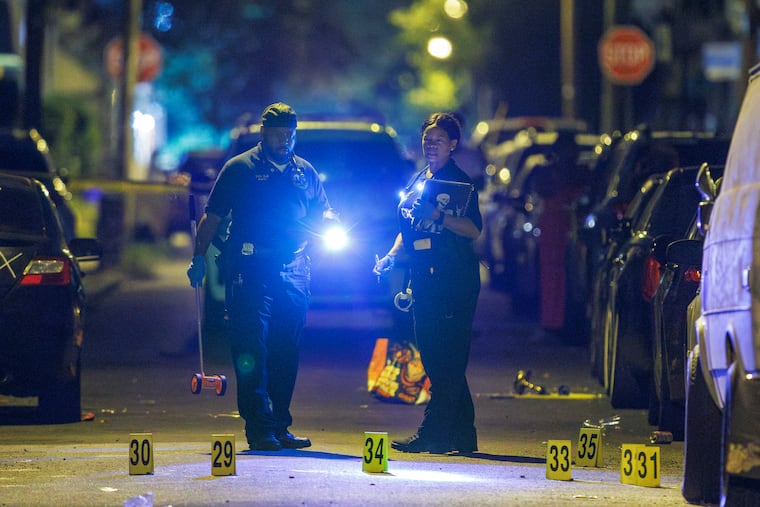
A North Philadelphia man who shot his childhood best friend inside a van parked on City Avenue in Lower Merion, and then lied to police and said he found the body on the side of the road, was convicted of third-degree murder Tuesday after a two-day trial in Montgomery County.
Tyreese Quinerley, 39, choked back tears during his testimony as he told the judge that he and Jeremiah Shackford had grown up together and were more like brothers than friends. He said he has no recollection of shooting Shackford, 31, twice in the chest near the campus of St. Joseph’s University on April 14, and cannot understand why he would do that to the godfather of his children.
“I feel like a nut, like a weirdo,” Quinerley said. “I’m just hurting. I can’t believe it. It’s nothing I would do.”
Quinerley’s attorney, Thomas Egan, said his client could not recall the fatal shooting because he and Shackford had spent the day smoking PCP, a powerful hallucinogenic. The two men had been habitual users of the drug for more than a decade, Egan said. Quinerley was so intoxicated that night, Egan said, he lost his ability to think coherently.
For that reason, Egan argued, Quinerley should not be convicted of first-degree murder, since he lacked the fully formed intent to kill that the charge requires.
“He has no recollection of shooting his best friend whatsoever, he turned himself in, and he didn’t make any efforts to throw away the shell casings,” Egan said, adding that those actions were not consistent with an “assassin” trying to get away with murder. “He simply didn’t recall doing it.”
Prosecutors, led by Assistant District Attorney William Highland, disagreed, saying Quinerley made a series of actions on the night of the shooting that demonstrated consciousness of guilt, including waiting 16 minutes before calling 911 and concocting the false story he gave to responding officers.
Because of this, Highland said, first-degree murder was the more appropriate charge.
“He chose to shoot Mr. Shackford that night,” Highland said. “And he did so with the full sensibilities of what he was doing.”
Montgomery County Court Judge William Carpenter was not swayed, and found Quinerley guilty of third-degree murder and gun offenses.
On the night of the shooting, Quinerley told officers he nearly hit Shackford’s body, which he said had been lying in the road, as he drove down City Avenue, according to prosecutors.
Medics took Shackford to nearby Lankenau Medical Center, where he was pronounced dead from multiple gunshot wounds, the affidavit said. He was carrying a cell phone, and call logs retrieved from the device led detectives to question Quinerley’s version of events.
Detectives learned that Quinerley and Shackford grew up together, and had called each other multiple times on the day of the shooting, according to evidence presented during the trial. In the 911 calls Quinerley made, he is overheard calling Shackford “Creek,” the childhood nickname his family and close friends knew him by.
Two witnesses testified during the trial that they saw Quinerley driving erratically and weaving through traffic on City Avenue. While his van was stopped at a red light, they said, he got out and fired a handgun into the vehicle before getting back in and speeding off.
Surveillance footage later recorded Quinerley walking to the van’s passenger side and pulling Shackford’s body out of the vehicle.