What to expect from Brandon Graham? Here’s how other NFL players who unretired fared.
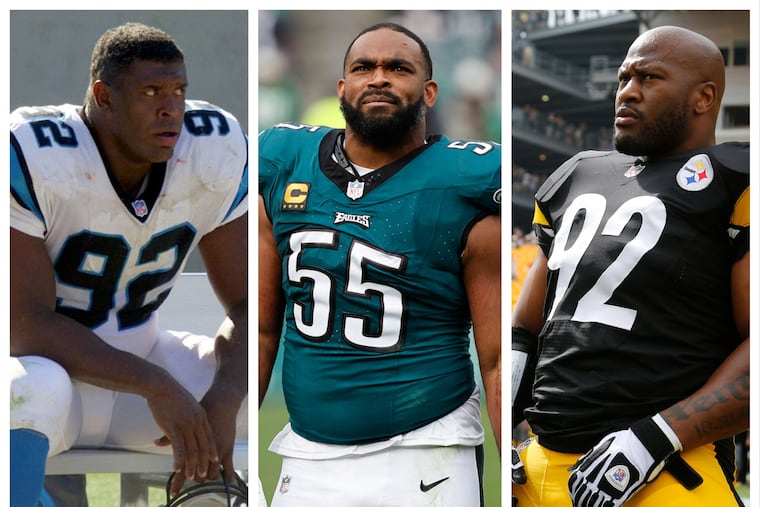
Not all unretirements are created equally. From Reggie White to James Harrison to Tom Brady, rejoining the NFL doesn’t always mean you pick up where you left off.
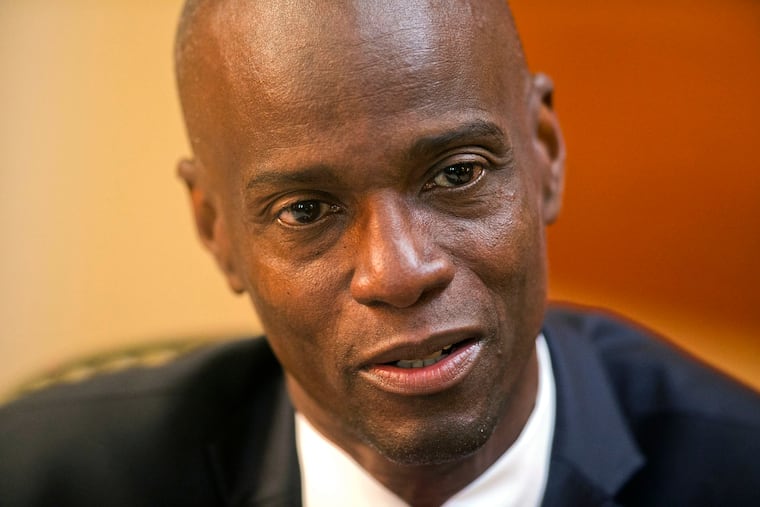
Tom Brady was 44 when he retired for 40 days before he changed his mind and went back to the playoffs one more time with Tampa Bay in 2022.
In 1974, former Eagles linebacker Maxie Baughan left his defensive coordinator gig at his alma mater, Georgia Tech, to go back to the NFL as a player-coach with Washington. He was a backup and played in two games.
Brett Favre was 40 when he decided to come out of retirement for the second time and join the Minnesota Vikings in 2009. He stuck it twice to his old team, Green Bay, won the NFC North, then led the Vikings all the way to the NFC title game.
Reggie White returned from retirement at 38 with the Carolina Panthers in 2000. He played in all 16 games but recorded his lowest single-season sack total (5½) in a Hall of Fame career.
» READ MORE: Can the return of Brandon Graham fill the leadership void on the Eagles defense?
Then there’s Bronko Nagurski, who, in 1943, came out of retirement to play with the Chicago Bears, who needed players because many of theirs were fighting in World War II.
All of this is to say not all unretirements are created equal.
What does the historical data mean for Brandon Graham, who is back with the Eagles after retiring from football seven months ago? Maybe nothing — human bodies aren’t created equal, either. Or maybe something, as there may be relevant context.
Is Reggie White’s case similar?
White was 38 when he decided to end his one-season retirement to join the Panthers, and Graham turned 37 a few weeks after retiring in mid-March.
But White, one of the best defensive ends of all time, was coming off a 16-sack, first-team All-Pro, Defensive Player of the Year 1998 season when he retired. Graham was playing well with the Eagles last year, but his season was cut short by injury, and his sack numbers dropped off a cliff one year earlier in 2023.
White still was disruptive to opponents, but he wasn’t his normal high-production self in a more limited role in Carolina. It is a physical and demanding position, not that Graham needs any reminder of that.
The Harrison comparison
James Harrison officially retired in August 2014, but his retirement essentially lasted a similar length as Graham’s. Harrison played the 2013 season with Cincinnati and wasn’t in a training camp in the summer of 2014.
But after the Steelers suffered some injuries early in the 2014 season, the linebacker was back with his former team at the age of 36. He was still productive, too, with 45 tackles and 5½ sacks in 11 games.
» READ MORE: Could unretired Brandon Graham play as soon as Sunday against the Giants?
Harrison then signed a two-year contract with the Steelers and ended up playing three more seasons after returning in 2014. Don’t expect the same from Graham, but Harrison’s effectiveness as a pass rusher might be a good comparison for him.
Witten still had a little in the tank
Graham will go from the podcast studio to the locker room, similar to how Jason Witten went from the broadcast booth back to football.
Witten, like Graham, was 37 years old when he rejoined the Dallas Cowboys in 2019 after one year of retirement. The tight end still had it. He caught 63 passes, four of them for touchdowns, and accumulated 529 yards in 16 games. His 2017 season line: 63 catches, 560 yards, five touchdowns.
37 is popular
Lucky No. 37? Deion Sanders was also 37, and he chose that number for the back of his jersey when he came out of retirement to play with Baltimore in 2004 after three seasons away from the game.
Sanders played nine games in 2004, mostly as a nickel cornerback, and still had a knack for the football. He had three interceptions and returned one of them for a touchdown. He played all 16 games in 2005 and registered registering two interceptions and 30 tackles. He was fine, but he wasn’t Prime Time.
Graham may be fine
All of this is mostly a fun trip down memory lane. It’s unclear what kind of shape Graham is in or whether he has lost a step after being away for a short time. Every body is different.
But Graham’s 2024 season can, at least, be a little instructive. He was an energy booster on the field, a veteran presence off it, and a really capable edge setter who helped the Eagles vs. the run.
They could use that right now, and it’s not hard to imagine him being like Witten or Harrison in that he still can do what a team asks him to do.
» READ MORE: Brandon Graham says he didn’t want to retire — and this isn’t the first time the Eagles tried to bring him back
Graham is the biggest of the edge rushers at 265 pounds, and he could be useful helping a defense that is allowing 4.6 yards per carry, the ninth-highest average in the NFL.
The Eagles also could use some more volume from their pass rushers, and Graham was making an impact there before a torn triceps ended his regular season in Week 12 vs. Los Angeles. He sacked Rams quarterback Matthew Stafford before the injury, his fourth time getting home in 11 games (3½ sacks). Graham still could make an impact there, even if the Eagles aren’t asking for a large snap count out of him.
The Eagles needed Graham, and it seems like he needed them, too. Time will tell if the play matches up to the presence.

Landon Dickerson has made a career of fighting through injuries and pain, last season being the latest instance. But after the left guard looked like a shell of himself Week 1 vs. Washington, the Eagles decided to shut him down — at least for now. With Dickerson landing on injured reserve, The Philadelphia Inquirer's Jeff McLane explains why, this time around, he and the Eagles are taking the cautious route. Jeff also shares what he's heard about how the Eagles might fill Dickerson's void on the offensive line, and takes listener questions in this week's mailbag segment. Listen here.
Listen to all episodes here or wherever you get your podcasts.