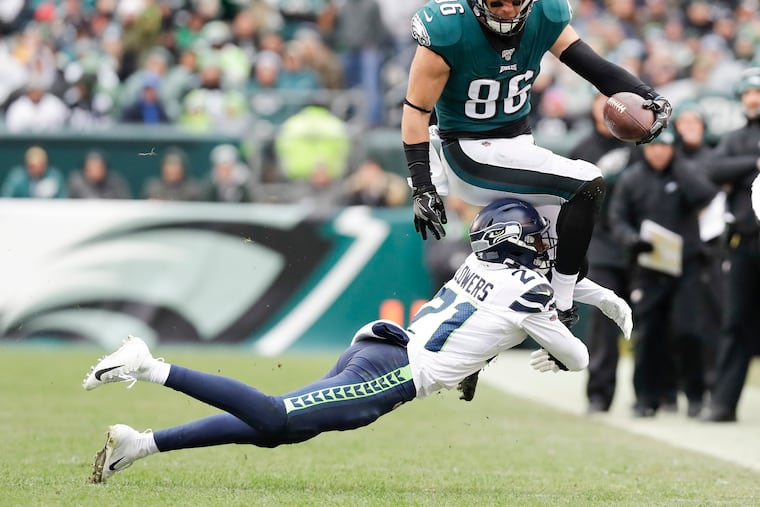
Penalties, called and uncalled, proved critical in Eagles’ loss to Broncos
Players, coaches, and referees offered their takes on how some of Sunday's pivotal moments played out.

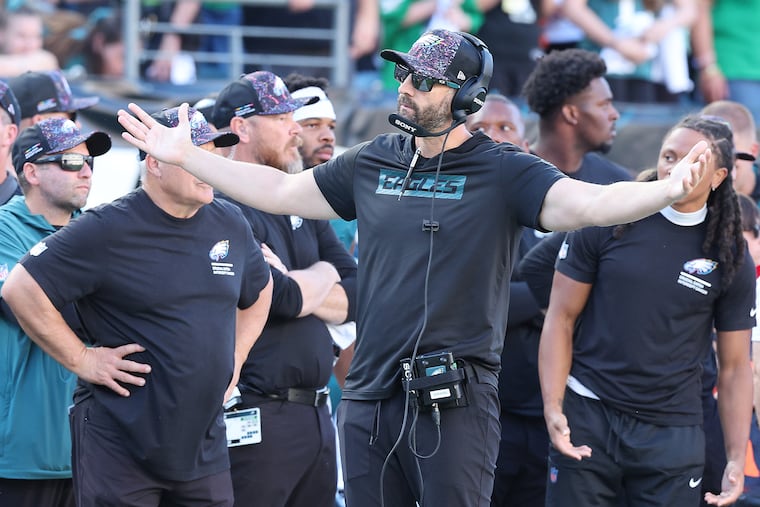
Nick Sirianni believes that penalties have a way of evening out in the end.
“I know sometimes there’s always going to be, ‘Well, we got screwed on this one,’” he said after the Eagles lost, 21-17, Sunday. “I don’t think that way. They all balance each other out.”
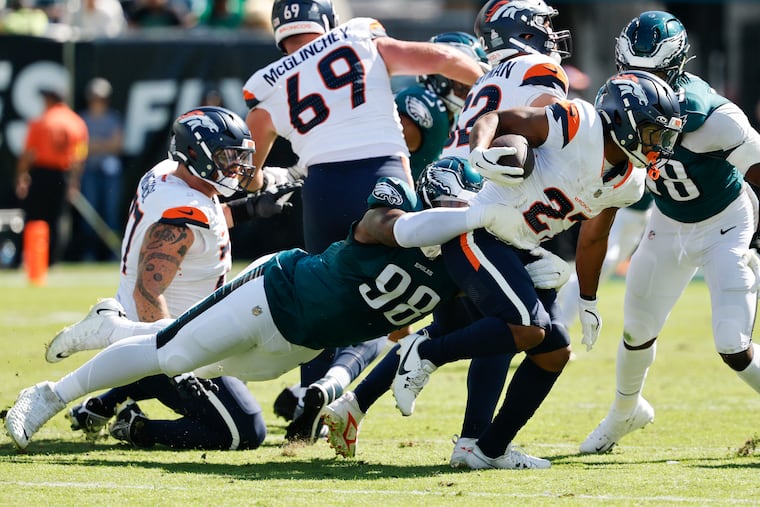
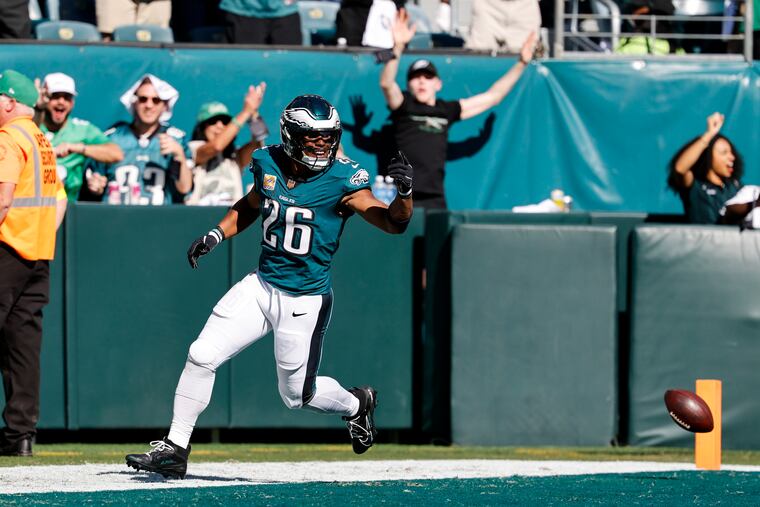
Call Sunday an aligning of the cosmos of sorts. The Eagles had played with fire through their perfectly imperfect 4-0 start. They won ugly and at times played undisciplined. Their deficiencies caught up to them Sunday, and while there were penalties, called and uncalled, that contributed to the end result, it was the self-inflicted wounds that hurt the worst.
Let’s start, though, with the red meat that will have radio callers hot.
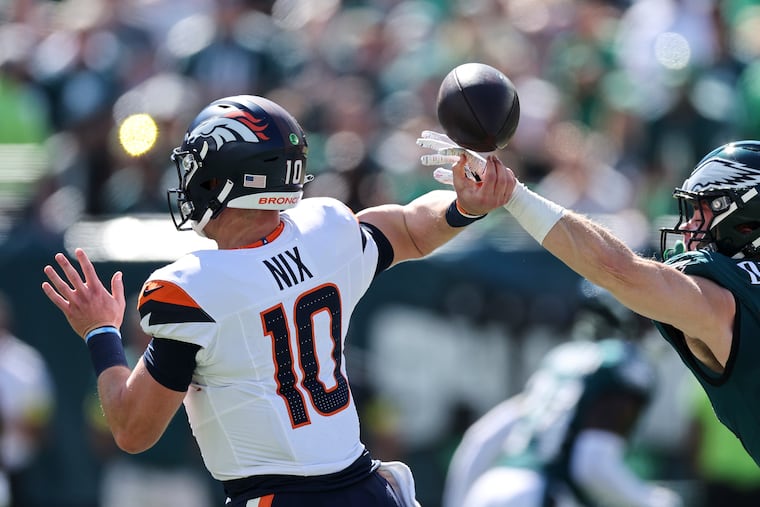
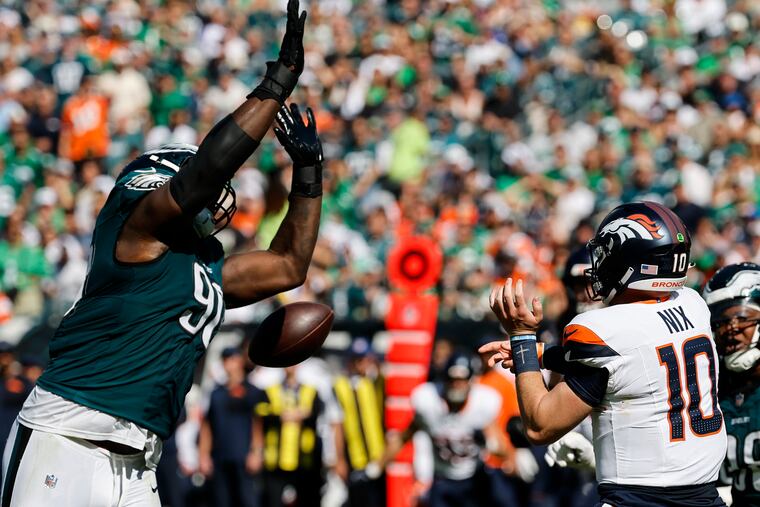
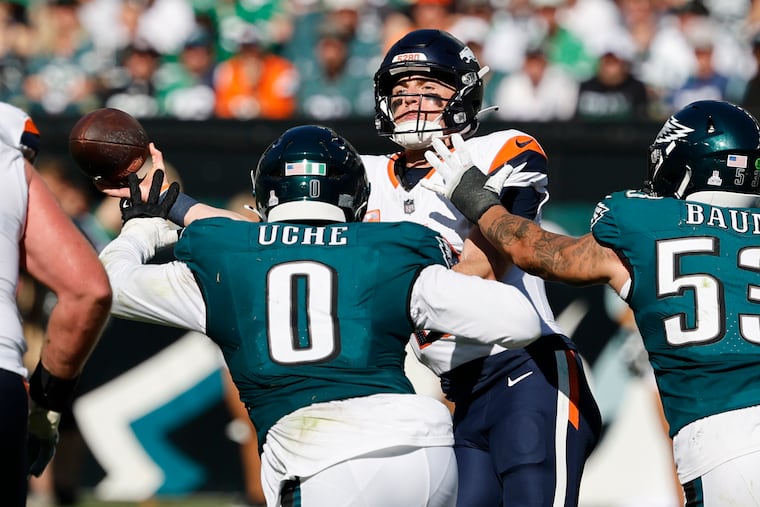
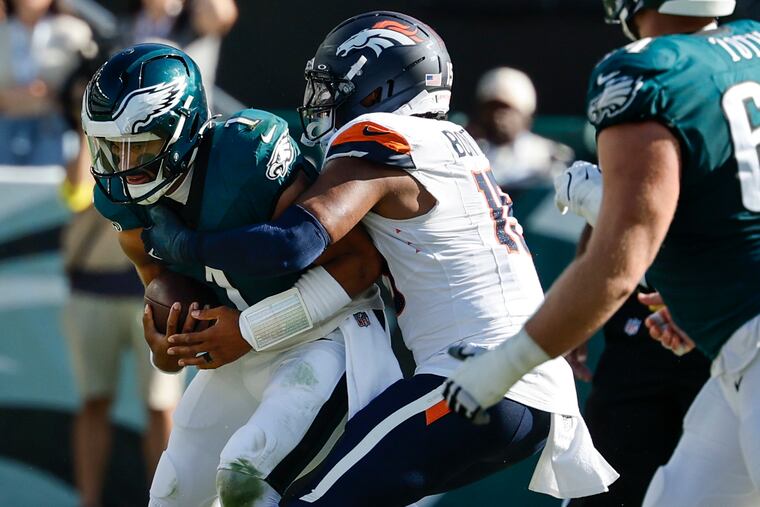
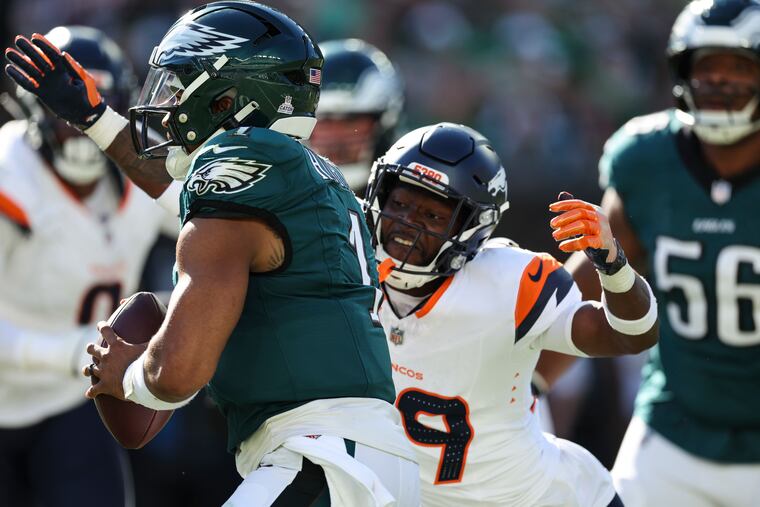
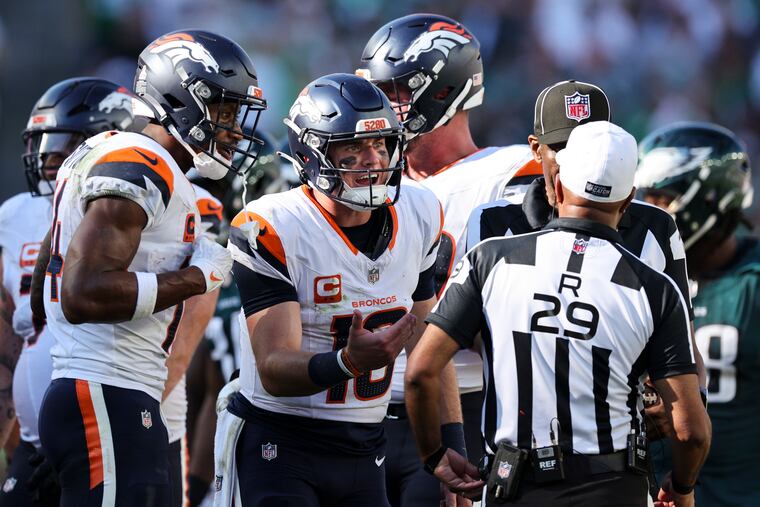
Broncos quarterback Bo Nix was instantly pressured by Jalyx Hunt on a second-and-6, his team leading by a point, from his own 47-yard line with 3½ minutes to go. Nix was in Hunt’s grasps but managed to get rid of the ball before he was sacked, flinging a wobbly pass that didn’t reach the line of scrimmage. The officials threw a late grounding flag and spotted the penalty off, leaving Denver with a third-and-24 and the Eagles likely getting the ball back on the correct side of the two-minute warning down just a point.
» READ MORE: Grading the Eagles' loss to the Denver Broncos
But the flag was picked up late, and the Broncos converted on third-and-6 to keep the chains and, more importantly, the clock moving.
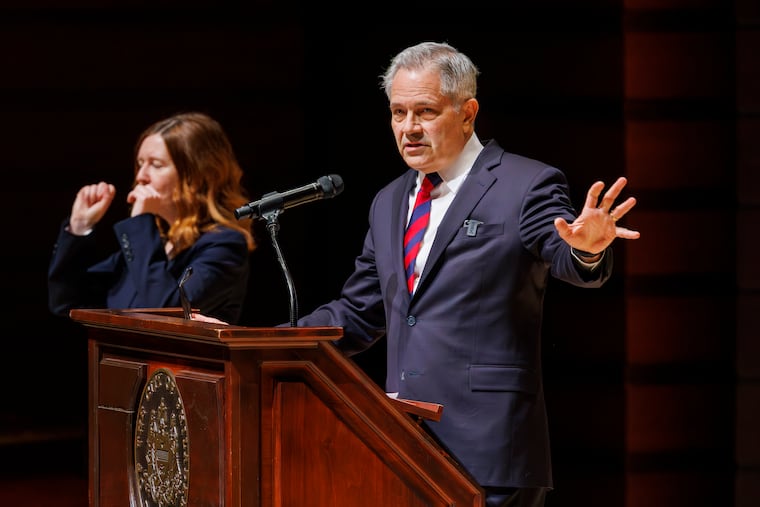
Here’s an explanation from referee Adrian Hill, according to a pool report:
“So what happened there, we have an O2O — that’s our official-to-official communication system,” Hill said. “My O2O was not working. Grounding is a teamwork foul. I had intentional grounding. The line judge had that there was a receiver in the area — 28 — but I didn’t hear the information over O2O, so I threw the flag. The line judge came in and let me know that 28 indeed was in the area, and that’s why we picked up the flag.”
Hill probably meant to say 82 instead of 28. Broncos tight end Adam Trautman was the nearest player to the football, but he multiple yards away from the errant throw.
The Broncos, of course, bled more clock and kicked a field goal to take a four-point lead, leaving the Eagles with little time, no timeouts, and a need to get to the end zone to win.
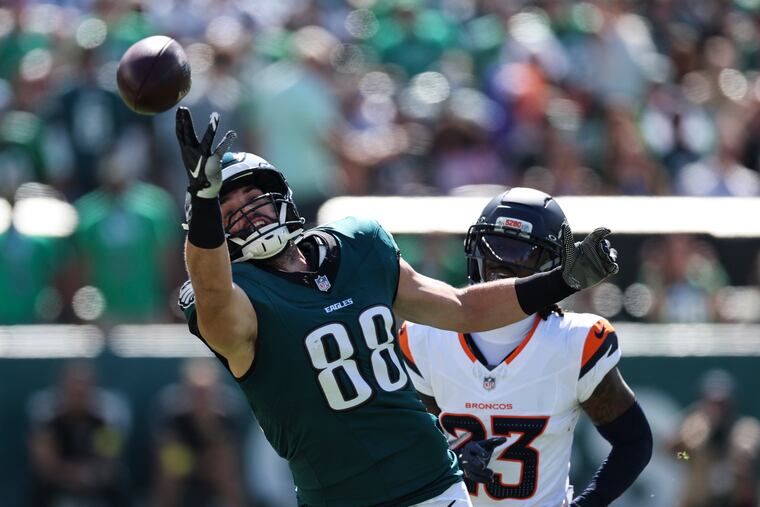
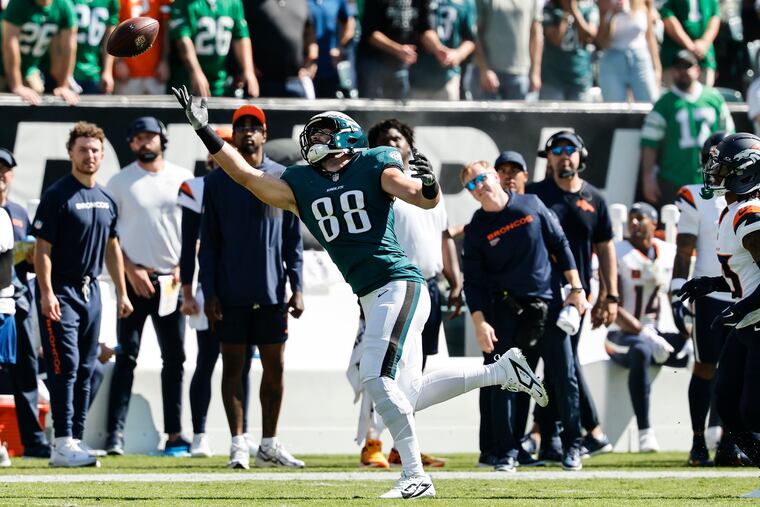
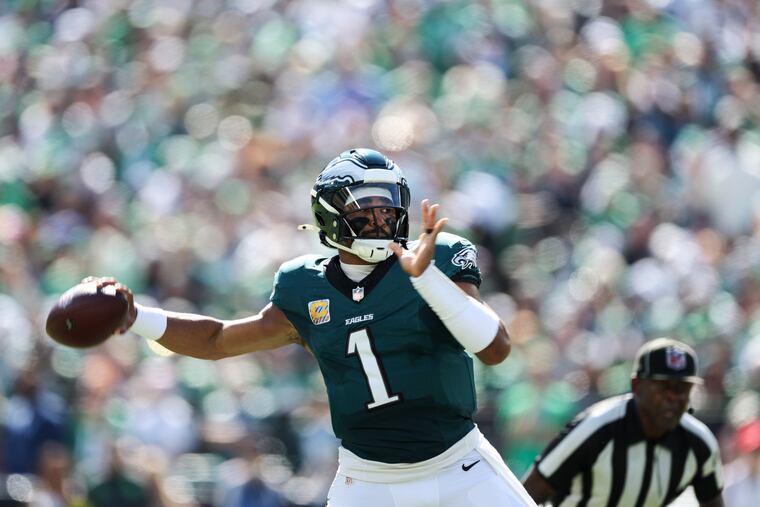
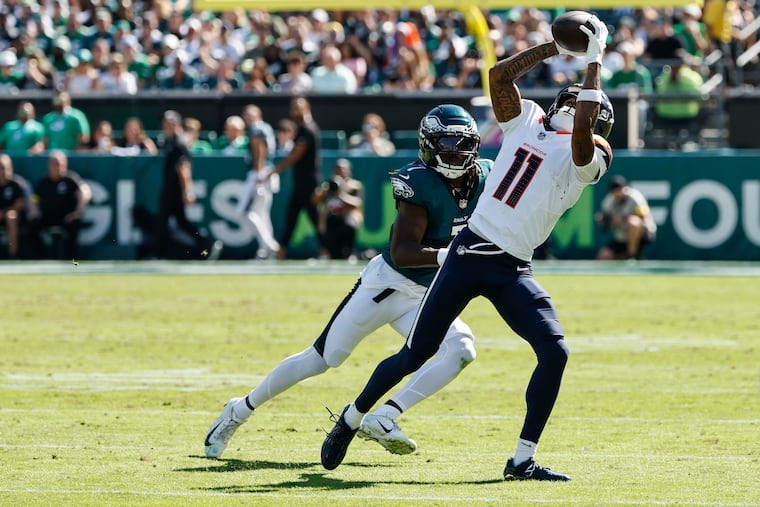
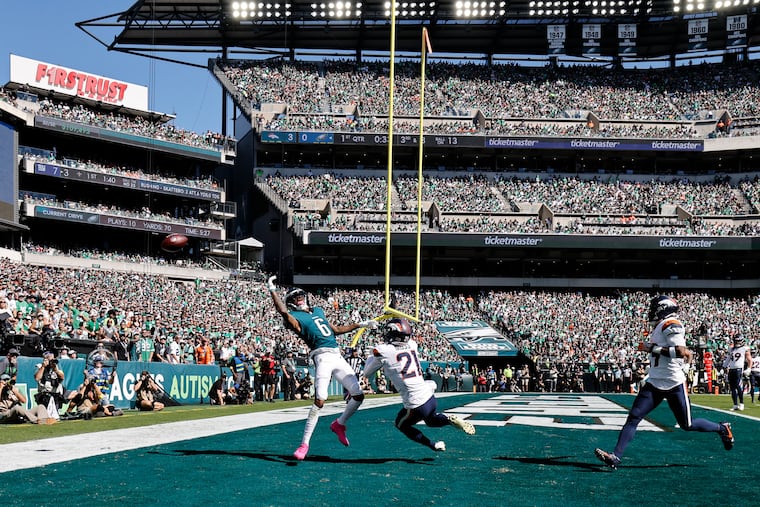
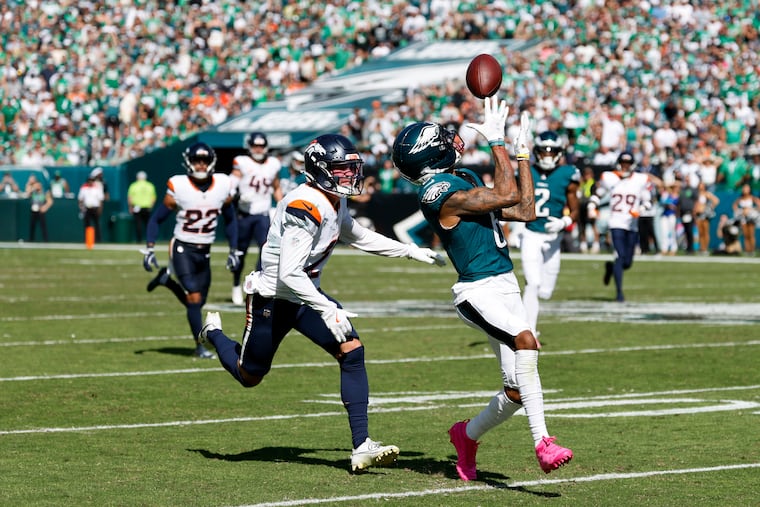
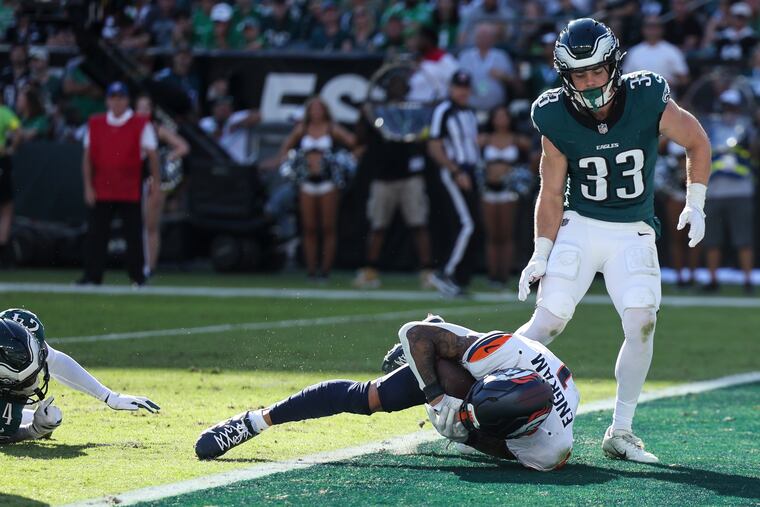
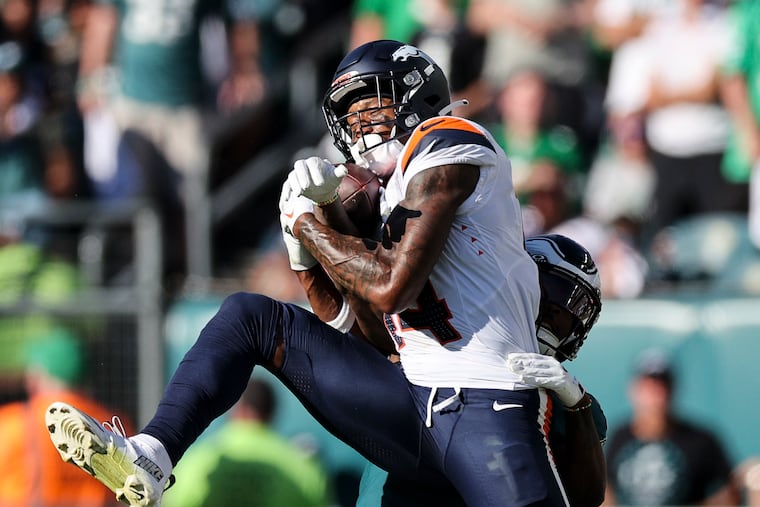
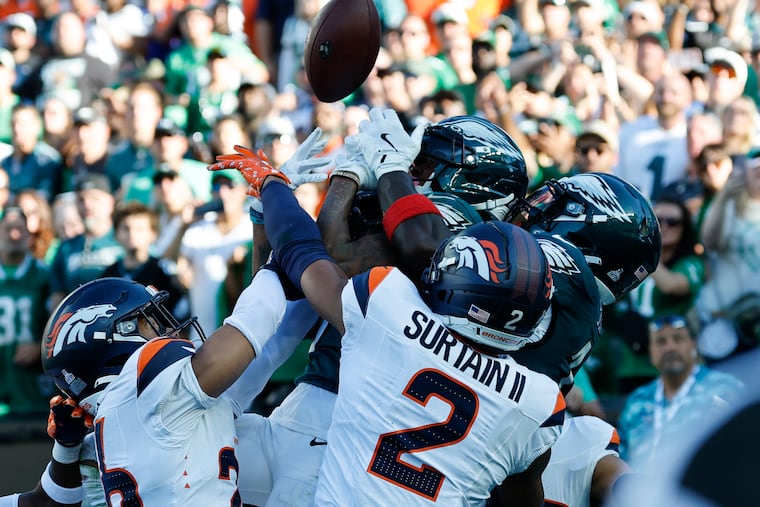
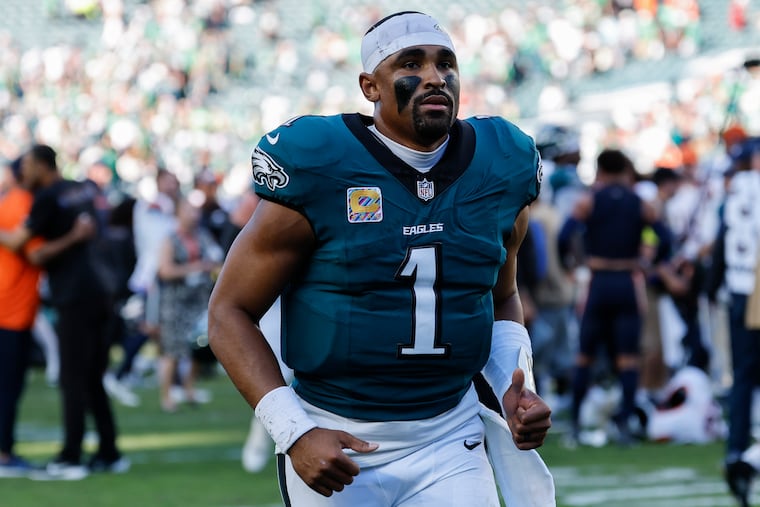
Still, there was a chance. With 9 seconds remaining, on the Eagles’ second-to-last play of the game, Jalen Hurts threw up the right sideline to Dallas Goedert, who was engaged with Broncos safety JL Skinner. Goedert said afterward that he thought there was “a little bit of contact there.” No pass interference was called. The Eagles would have been at the 5-yard line with one last try to win the game. Instead, Hurts was forced into a desperation heave from farther away.
Hill, according to a pool report, said the officials “saw mutual hand fighting and hand-to-hand combat and did not see action that rose to the level of a foul on that play.”
“Would have been interesting to see what happened,” Goedert said.
But … “The game really shouldn’t have come down to that,” he said later.
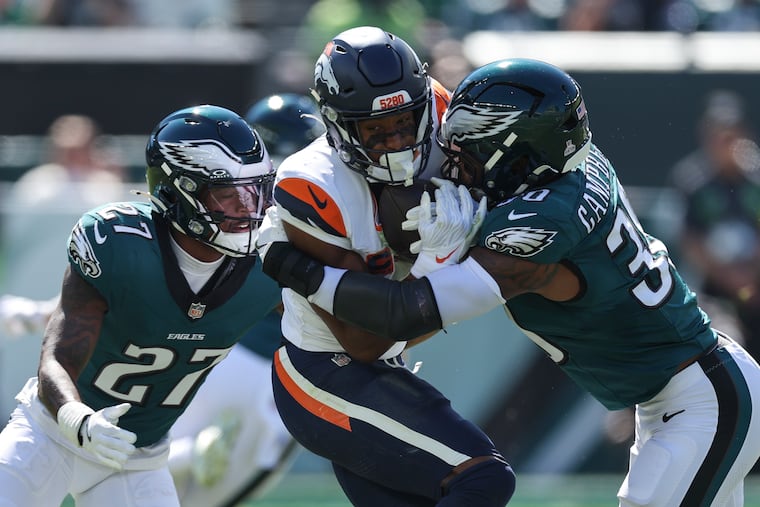
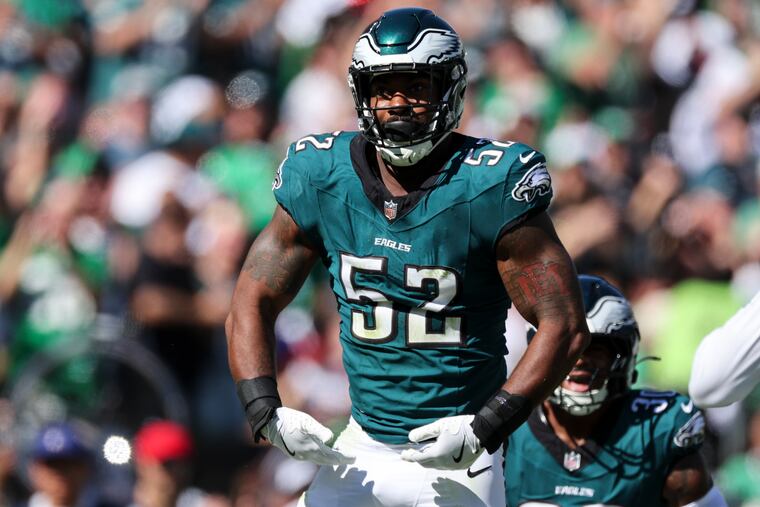
There were things the Eagles did to themselves, Goedert said. The passing game, while dominant at times in the first half, was too often not on the same page. And there were self-inflicted penalties, too, like when Zack Baun was called for a late hit a few plays after the picked-up intentional grounding penalty.
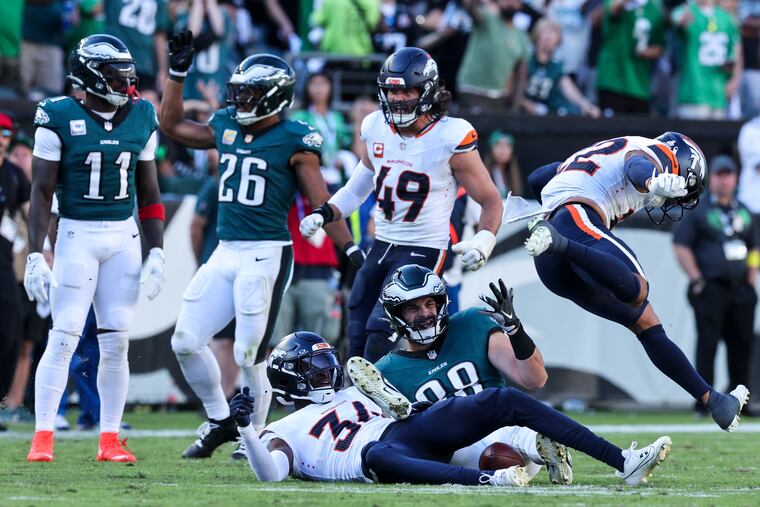
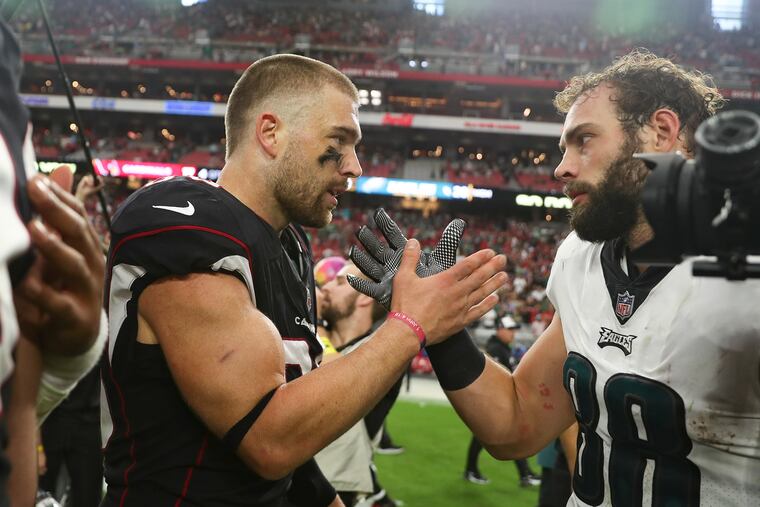
“He was fighting for extra yards, and we’re taught to cap off on those types of situations,” Baun said. “I didn’t think he was down, but one ref threw the flag, and it was a subjective penalty, I think.
“I thought it could have gone either way.”
Hill’s explanation: “So the officials saw we had a prone player on the ground, and he came in and hit the player that was prone on the ground when the play was over.”
» READ MORE: Tony Romo doesn’t like how the refs treated the Eagles, and more from the Birds-Broncos broadcast
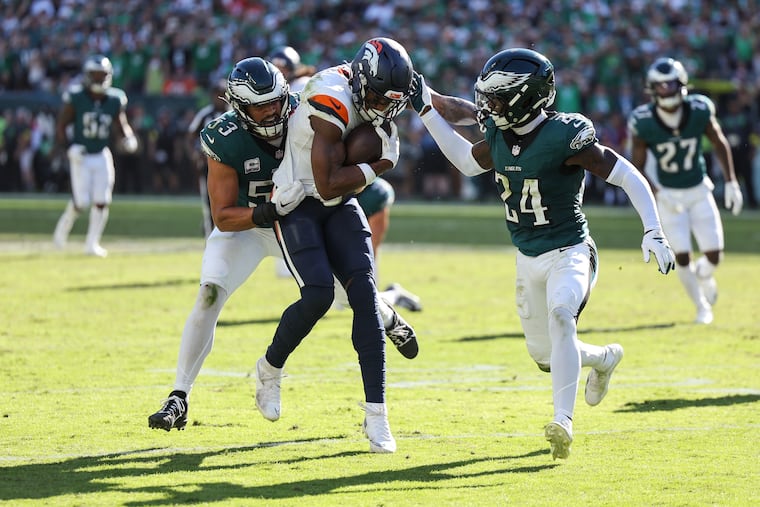
For the record, the penalties Sunday were not one-sided against the Eagles. Denver was called for 12 penalties (121 yards) and the Eagles were called for nine (55).
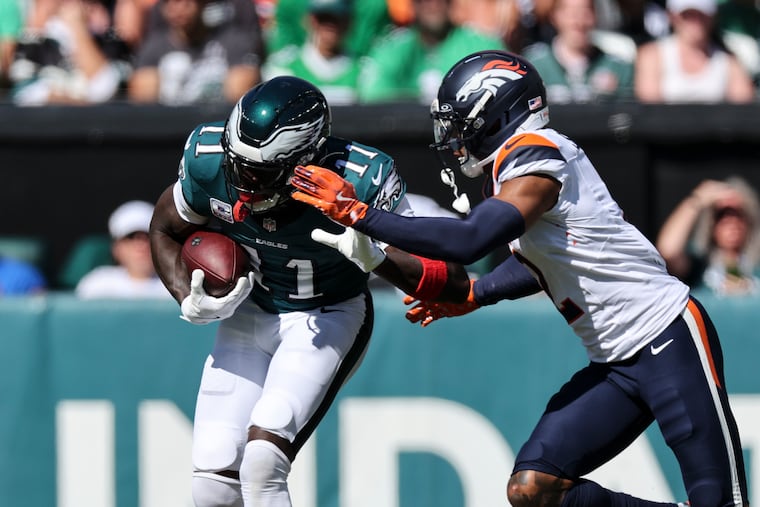
But there were avoidable miscues from the Eagles, two of them on the same series. Tyler Steen went downfield too early on a passing play from Denver’s 48-yard line on a second-and-1 play that went for 8 yards but was called back. The Eagles, on the same set of downs, trailing, 18-17, with more than five minutes to play, eventually found themselves in a fourth-and-4 at their own 49-yard line. Hurts connected with DeVonta Smith for a 30-yard gain to Denver’s 21-yard line, but the Eagles were called for an illegal shift.
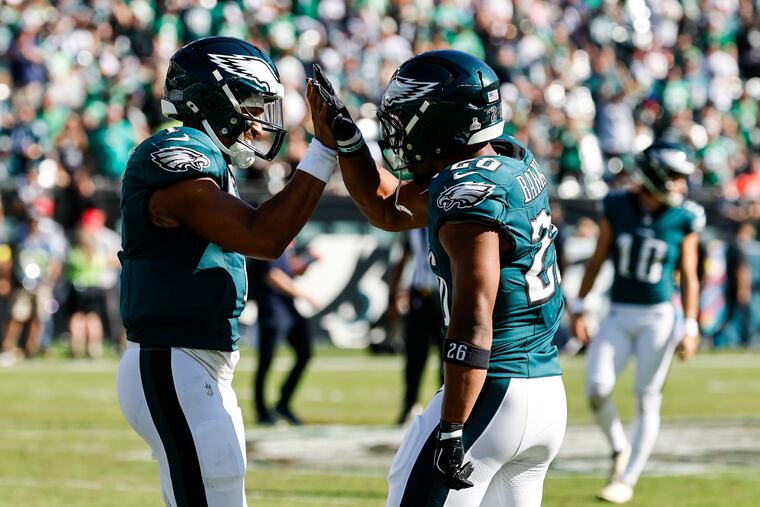
Hill said that two players were in motion and, by rule, both need to stop for a full second before the snap. Saquon Barkley, Hill said, “continued in motion,” causing the flag.
Hurts said the offensive operation being quicker and more urgent could have avoided that specific flag. That operation problem has been an issue for the Eagles, who are often late to the line and, in situations like two players going in motion, at the mercy of the play clock.
» READ MORE: A.J. Brown got his wish but still lost because Jalen Hurts isn’t consistently good enough | Marcus Hayes
Sirianni took the blame for some of the self-inflicted errors.
“When we don’t master the things that require no talent, that’s always going to be on me,” he said.
The Eagles have been penalized 37 times through five games. Only seven teams with five games played have more, and only four have accumulated more penalty yardage.
The 50-50 calls probably do balance out eventually, like Sirianni says. But the coach’s parting thoughts on the non-calls were what will haunt the Eagles: “You just don’t want to put yourself in those situations where it’s coming down to a decision making by someone else,” he said.