The Eagles are about to win the NFC East again, as usual. Here’s how they’ve done it.
How did the Eagles manage to create so much distance between themselves and the NFC East field? As with all big questions, there’s not just one big answer, but here are a few explanations.
The Eagles are going to win their division. They need just one victory to clinch first place, and they’re likely to get that victory Saturday night against the Washington Commanders. And even if, by some minor miracle, they manage to lose to a 4-10 team that will be quarterbacked by Marcus Mariota, they can still just wait until the Dallas Cowboys lose again, which would bring its own kind of satisfaction.
One way or another, the Eagles will end up atop the NFC East, becoming the first team to repeat as the division’s champion since they won it four straight times from 2001 through 2004. That statistic makes the last quarter-century of NFC East history sound more competitive and equitable among the Eagles, Cowboys, New York Giants, and Washington than it has actually been. In 2001, the Eagles won their first division title and reached their first NFC championship game with Andy Reid as their head coach and Donovan McNabb as their starting quarterback. That season was, really, the start of the general dominance that has followed. Here’s the breakdown of these 25 years, assuming the Eagles finish first again this season:
Eagles
Overall record: 240-160-2
Winning seasons: 18
Playoff berths: 16
Division titles: 12
Conference championship games: 8
Super Bowl appearances: 4
Super Bowl victories: 2
Cowboys
Overall record: 218-183-1
Winning seasons: 13
Division titles: 7
Conference championship games: 0
Super Bowl appearances: 0
Super Bowl victories: 0
Giants
Overall record: 176-225-1
Winning seasons: 9
Division titles: 3
Conference championship games: 2
Super Bowl appearances: 2
Super Bowl victories: 2
» READ MORE: Eagles can still get to the Super Bowl, but only if their defense drags them there
Washington
Overall record: 166-234-2
Winning seasons: 6
Division titles: 3
Conference championship games: 1
Super Bowl appearances: 0
Super Bowl victories: 0
Whatever crises the Eagles might be undergoing are framed through a different lens from any other team in the division. They judge themselves and are judged by the answer to one question: Are we good enough to win the Super Bowl? Their divisional foes’ standard has not been quite as high: Are we good enough to keep from embarrassing ourselves again?
Less than a year ago, for instance, the Commanders’ appearance in the NFC championship game was supposed to augur a new rivalry between them and the Eagles at least and a new era for the division at best. That’s why the teams’ two games this season were scheduled in the season’s final three weeks. Huge head-to-head matchups to decide the division, right? Instead, the Eagles trounced the Commanders by 32 points to reach Super Bowl LIX. Jayden Daniels, Washington’s wonderful young quarterback, has played just seven games this season because of injuries, and even if Daniels had remained healthy, the Commanders might be floundering anyway; their front office built the oldest roster in the NFL around him.
» READ MORE: DeVonta Smith wants the ball and wants to win. Can the Eagles do both?
So what happened? How did the Eagles manage to create so much distance between themselves and the NFC East field? As with all big questions, there’s not just one big answer, but here are a few explanations:
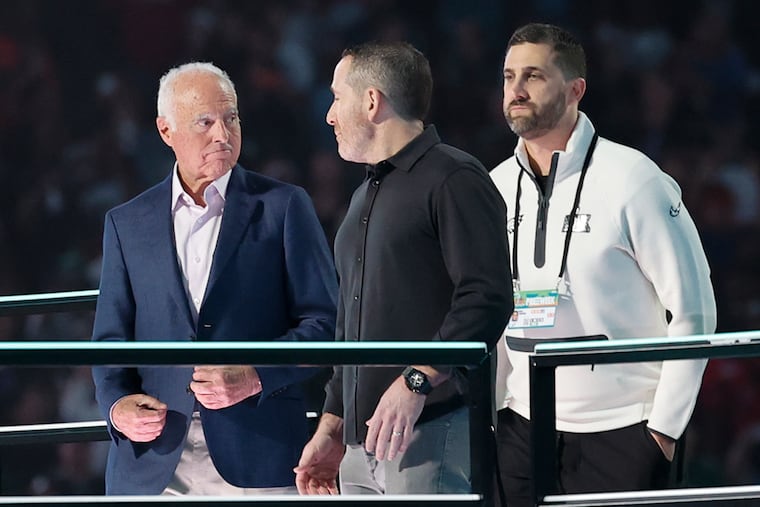
Jeffrey Lurie, Joe Banner, and Howie Roseman have been forward-thinkers.
From strategic massaging of the salary cap to aggressive play-calling on fourth down, Lurie has empowered his executives (and, in that middle-management position, his head coaches) to be creative, to posit how the NFL would evolve and how the Eagles might get ahead of those changes.
Jerry Jones can’t put his ego aside for the sake of a Super Bowl.
Jones has been a true visionary when it comes to the NFL’s growth into the pop-cultural monster it is today. He recognized America’s insatiable appetite for pro football and has built one trough after another to feed us, and he does want to win championships. But he’s not willing to sacrifice the publicity and the credit, to stand aside and let someone smarter handle the Cowboys’ football-related decision-making. It is not enough that the Cowboys win. Jones must be perceived as the reason they have won, and it’s that very thinking that keeps them from matching the Eagles’ success.
Daniel Snyder.
That’s it. The man pretty much single-handedly destroyed one of the best and most popular franchises in the league. As just one example, Washington’s coaching staff in 2013, under head coach Mike Shanahan, included Sean McVay, Kyle Shanahan, Matt LaFleur, Mike McDaniel, and Raheem Morris — and Snyder let all of them get away. (Or run away, as the case may be.)

Mike Sielski alerts
Eli Manning retired.
Sounds crazy, right? It’s not. When Manning was in his prime, the Giants went through an eight-year stretch in which they qualified for the postseason five times, won two Super Bowls, and never finished under .500. The Giants haven’t been able to replace him, and that has been a bigger failure even than allowing Saquon Barkley to sign with the Eagles.
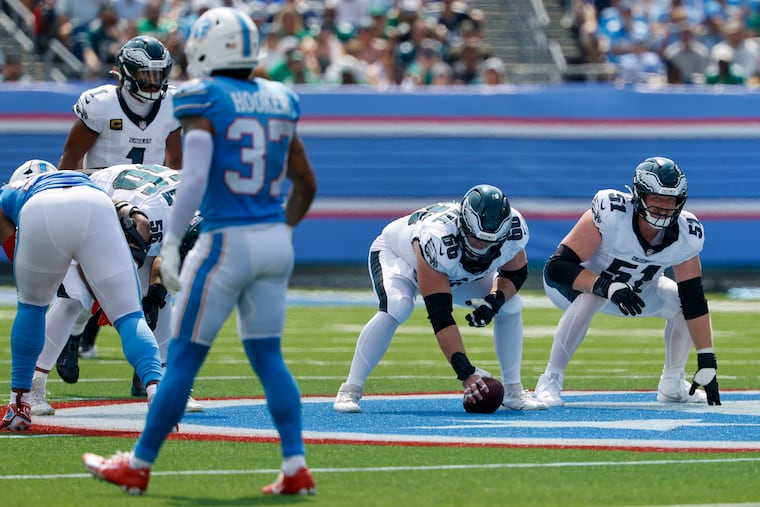
Jeff Stoutland has given the Eagles an edge in the trenches.
Yes, the Eagles have long maintained that games are won and lost along the offensive and defensive lines. Any franchise’s coaching staff can chant that mantra, though. Few, if any, can develop linemen like the Eagles, and Stoutland’s presence and expertise are invaluable in that regard. Ask yourself if Jordan Mailata would have become an elite left tackle anywhere else.
The Eagles value depth at quarterback.
They won one Super Bowl with their backup quarterback (Nick Foles), won another with a player who had been drafted to be their backup quarterback (Jalen Hurts), made a season-saving run to the NFC divisional round in 2006-07 with their backup quarterback (Jeff Garcia), and have generally hired head coaches who know how to implement and oversee quarterback-friendly systems.

Landon Dickerson has made a career of fighting through injuries and pain, last season being the latest instance. But after the left guard looked like a shell of himself Week 1 vs. Washington, the Eagles decided to shut him down — at least for now. With Dickerson landing on injured reserve, The Philadelphia Inquirer's Jeff McLane explains why, this time around, he and the Eagles are taking the cautious route. Jeff also shares what he's heard about how the Eagles might fill Dickerson's void on the offensive line, and takes listener questions in this week's mailbag segment. Listen here.
Listen to all episodes here or wherever you get your podcasts.