Is artificial intelligence our economy’s friend or foe?
AI adoption is in the early stages, but it could be implemented in ways that boost the economy, economist Mark Zandi writes.

As a professional economist, I have the opportunity to weigh in on many issues. In some of my views I’m highly confident, some less so. When it comes to artificial intelligence and its impact on the economy, I’m less confident.
Having said this, AI has — at least so far — been mostly beneficial for the economy. It has provided a strong tailwind to economic growth since its commercial introduction with the release of ChatGPT nearly three years ago. Over the past year, an estimated more than one-third of the growth in real GDP — the value of all goods and services produced by the economy — has been powered by AI.
One could make a strong case that without this tailwind, the economy would be in or near a recession. The higher tariffs, the highly restrictive immigration policy, large cuts to federal government jobs, and the interminable federal government shutdown are stiff headwinds to growth.
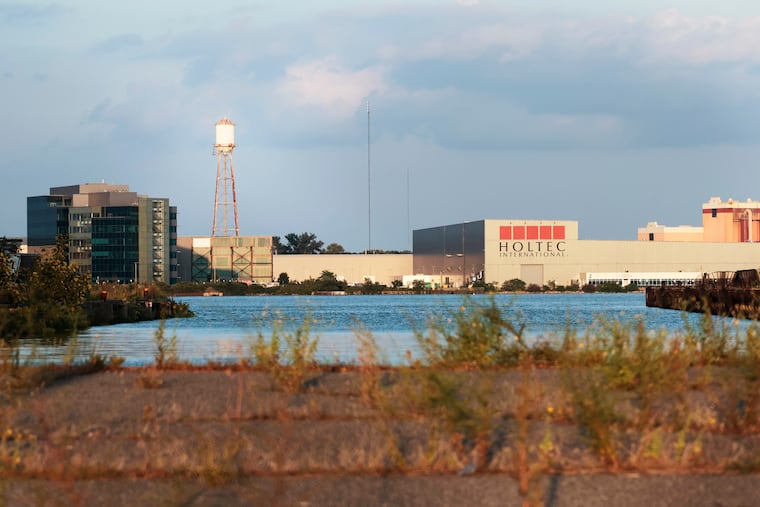
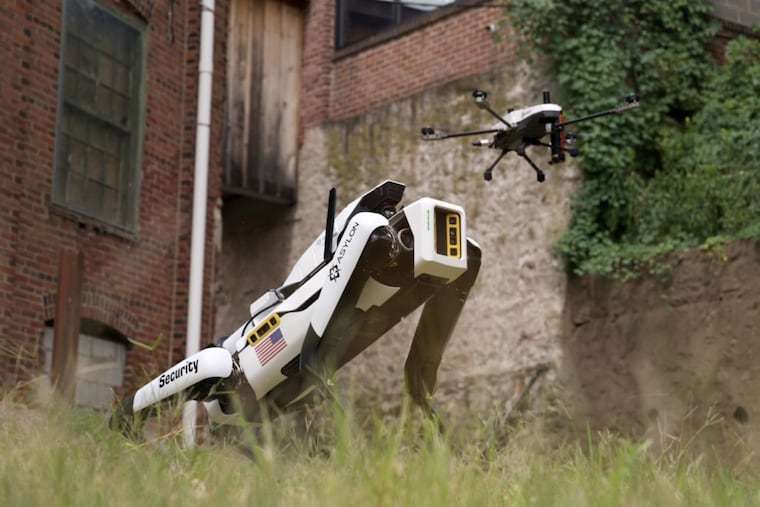
But the economy hasn’t buckled — thanks to AI. It is lifting growth via the massive investments being made to erect the AI infrastructure. This includes data centers that are being feverishly built across the country, electric power capacity that is needed to keep the data centers humming, and the fabrication plants that make the semiconductors powering AI‘s intense calculations.
Even more important to economic growth is the blockbuster increase in the stock prices of AI companies. Stocks for the “magnificent seven,” the seven most iconic AI companies, are up some 40% over the past year and 300% since the unveiling of ChatGPT. Investors are anticipating huge profits from these companies.
These gains equate to trillions of dollars in increased stock wealth, owned mostly by well-to-do Americans. The wealthy, with suddenly much larger nest eggs, are able and happily willing to spend more, and that’s what they are doing. Consumer spending by those in the top part of the income distribution is on a tear.
AI has not eliminated lots of jobs as feared, at least not yet. Most businesses are cautious in their hiring, but that has more to do with the uncertainty created by the wild swings in economic policy, the poster child of which is the up-and-down tariffs. Businesses are also waiting to hear from the Supreme Court about the legality of these policies before making any expansion decisions.
There is some indication that younger workers, those just entering the workforce, may be feeling the early ill effects of AI on their job opportunities. The unemployment rate for those aged 20-24 exceeds 9%, up more than 3 percentage points during the past couple of years, and is on the rise despite a decline in labor force participation. But even here, it is tough to connect the dots from AI to this group‘s difficulties landing a job.
Of course, it is still early days in the adoption of AI. Just how disruptive AI will be to the job market depends on how quickly companies adopt it. So far, it has been slow going. Less than one-tenth of U.S. companies, mostly large companies, have begun to meaningfully incorporate AI into their workflows. It stands to reason that the most intensive users of AI would be information-technology companies, but even here, the adoption rate is no more than one-fourth.
AI adoption by businesses is slow because it is hard. Companies don’t have employees with the right skills, their information-technology systems aren’t set up to take advantage of AI, and they are fearful of releasing AI-driven products and services, given that they might cannibalize their existing offerings. A range of compliance and legal issues must also be resolved before adoption.
If the history of the adoption of pathbreaking technologies is a guide — for example, electricity and the internal combustion engine more than a century ago, or the personal computer and the internet several decades ago — it’s only when new businesses form and optimize around that technology that its economic impact is truly felt. But this takes years.
AI’s adoption rate is sure to be faster than that of other technologies, but you get my point. There will be disruptions as AI replaces some jobs, and the nature of work will change as AI assumes some of the more menial tasks done by workers. But all of this should happen slowly enough to allow disrupted workers to gain new skills and new jobs.
This isn’t to say AI raises no concerns for the economy.
Most immediately, I worry about those high-flying AI stock prices. If I’m even close to right about slower AI adoption rates, this will come as a disappointment to euphoric investors, and stock prices will quickly come back to earth. Wealthy investors will take it on the financial chin, and so too will the economy.
And abstracting from the near-term gyrations in the stock market, there is a reasonable concern that the financial benefits of AI will accrue largely to the well-to-do. Our already highly skewed income and wealth distribution will become even more so. The economic and political struggle between the haves and have-nots will intensify, to everyone’s detriment.
Of course, there are even more dystopic views of where AI is set to take us, and they can’t and shouldn’t be dismissed when thinking about legal and regulatory guardrails.
But when it comes to the economy, AI should be much more friend than foe.