Federal Reserve unlikely to lose its independence under new chair | Expert opinion
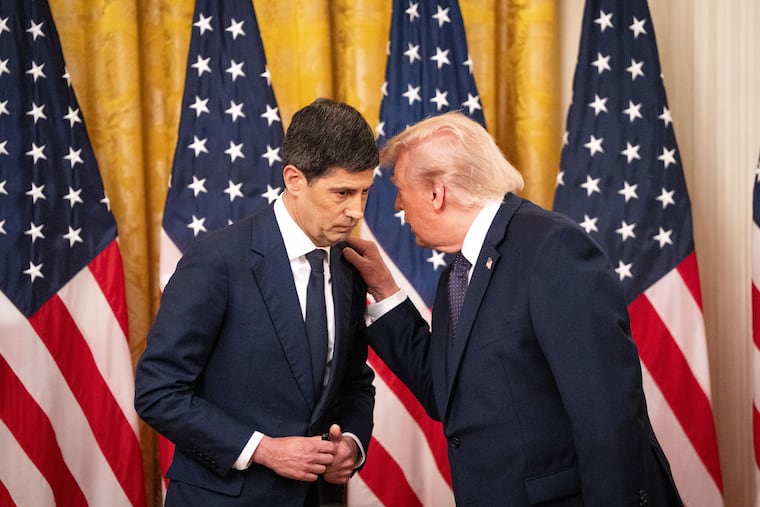
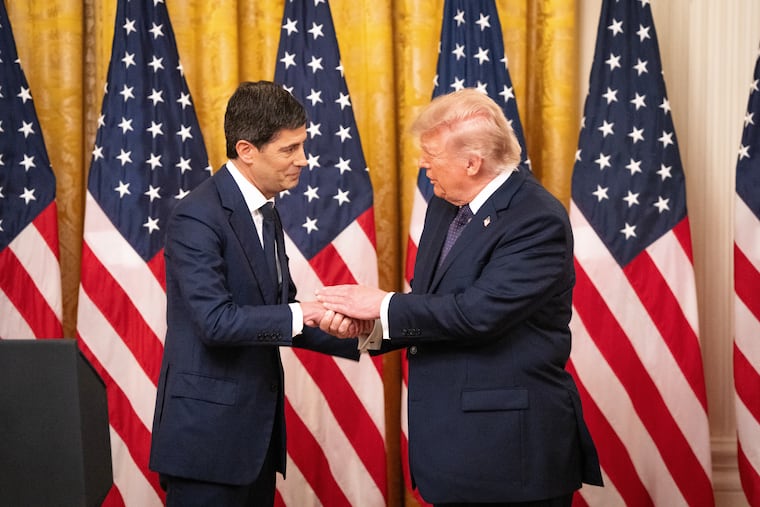
Until Kevin Warsh’s recent appointment as Federal Reserve chair, this was near the top of economist Mark Zandi’s list of economic worries.
I suspect there is much about the economy that’s worrying you. There is the Iran war, and the resulting surge in gas prices and inflation. There is the concern that artificial intelligence is set to take many of our jobs. And there is our nation’s massive budget deficit and high and quickly rising debt load.
I could continue, but rather than pile on, let me take one worry off your list — or at least one that should have been on it. Namely, that the Federal Reserve will lose its independence to set interest rates based on what is best for the economy, and not based on political considerations.
Until Kevin Warsh’s recent appointment as Federal Reserve chair, this was near the top of my list of worries. President Donald Trump has made it clear that he wants lower rates and is prepared to replace Fed members who don’t share that view. He tried to fire Governor Lisa Cook over allegations of mortgage fraud — the first attempted removal of a Fed governor in the central bank’s history. And then, under pressure from the White House, the Justice Department opened a criminal investigation into former Chair Jerome Powell.
But the Supreme Court appears set to block Cook’s firing, and last month, a federal judge quashed the subpoenas issued in the Powell investigation.
Fed independence, regardless of who the president is, is the cornerstone of a well-functioning financial system and economy. Without it, the president will always want lower rates to help juice up the economy, particularly before elections. And that will inevitably result in higher inflation and never ends well.
That’s exactly what happened in the early 1970s. We know this from tape recordings of then-President Richard Nixon and his good friend, Fed Chair Arthur Burns, who agreed to keep rates low to help Nixon win reelection.
Nixon won, but the overly low interest rates fanned inflation, which was further fueled by surging oil prices stemming from disruptions to oil production in the Middle East.
Sound familiar?
The 1970s inflation ended only when the strong-willed Paul Volcker became Fed chair and aggressively raised interest rates, pushing the economy into severe back-to-back recessions. Even then, it took more than a decade to fully vanquish the undesirably high inflation.
The encouraging news is that the practical constraints on politicizing the Fed have been reasonably durable. By staying on as a governor — the first former chair to do so in nearly 80 years — until his term expires in 2028, Powell pushed Stephen Miran, the former chair of Trump’s Council of Economic Advisers and a staunch supporter of the president’s call for rate cuts, off the Fed when Warsh was confirmed.
The president will likely have other opportunities to fill open Fed positions as current members roll off, but it will take more time than he has to meaningfully change the Board’s composition.
Warsh’s own posture on the importance of Fed independence and the necessity of setting interest rates without political interference has been clear. He was an important member of the Fed under Ben Bernanke during the worst financial crisis America had faced since the Great Depression, and he is well ingrained in global monetary policy circles, where central bank independence is a strongly held orthodoxy.
Global investors appear convinced. They are betting in futures markets that the next move by the Fed will be to raise rates and not lower them as the president wants.
None of this means there won’t be significant changes in how the Fed manages monetary and regulatory policy under Warsh. He has been critical of how the Fed communicates, arguing that Fed officials speak too often and are too transparent in guiding where rates are headed. Most Fed members believe that increased transparency has reduced costly volatility in financial markets. Either way, the new chair has significant latitude to make changes.
Warsh has also been highly critical of the Fed’s changes to monetary policy, which have led to an expansion of its balance sheet. This has been a long-standing concern for him, and he resigned from the Bernanke-led Fed soon after the financial crisis, citing the Treasury bond-buying program. There’s no argument that a careful reassessment of the balance sheet is in order, but scrapping the current framework would be highly disruptive to the banking and broader financial system.
Warsh’s opinions on monetary policy often differ from my own. But I respect his views — and, more importantly, his commitment to setting policy based on what the Fed thinks is best for the economy. The cost of getting Fed independence wrong in the 1970s was a decade of stagflation and back-to-back recessions with double-digit unemployment. It’s been touch-and-go, but it looks increasingly likely we will get it right this time.