This Philly school police officer was shot 11 times — and lived. Here’s what he wants you to know.
Craig Romanczuk had just finished a patrol shift when he nearly lost his life to a driver with road rage and a gun.
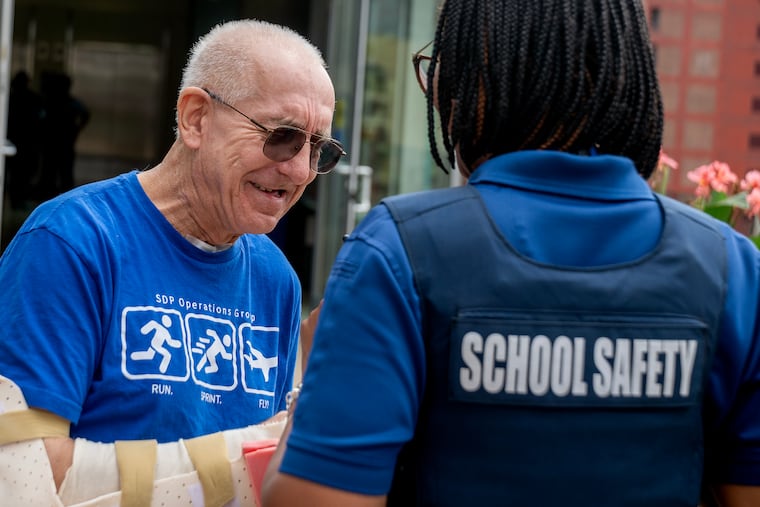
Craig Romanczuk’s voice barely gets above a whisper these days.
But speaking at all, he said, feels like a miracle.
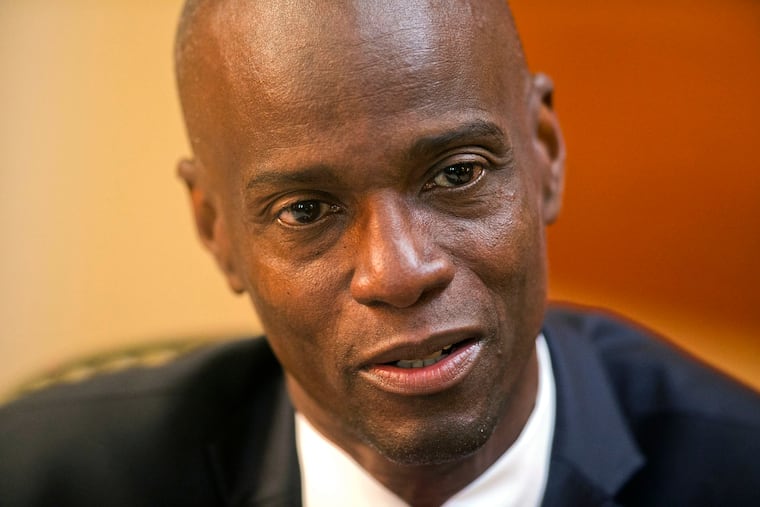
Five months ago, the 68-year-old retired Philadelphia police officer, a Philadelphia School District safety officer of nearly 20 years, was shot 11 times while driving in a marked patrol car. He almost died.
Life is crowded with medical appointments, surgeries, and therapies now. But Romanczuk takes it in stride, with the kind of gruff and jovial banter born of his one-of-nine-kids-growing-up-in-Kensington roots and the near-death experience that still feels very close.
After almost dying, “you appreciate your family, your brothers and your sisters,” Romanczuk said, pausing. ”Even though they’re still jerks. Now you get a chance to tell them that they’re jerks and you still love them."
‘Officer, can you help me?’
It was a warm June morning when Romanczuk wrapped up his patrol assignment, checking on a Kensington high school building just before 2 a.m.
It had been a night shift like many others — after graduating from North Catholic High School, Romanczuk joined the police force at 19, spending his career in the 3rd District, in South Philadelphia, and finishing it in the 19th, in West Philadelphia. After he retired in 2004, his sister encouraged him to take the school police test. He spent years as an officer in schools, then took a patrol job in 2017, driving around the city to check on school buildings between 10 p.m. and 8:30 a.m.
On June 29, Romanczuk took Front Street toward North Columbus Boulevard on his way back to a district garage after the Kensington High School for the Creative and Performing Arts job. He was stopped for a red light near Dave & Buster’s when a car pulled up to him.
“The man said, ‘Officer, can you help me?’” Romanczuk remembered. A driver exhibiting road rage had been following the man since they were both driving on I-95, he told Romanczuk, who agreed to assist.
District safety officers are not armed; Romanczuk said he planned “to say, ‘Yo, guy, knock it off, go the other way.’“
He opened his car door, stepping out onto the street. He didn’t even have time to say a word; bullets started flying immediately.
Romanczuk was shot 11 times — in the shoulder, in the armpit, through the bicep. One bullet cut across his chest, striking the cell phone in his pocket. One pierced his neck, breaking his collarbone, damaging his Adam’s apple and his vocal cords. One exited out of the left side of his face, breaking his jawbone and taking nearly all of his upper teeth with it. One hit the side of his face, going through the roof of his mouth and coming out of his nose.
He was wearing a bulletproof vest, but was still injured enough to nearly bleed out.
“It isn’t like a movie,” Romanczuk said. “You feel the bullets break your bones. You feel them going through your body. That’s the pain I felt. I thought, ‘I hurt too much. I’m not going to live through this.’”
Somehow, Romanczuk managed to get back into his car, an attempt to elude the shooter.
“I put the car in drive and I felt more bullets hitting the car seat. I was thinking, ‘Why am I being shot? I didn’t do anything. He’s not mad at me,’” he said. “It’s like the Hallmark movie — you think of your kids. I thought, ‘Tell them that I love them.’”
He hit a tree. His last memory is staggering out of his patrol car.
‘This ain’t heaven’
A Philadelphia Parking Authority tow truck sat across the street, its operator watching the whole scene unfold. The tow truck driver called 911 and a buddy of his who was a school police lieutenant. City police responded, ready to scoop Romanczuk and take him to the hospital, when a fire department paramedic unit drove by.
The paramedics got Romanczuk to Thomas Jefferson University Hospital. He remained unconscious for two weeks.
When he eventually woke up, he thought he was dead.
“I’m looking around, I’m on the ninth floor in a dark room. I said, ‘Well, this ain’t heaven. This must be purgatory.’ A nurse leaned over and I went, ‘Lucifer?’ I went, ‘Where am I?’ He said, ‘Jefferson.’ I said, ‘Is that hell?’”
It turns out it wasn’t hell. Romanczuk remained in Jefferson until the end of July, then spent a month at Jefferson Moss-Magee Rehabilitation Hospital in Center City, astonishing staff with his progress. He received a hero’s send-off on his release.
Romanczuk is full of effusive praise for the staff at Jefferson. He’s not a hero, he said.
“The doctors and God are,” he said. “I think God was working through the doctors. They were so skillful.”
Politicians like to take credit for improving homicide rates, Romanczuk said.
“But it’s not the politicians, it’s the doctors,” he said. “They’re so good at saving people.”
‘He will do this again’
Romanczuk could not speak at all for weeks. Now that extensive therapy has allowed him to regain a quiet voice, he wants to use it.
Ariza Giansteban is accused of attempted murder in connection with Romanczuk’s shooting. Romanczuk feels strongly that Giansteban, who remains in custody, should not be granted reduced bail.
“I think he should spend the rest of his life in prison,” Romanczuk said. “I believe if they let him out, he will do this again somewhere.”
Romanczuk worries that prosecutors leading the case against Giansteban and other alleged criminals do not think enough about the victims of violence.
He will continue to show up at Giansteban’s court appearances when he can, Romanczuk said, to make his voice heard and remind people what he has suffered.
And he will continue to be grateful for being around to crack jokes.
Romanczuk is able to live alone at his house in the Northeast, “with my sister yelling at me, and my son,” he quipped. (His son is also a city police officer.)
Until the shooting, Romanczuk had no plans to retire, but his massive injuries forced his hand. The steady stream of visits buoyed him, he said.
“I love my coworkers and my family,” he said, “and I got 20 more years to tell them so.”