Penn State board committee approves raising the president’s compensation by $1 million
The board of trustees is scheduled to vote on President Neeli Bendapudi's new compensation package on Friday. The proposal would raise her total compensation from $1.8 million to $2.8 million.
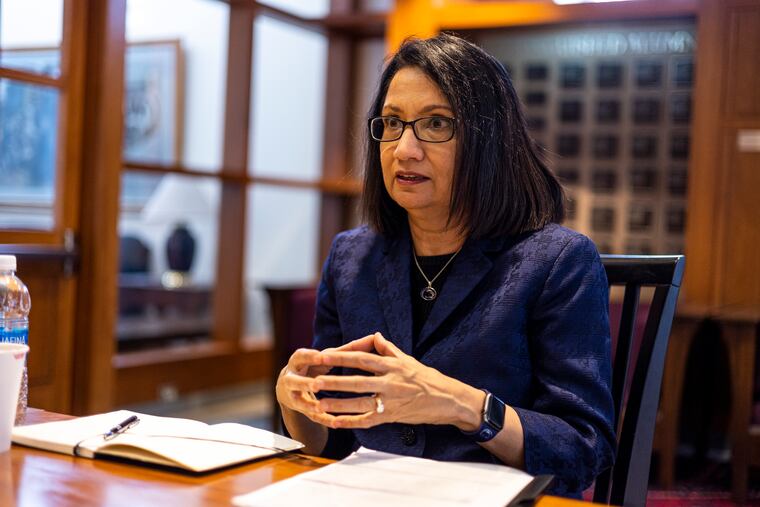
Pennsylvania State University president Neeli Bendapudi would receive a $1 million compensation boost under a proposed new package that was unanimously approved by a board of trustees committee Thursday.
Bendapudi’s current compensation stands at about $1.8 million and would rise to $2.8 million under the proposal outlined at the committee meeting. That includes an increase in base salary from $950,000 to $1.4 million, an increase in the pension component from $250,000 to $525,000, and an increase in deferred compensation from $550,000 to $650,000. The proposal also includes a new performance-based incentive of up to 15% of the base salary.
The information was shared at what was supposed to be a private executive session of the board, but the livestream of the meeting was on and could be heard, though not viewed, by The Inquirer. The stream was shut off about 15 minutes into the meeting.
The full board is scheduled to vote on Bendapudi’s compensation package at a meeting Friday.
Under the proposal, Bendapudi’s contract would extend to 2032; she currently has a rolling five-year contract, so the proposal would add two years to that.
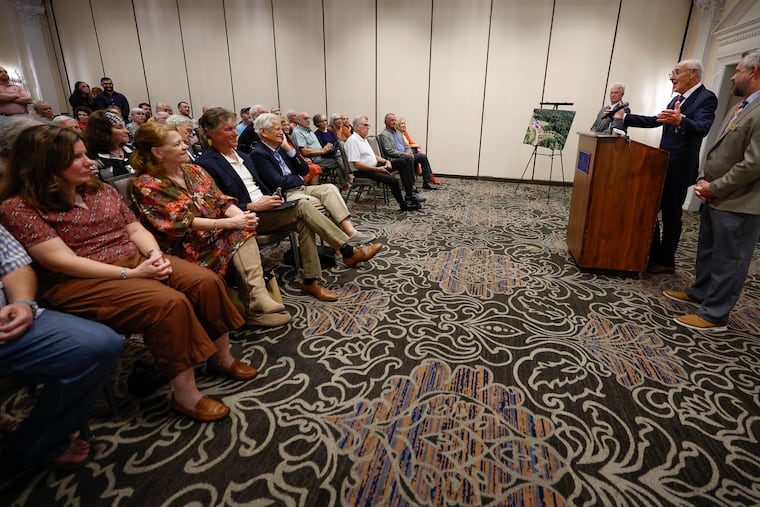
The new package would come as Bendapudi begins her fourth year at the helm of the flagship state university. Bendapudi in July earned high marks from trustees in her evaluation and got a standing ovation at the meeting.
“Your evaluation reflects what so many of us see every day, a president who leads with courage, clarity, and conviction, a leader who builds trust not by avoiding the hard decisions, but by meeting them head-on — and doing so with empathy, discipline, and resolve,” board chair David Kleppinger said to Bendapudi at the July meeting.
Kleppinger at that meeting credited Bendapudi for making the hard decision to close seven Commonwealth campuses, balancing the budget a year ahead of schedule, and garnering record fundraising. The university received $560 million in donation commitments, including 17 gifts of $5 million or more, beating a record of 12 established six years ago, he said.
» READ MORE: Penn State names Louisville president Neeli Bendapudi as its next leader
During Thursday’s committee meeting, it was shared that Bendapudi ranks just below the median in comparison with her peers and that the raise would take her to the 80th percentile. It was not clear who the peer group is.
“I would say that she feels undervalued right now … in comparison to what’s happening in the marketplace,” Kleppinger said.
In 2024, Bendapudi placed seventh in overall compensation among 180 public doctoral university presidents, according to the Chronicle of Higher Education, which released its survey results this month.
A consultant presented the recommendation on Bendapudi’s compensation at the committee meeting.
The consultant said presidents must serve in a “highly politicized” environment, creating increasing challenges for the job.
“More presidents are leaving the job than they have in the past or retiring earlier, so we see presidential tenure decreasing significantly, and the challenges and the pressures that we’ve seen are generally more intense at public institutions than the private counterparts,” the consultant said.
A board member asked what Bendapudi’s goals would be in the year ahead.
Kleppinger shared that while her goals have not been finalized, Bendapudi wants to “complete an institution-wide career services assessment for both graduate and undergraduate students” and have internship capabilities for all students. She also wants to develop a comprehensive internal strategy on artificial intelligence to increase learning and productivity, work on succession planning for her direct reports, increase financial stewardship, and unify the academic and community clinical positions at Penn State Health into one practice group.
He said Bendapudi also wants to improve overall student success and communication with board members. And the board, he said, has asked her to share her 2032 vision for the university.
Bendapudi has faced criticism from some faculty for budget cuts and the Commonwealth closure plan, and a move for a vote of no confidence in her was tabled at the faculty senate meeting in February. Some faculty are attempting to form a union, citing concerns about lack of shared governance, salary and workload inequities across campuses, and transparency.
In an interview before the July meeting, Bendapudi said she was pleased with how her team has performed since she started as Penn State’s president in May 2022, given the turbulent times higher education has faced.