A state board has plans to improve college affordability and increase the number of people who complete degrees
Helping financially struggling colleges, increasing college degree attainment, and addressing costs are among the areas addressed in the Pennsylvania State Board of Higher Education's 10-year plan.
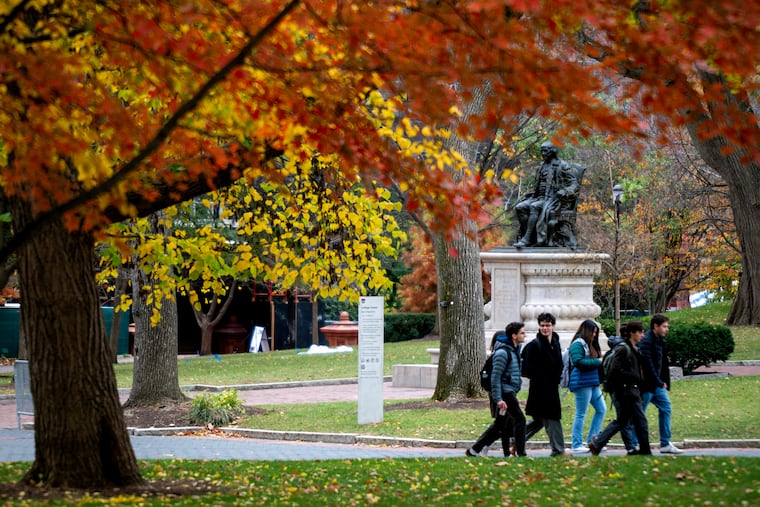
Pennsylvania’s fledgling State Board of Higher Education on Thursday rolled out its first strategic plan, setting goals addressing affordability, increased degree attainment, the state’s workforce and economic development needs, and the fiscal health of colleges.
The board voted unanimously to post the 10-year plan for public comment. It will consider adoption in February.
“The plan will strengthen partnerships, break down silos, and enable effective reinvestment in the sector,” Cynthia Shapira, chair of the board, said in a statement introducing the plan.
» READ MORE: The new state board for higher education is getting started as colleges face challenges and scrutiny
It comes as the sector faces perhaps its greatest challenge in decades. Both private and public universities have been losing enrollment as the number of high school graduates falls — with another dip beginning next year and a 12% decline expected in Pennsylvania by 2037. Public trust in colleges has faltered, while concerns about cost and student debt have mounted.
They are also facing scrutiny from President Donald Trump’s administration and a forecasted gap in workers who require a postsecondary credential in essential areas, such as healthcare, teaching, and advanced manufacturing.
The Pennsylvania State System of Higher Education, which oversees the state’s 10 universities, endorsed the plan’s emphasis on collaboration across private and public colleges and universities.
“Within our own system, we have learned that when universities work together, they can innovate, overcome challenges and better serve students and the Commonwealth,” the system said in a statement. Shapira is also the chair of PASSHE’s board.
What is the board and what’s in its plan?
The 21-member higher education board includes college presidents, administrators, legislators, and students. It was formed in 2024 by the governor and General Assembly to help public and private colleges work more cohesively and better serve students and the state’s workforce needs. The plan rollout follows public hearings that drew comments from more than 1,200 people, the board said.
The plan outlines the challenges facing the higher education sector including another coming decline in the high school population, financial constraints, and the lack of coordination among institutions. Student debt averages more than $40,000 per student in Pennsylvania, the plan notes.
“Multiple comparative state-level analyses ... place Pennsylvania at or near the bottom in terms of affordability, attainment, and state investment per capita,” the report stated. “Adding to these challenges are a large and growing postsecondary workforce credential gap, and a range of closures and mergers that threaten to reduce access to postsecondary education.”
» READ MORE: Financially Fragile
In the Philadelphia region, Cabrini University and the University of the Arts closed in 2024 and Rosemont College announced earlier this year that it would cease operations in 2028 and that Villanova University would purchase its campus. Salus University was merged into Drexel University. Six of Pennsylvania’s state universities were merged into two entities in 2022, and St. Joseph’s University absorbed the University of the Sciences the same year.
Other local colleges have struggled with enrollment declines and deficits. Temple University, for example, has gone from more than 40,000 students in 2017 to less than 30,000 this year.
What are the specific goals in the plan?
The new plan set six goals:
Increase postsecondary attainment.
Ensure affordable pathways to postsecondary credentials.
Support the economic development needs of the state.
Support the workforce development needs of the state.
Ensure accountability and efficient use of state funds.
Strengthen the fiscal health and stability of the higher education sector.
How will the board work toward those goals?
To meet the goals, the board proposes a “strategic communications plan” that touts the benefits of postsecondary education and how it impacts employment outcomes.
It also emphasizes expanding funding for dual credit programs and enrollment in those programs to streamline the path from high school to college and allow students to accumulate more credits before they graduate high school. In addition, the plan proposes studying how to improve retention rates and focusing on reenrolling adults who started college but didn’t finish; there are more than 1.1 million Pennsylvanians with some college experience.
Among its plans for addressing affordability are support of policies that “expand financial aid and forgive debt for in-demand, high-quality credentials,” take advantage of new federal Pell grants for workforce programs, and boost access to “open educational resources” to reduce the cost of course materials.
The report also discusses the intent to “maximize the impact of research universities,” recruit out-of-state students to broaden the talent pool, and increase access to paid work experiences for students.
To promote fiscal health, the plan recommends identifying and promoting best practices for fiscal efficiency and cost savings, and developing resources and an advisory group to help financially struggling colleges.
“If institutions decide to close or merge, tools and expertise to assist in this process will help maximize savings, retain access to critical academic programming, and mitigate negative effects on students and communities,” the plan states.
Another advisory group is recommended to help communities where colleges close maintain access to postsecondary education.
What comes next?
After the public comment period and the plan’s final adoption, the board intends to report annually on progress toward the goals and to consider revisions to the plan every five years.