The Philly school board finally began considering the superintendent’s school-closing plan — and the community is not happy
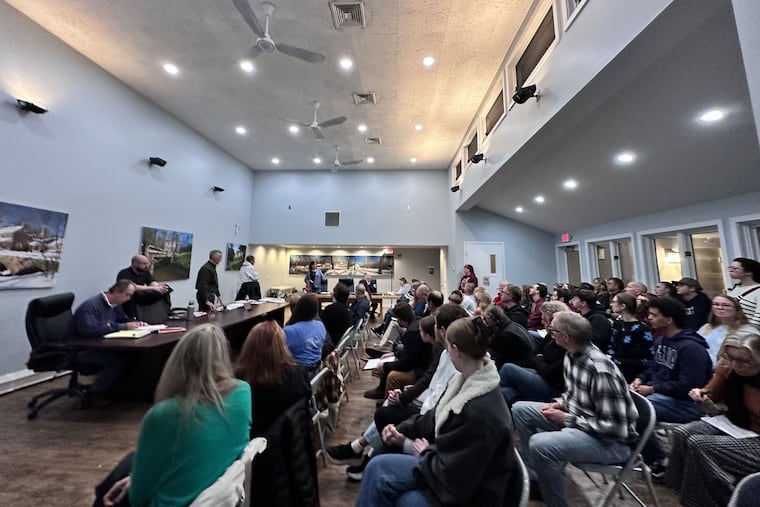
Superintendent Tony B. Watlington Sr. presented his proposal to close 18 schools at a lengthy, emotional meeting that began Thursday afternoon and stretched into Friday morning.
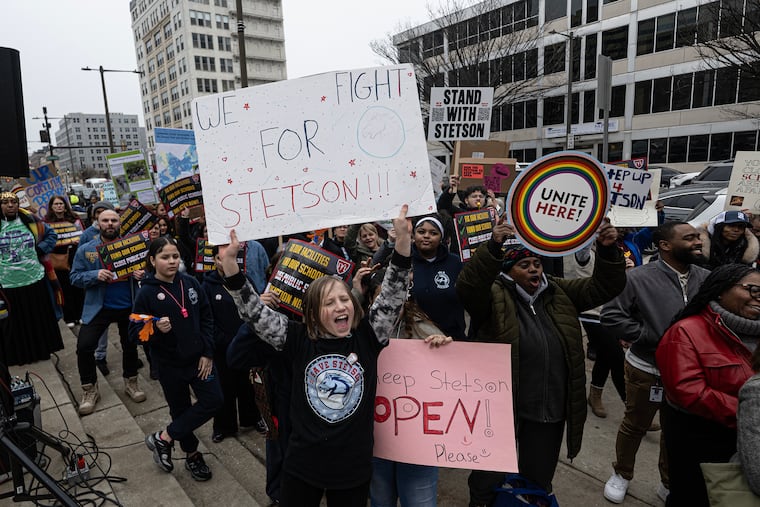
Frustration and anguish spilled over Thursday night as Superintendent Tony B. Watlington Sr. presented his sweeping, $2.8 billion facilities plan to the school board at a heated, lengthy meeting.
Watlington revised the plan to include 18, not 20 school closings — saving Conwell Middle School and Motivation High — and still wants to modernize 159 schools over a decade. He pitched it as a “once-in-a-lifetime” opportunity to drive academic improvement.
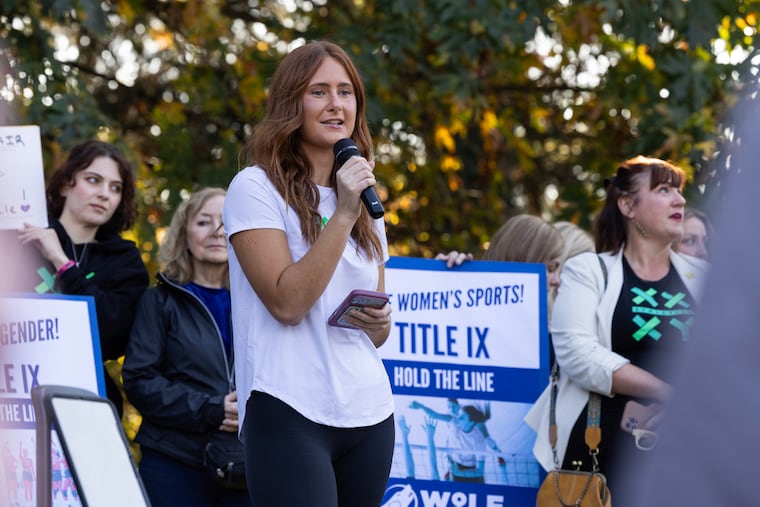
But the community did not seem impressed — at an anti-school-closure rally prior to the meeting, and at the public session itself, which stretched on for more than eight hours, into the early hours of Friday morning.
“Dr. Watlington, you’re breaking my heart,” said Amanda Chandler, a teacher at Harding Middle School, one of the schools on the chopping block.
The district’s plan “isn’t an opportunity — it’s calculated abandonment,” said Beth Cole, a teacher at Stetson Middle School, which is also slated to close.
» READ MORE: Two of 20 Philly schools slated for closure would be spared under a revised district plan
Watlington first unveiled the facilities plan, which was years in the making, in January. After weeks of community meetings, the superintendent formally presented the blueprint — with some tweaks — to the school board Thursday. The board has not yet said when it will vote on the plan, but has scheduled a March 12 town hall to hear more public feedback.

Wholesale changes are coming to the Philadelphia School District, with the school board passing a $3 billion facilties plan that aims to close 17 schools permanently, and renovate 169.
Superintendent Tony B. Watlington Sr. presented the plan to the school board Feb. 26 and it immediately faced strong opposition. After some amendments, the board passed the plan April 30. Here's what we do and don't know about it.
And to see the proposed list school closures and check how your school could be impacted, use our interactive charts.
Each of the schools proposed for closure has its own story. Find them all here.
‘Massive upheaval’
The district has 70,000 empty seats in schools citywide. For example: Watlington said he recently watched a recording of a 1969 Overbrook High graduation. The school educated 5,000 students then. Now, it has fewer than 500.
And while some schools are underenrolled, some are overfull, particularly those in the Northeast. Inequities are widespread, also. For instance, only half of city students have access to Algebra 1 in eighth grade, barring them from admission to Masterman, a top city magnet that requires algebra for admission.
The board must address all those issues, said Reginald Streater, school board president.
“We have chronic underfunding, coupled with enrollment shifts that have materially created structural challenges that no district board can simply absorb without consequence to the district,” Streater said. “These realities have materially affected our ability to accelerate our fight against systemic chronic underachievement within the School District of Philadelphia.”
Streater did not weigh in on the details of the plan, but some other board members did, indicating there may be some pushback when it comes time to vote.
Board member Crystal Cubbage said she wanted a “bolder plan” including more new buildings. (Watlington’s version proposed a single new building in the lower Northeast for the Arts Academy at Benjamin Rush.)
“I’m struggling to reconcile this massive upheaval, and the $2.8 billion price tag, with the fact the plan is not explicitly designed to produce better outcomes for all of our children,” Cubbage said.
Audience members in the packed board room cheered as board member Wanda Novales voiced criticisms of the plan.
Novales said she recognized the complex challenges the board and district face, but “the standard cannot simply be operational efficiency,” Novales said. “I am struggling to see the heart ...that sees the lived realities of our neighborhoods.”
Areas like Kensington and Fairhill have long been underresourced, Novales said, and the plan falls short in providing opportunities to students there.
“This conversation cannot just be about buildings. It must be about students,” Novales said.
Joyce Wilkerson, the longest-serving member of the school board, and a member of the School Reform Commission, the board’s predecessor, said the district has known it had to “rightsize” for years.
“We can’t afford to be locked in inaction,” Wilkerson said.
More pushback
Students from the affected schools spoke pointedly about the proposed changes.
Jade Colon, a student at Stetson Middle School, in Kensington, said her school’s roof has leaked for years. It’s never been properly fixed.
“We are told this plan is about equality, yet we see our neighborhood — one that has already faced decades of disinvestment — being asked to sacrifice yet again,” said Colon. “True equality isn’t found in a swing space or a longer walk to a different building across dangerous intersections like Kensington and Allegheny. True equality is found in investing in schools we already have.”
David Samuel, who attends Parkway Northwest, another school on the closing list, said the school is “building strong children.”
Virtually all Parkway Northwest students are on track to graduation.
“Those are lives being moved forward,” Samuel said. “Closing Parkway Northwest wouldn’t be closing a school; it would be closing my home.”
The plan drew pushback from a number of politicians who showed up to voice displeasure to the board.
“I do not have the words to describe how disappointed I am by the district’s proposal today,” City Councilmember Jamie Gauthier said, underscoring concerns about harm to Black and brown students.
Removing Motivation from the closing list is a good step, said Gauthier, who represents a West Philadelphia district. But she wants Watlington to consider removing Robeson, Blankenburg, and Parkway West, too.
“Robeson did send a student to Harvard, and you still want to close it,” said Gauthier.
The superintendent said the district has done its best to spread opportunity, but he acknowledged the difficulty of the decisions in front of the board.
“In an ideal world, I never believe in closing schools,” Watlington said, a remark met with some groans from the crowd. “I would never want my child’s school to be closed, to be frank.”