The Philly School District illegally imposes conditions on charters, a group representing 70 of them says in lawsuit
The school district requires enrollment caps and for charter schools to shut down if performance targets aren't met. Philadelphia Charters for Excellence is suing the district over those requirements.
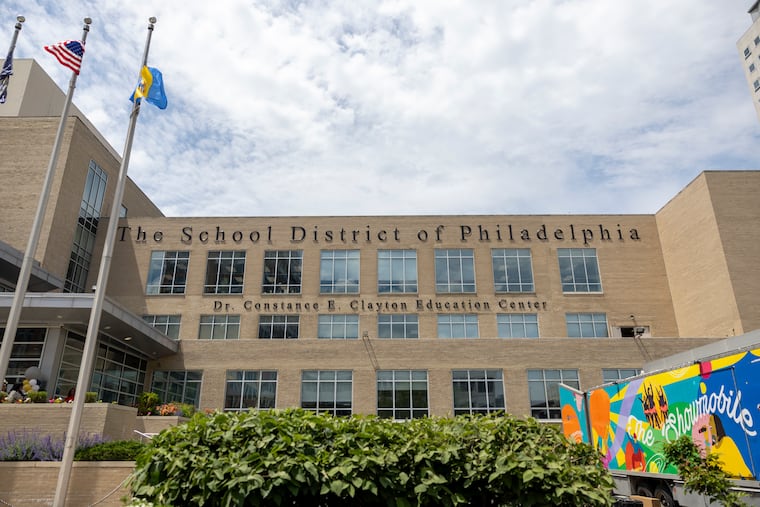
The Philadelphia School District illegally forces charter schools to agree to certain conditions in order to stay open, an advocacy group representing 70 of the city’s charters claimed in a lawsuit filed Thursday.
The group, Philadelphia Charters for Excellence, said in its complaint that requiring charters to agree to enrollment caps and to close if performance targets are not met amounts to abusing the charter-renewal process.
The lawsuit, filed in Common Pleas Court, names both the district and the school board and escalates a long-simmering dispute between the district and its charter sector.
And it came hours before the school board — which last month voted to close 17 district schools as part of its facilities plan — prepared to make recommendations about the fate of 11 charters up for renewal at a meeting Thursday evening. The city’s charter schools educate about one-third of Philadelphia’s public school students.
Three of 11 charters received “adverse” recommendations from the board Thursday night, resulting in nonrenewal recommendations for two and a one-year renewal recommendation for another instead of the standard five-year renewal.
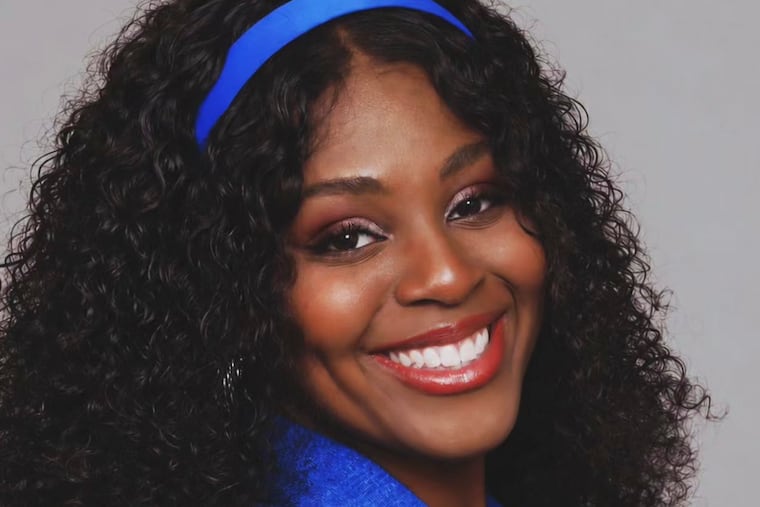
“Charter schools in Philadelphia have spent years navigating a renewal process that treats legal compliance like a negotiating chip,” Cassandra St. Vil, CEO of Philadelphia Charters for Excellence, said in a statement. “Schools are told to sign agreements they never agreed to, under conditions the law does not permit, or risk losing the authorization that tens of thousands of students and families depend on.”
The suit was the last resort, and a way to bring long-held concerns to light, St. Vil said in an interview. There is growing frustration around the charter-renewal process, she said, and “each year and renewal cycle, we’re seeing it narrower and tighter and more impossible and unpredictable, and therefore destabilizing to our schools.”
The school board, in a statement, said it was using the tools available to it to hold schools accountable for academics, operations, and fiscal integrity, as required by state law.
“The board will continue to hold all schools to high standards, celebrating measurable gains and addressing challenges that may exist as we remain focused on providing every student in Philadelphia with access to a high quality education and learning environments where they can thrive,” the board statement said.
Surrender clauses a point of contention
In Pennsylvania, school districts are responsible for authorizing charter schools, which are publicly funded but independently run and were intended to spur innovation and outperform traditional public schools.
Districts decide whether to approve or deny new charter schools. Charter advocates say the process is inherently unfair, because districts are disincentivized from opening schools that will take a share of their money.
Philadelphia’s charters have long objected to the district’s renewal process. Charters are typically granted for a five-year term; the district then evaluates the schools and recommends whether to renew them.
In some cases, the district has required charters to agree to “surrender clauses” as a condition of renewal — stating that if they do not meet certain academic targets, they will have to close.
The lawsuit filed Thursday alleges the district does not have the right to impose those clauses, and that Pennsylvania law requires any material changes to a school’s charter be done by mutual agreement.
Charters are forced to “refuse conditions unilaterally developed by the [district’s charter schools office] with little regard for the charter school’s academic design and face retaliation, or accept what they perceive to be the lesser of two evils,” the lawsuit says.
The clauses have been a point of contention for years. A district-commissioned investigation into allegations of bias against Black-led charter schools found in 2023 that the district used surrender clauses more often with minority-led charters than others, and noted that “schools with fewer resources and less bargaining power” were more likely to accept the conditions.
The school district has moved to lessen the adversarial relationship with charters.
Last year, the board approved the city’s first new charter in seven years and launched a process to revise its framework for evaluating charters.
Philadelphia Charters for Excellence has called on the district to pause renewal decisions until the new framework is completed, which is not expected until the 2027-28 school year.
St. Vil has said that while her group and its member schools remain at the table as part of that discussion, and have presented research and ideas, “we’re seeing more and more those ideas, those recommendations being overstepped or ignored.”
“We have no confidence that there will be an improved framework that will incorporate charter school perspective in it, nor that our schools will not be subject to additional scrutiny as we move forward.”
‘A broken process’
Amanda Wilson, executive director of Philadelphia Montessori Charter School, said she expects a nonrenewal recommendation Thursday night.
Philadelphia Montessori serves about 250 students in kindergarten through fourth grade in Southwest Philadelphia. The charter office cited significant academic concerns in recommending a one-year charter for the school in its last renewal cycle.
“As we’ve gone through this renewal process, we cooperated every step of the way, addressed every recommendation, and the process is still coming out punitive to our families and to our students and staff,” Wilson said. “We’re showing up every day, doing the hard work and serving the youth of this city, and we’re facing a broken process that’s not working for our students and families.”
Wilson said the school has demonstrated growth over the last year.
Lindley Academy Charter School at Birney, a K-8 school that enrolls about 700 students in Logan, is expecting a one-year renewal recommendation, rather than the typical five years. Leaders of the charter and American Paradigm Schools, the network that runs several charters, said the district has not provided clear reasons or explained differences between Lindley’s recommendation and those for other schools.
Marjory Covello, Lindley’s CEO, noted that Mayor Cherelle L. Parker’s office had “put their utmost trust in us,” selecting the charter among a group of schools to pilot an extended-day, extended-year program.
“We would hope the school district and school board would put that same trust in us,” Covello said, adding that the school serves a vulnerable population. “That is not what we see happening. And that is what we are fighting against so hard tonight.”