Historic Frankford High building, closed for years because of asbestos, reopens after a $30M refresh
At one point, the future of the 1912 building on Oxford Avenue was in doubt. Officials chose not to gut the building or knock it down.
For a time, it wasn’t a sure thing that Frankford High’s grand, Gothic Revival building would ever reopen — extensive asbestos damage shut the school in 2023, and officials feared they would have to tear down and build anew.
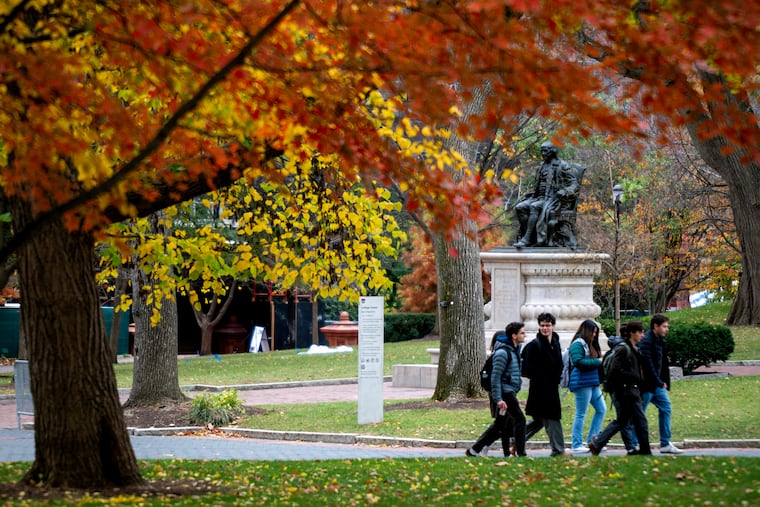
But the “Home of Champions,” a castle-like structure on Oxford Avenue, has a new life, and formally opened Monday after a $30 million refresh.
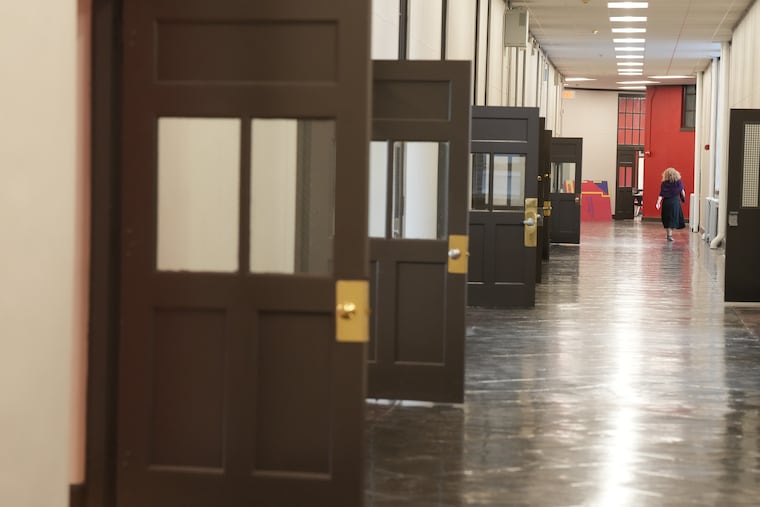
Ceiling tiles throughout the building were replaced. Protective paneling was installed on all classroom walls and in hallways, bathrooms, and offices to protect plaster, some of which contained asbestos. The building got fresh paint, 83 new air-conditioning units, shatter-resistant windows, LED lighting, and refinished wooden floors or new vinyl floor tile.
A beaming Reginald Streater, school board president, said the Frankford project was an example of what the district is attempting to do all over the city, even as it manages scarce resources and a stock of aging buildings.
“The board understands the value of doing everything we can to invest in these edifices of learning,” Streater said.
Michael Calderone, Frankford’s longtime principal, said Monday was a banner day.
“This may in fact be the best day of my career,” Calderone said.
‘Facilities that they truly deserve’
After the asbestos discovery abruptly shut down Frankford in April 2023, school was virtual for two months while officials scrambled to come up with a plan B. Eventually, three-quarters of the 900-student school squeezed into the Frankford annex, and ninth graders moved to a satellite campus inside Roberto Clemente Middle School in North Philadelphia.
» READ MORE: Asbestos is closing two more Philly schools — one for the rest of the year
Shortly after the closure, the extent of the damage led officials to say they would have to either completely gut the building or knock it down.
But the price tags of those jobs — $160 million and $300 million, respectively — led leaders to go for option C: abatement and upgrades.
Calderone said he was ecstatic to be back inside the historic building, which opened in 1912 and is rich with details not present in modern schools: built-in wooden bookshelves, stained-glass windows, impressive artwork in gilt frames.
Moving back into the building feels like a commitment to the community, to students, to alumni, and to families, Calderone said.
“Students are actually getting facilities that they truly deserve,” he said. “It’s not perfect, but compared to how it was when we left, it’s night and day.”
Monday marked the first day back to work for district staff, and Frankford had a festive air, with visitors trooping in and out.
Local dignitaries wielding giant scissors cut a ceremonial ribbon at high noon. Officials made speeches. But the real magic happened in places like room 312, where English teacher Steven Gravelle set up his classroom — the first time in years he hasn’t had to share space.
His classroom, like all those on the third floor, featured red accent walls; other main floors are painted blue and gold, representing the school’s colors. Each classroom features room numbers that were hand painted using an original Frankford stencil, lending an old-school feel to rooms that look and smell new.
“It’s beautiful,” said Gravelle, a six-year Frankford veteran. “Before, it felt really dingy, really dark in here, and now it’s so bright. Look at the ceiling tiles — they don’t have water stains. The floor used to be covered with 30 or so layers of wax and dirt. Now they’re so much better, restored to this original hardwood that’s gorgeous.”
Ian Forster, the district’s director of environmental management services, said all classrooms in the school got some kind of refresh. One big upgrade? Changes to the heating system that mean individual rooms will have their own temperature controls.
Students will be “coming into a clean, safe environment for them to learn and grow and develop in,” Forster said.
In some places, the changes are more dramatic than others. The auxiliary gym, on the third floor, has been completely redone and now has air-conditioning, a feature that most gyms in the district lack.
Calderone is particularly enthused about the cafeteria, which used to be a place “where kids never wanted to come, and I didn’t blame them. It was dark. The furniture was almost as old as me, if not older, and it was just real dingy.”
The repairs took so long that only Frankford’s incoming 12th graders have ever set foot in the main part of the school. But those who remember the old lunchroom will be astonished, Calderone said. The aim was to make it more of a food court and less of a lunchroom.
“Now, we have this beautiful bright space,” he said.
Philly schools’ complicated environmental picture
Officials acknowledged the last two-plus years have been trying for Frankford staff and students.
“This was an extremely trying time for our school community,” Calderone said.
Some staff said they still had concerns.
Mary Beth Reinhold, who has taught at Frankford for nearly 20 years, had mixed feelings. When district officials announced they planned to send staff back into the building without fully gutting everything, she was worried.
But on Monday, Reinhold said she was “glad to return to the building,” while “hoping all the necessary abatement has been done.”
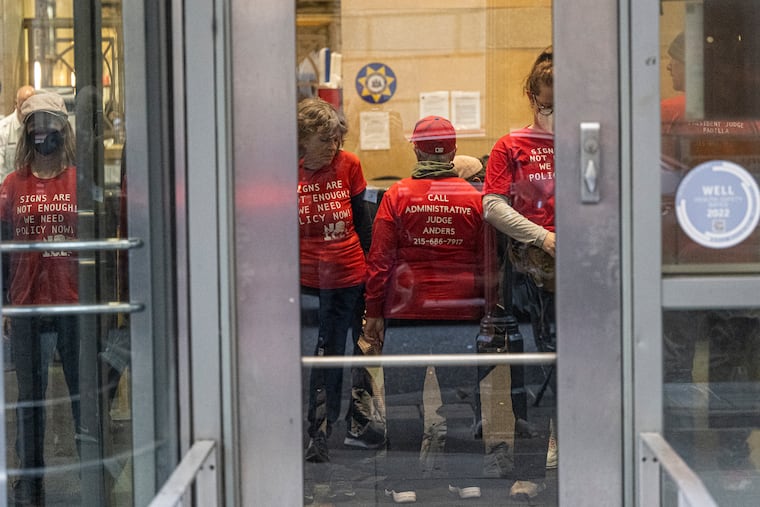
Another Frankford veteran has sued the district over asbestos exposure. Juan Namnun, a celebrated teacher, coach, and Frankford alum, believes the school’s asbestos caused his breast cancer.
The Philadelphia School District recently signed off on a deferred prosecution agreement with the U.S. Department of Justice over its asbestos management system, becoming the first school system in the country to be criminally charged with such environmental violations.
The settlement capped a five-year probe and means the district must follow a federal judge’s directives to the letter or face criminal prosecution.
District and U.S. officials say the school system is now current with its required asbestos inspections at all district buildings. It has said it will now inspect every building twice annually.