Rutgers professor seeks to spread kindness and compassion digitally
Yoona Kang and her graduate researchers are studying how to spread kindness digitally and in everyday life through the use of a mobile app called Daily Compassion.
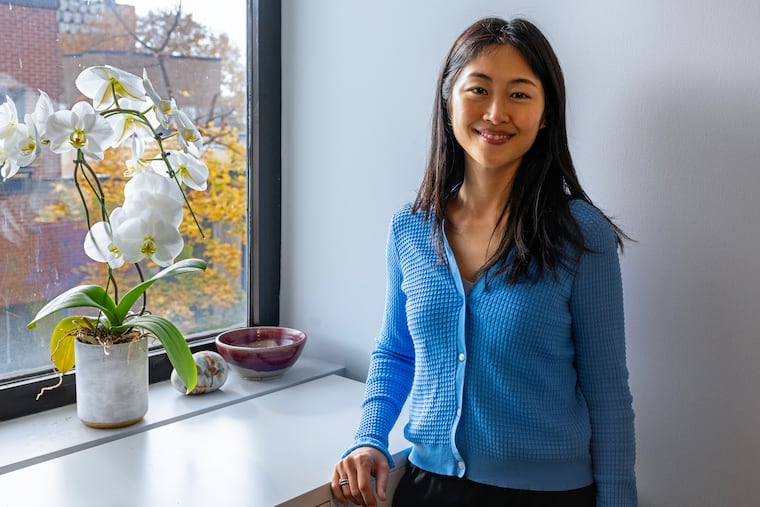
Yoona Kang’s Korean name means: “How can I help?”
“Helping others is something I thought about a lot,” said Kang, a Rutgers-Camden assistant psychology professor and the creator of a new mobile app called Daily Compassion that she believes may lead to a path to help a lot of people, if only in a small way.
» READ MORE: Want to get into Penn? Show a little gratitude - on an essay prompt
She and her graduate researchers are studying how to spread kindness digitally and in everyday life through the use of the app. She defines compassion as “having genuine concerns for the well-being of others and having desire to alleviate their suffering.”
The app measures, tests, and encourages the spread of kindness — quite the opposite of the nasty doxing and mean-spirited online messaging that occurs today.
People send messages anonymously on the app and can see, via a world map, messages being sent from one location to another.
“Our data does show that kindness indeed spreads,” said Kang, 41. “Whether/if you receive more messages yesterday or more positive wishes yesterday, then you are likely to send more the day after.”
That’s even though there is no pressure to reciprocate, she said, because of the anonymity of the messages.
» READ MORE: For Philly kids, lessons in grit from a MacArthur genius winner
The research is being conducted through the school’s Compassion and Well-Being Lab, which was started by Kang, who is also a professor of prevention science.
Her group recruited and paid 400 people across the United States to test the app in March and studied their usage. The app allows people to send messages that Kang created, including: “May you appreciate beauty.” “May you feel brave enough to begin again.” “May you experience kindness.”
Users reported they enjoyed participating. “This app made me feel GOOD,” one wrote. “Favorite part was being able to send them, hoping someone would benefit from it,” another wrote. “Wishing people well has been a very important part of healing,” wrote a third.
Even after using the app as little as four times on average, users reported higher feelings of well-being, she said. At 20 times or more, they reported decreased depression, she said.
Study participants also were asked to share their political party. People living in blue and red states were sending well wishes to each other, though they didn’t know it, she said.
Participants can send messages through the app, but they do not choose who they message because everyone is anonymous, Kang said. In some cases, the app randomly determines the user who will receive the message. In the meditation part of the app, users can send well wishes to a particular participant, as identified by an avatar, but they don’t actually know who that person is.
“The goal was to show that people from different backgrounds, regardless of where they are located, were willing to express compassion and kindness to one another,” she said.
» READ MORE: Rutgers student graduates at 18 and plans to pursue career in artificial intelligence
Kang said her interest in kindness and compassion stems from her own experience. Her family came to America when she was 19, she said, and her parents opened a restaurant in California.
“Suddenly, I was here working as a waitress, working 50 hours a week while going to community college full time,” she said. “From midnight to 4 a.m. or 5 a.m., I would study.”
She had to learn basic things about living in America.
“It really shook my foundation about my worldview, and it really motivated me to help people like me who were going through similar challenges,” she said.
After community college, Kang got her bachelor’s degree in psychology at UCLA and her doctorate in cognitive psychology at Yale. Her dissertation was on whether compassion meditation decreased negative bias against people who experience homelessness.
Kang then spent a decade at the University of Pennsylvania, first as a postdoctoral researcher and then as a research director. She explored the neuroscience of compassion, something that not everyone was ready to accept.
“They thought it was a really soft concept,” she said. “I wanted to show this is science. This is quantifiable.”
She said the team’s data show how meditation, even as little as three minutes twice daily, has an overall positive impact on well-being and decreases depression and anxiety.
There really had not been studies that tried to quantify the spread of kindness. There is older work on the spread of loneliness and happiness, she said.
Now that the initial study is complete, the app is available via iPhone, but Kang said she has not advertised it because she is working on making it better, based on feedback from the user study. Still, about 20 people in countries including the United States and England have found it and are using it, she said.
While users can only send phrases she created, she wants to allow them to author their own at some point.
“We are working on that now,” she said.
She hopes the app eventually will encourage more people to consciously spread kindness. She would like for it to become a “quick micro-practice” daily, like teeth brushing.
“I do see a lot of potential where this can change a lot of people’s lives,” she said, “not in a dramatic way, but in little and consistent ways. My goal is really to make small changes in the largest possible population.”
