Some Philly special-needs students are waiting hours this summer for buses that never come
The Philadelphia school district acknowledged "significant delays" for some students in the extended school year program on routes operated by First Student.
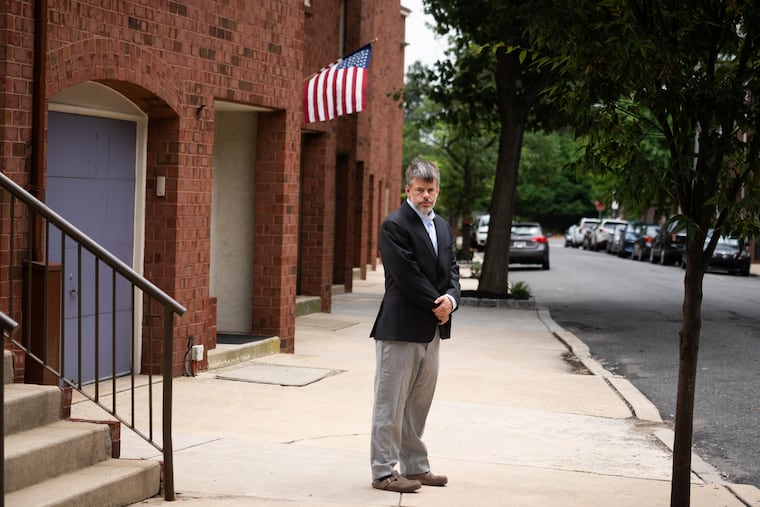
Brent Rose and his 9-year-old son, Alexander, were ready for the bus on the first day of the program Alexander is attending at De Burgos Elementary in North Philadelphia this summer for kids with special needs.
Alexander, who is on the autism spectrum, was told to be ready for the bus to pick him up at 8:08 a.m. But when it still had not come by 9:30, Rose’s wife drove their son from their home in Center City.
The episode was not an anomaly. Three weeks into the Philadelphia School District’s extended school year program, Rose said that on more than half of the days, his son’s bus simply has not shown up.
“It’s a huge inconvenience,” said Rose, who works for the IRS and has had to show up late or call out due to the problems. “You couldn’t just leave any 9-year-old out there and say good luck, but certainly not one on the spectrum, and say it’s going to be OK.”
Rose said the district has directed him to call dispatch for First Student, the company that operates his son’s bus route.
But often no one answers that line, Rose said, making it impossible to know whether a bus will eventually show up or not.
A spokesperson for the school district said the district is aware that “some families have experienced transportation delays and service disruptions for the Extended School Year (ESY) programming,” which schools nationally are required to offer to students with disabilities at risk of regressing over the summer.
“While the majority of routes are operating as scheduled, we recognize that some students have experienced significant delays, and we understand the impact this has had on families,” said the spokesperson, Naima DeBrest.
DeBrest attributed the delays to “staffing and operational issues affecting a portion of the transportation services provided by First Student.” She said the district had been working with First Student “to improve reliability,” including by reassigning 10 of the company’s routes.
Brenna Rudisill, a spokesperson for First Student, said the company recognized that “some families experienced transportation delays early in the program, and we apologize for the inconvenience and frustration that caused.” She said First Student had taken on additional routes after other vendors left the district.
“Our team has been working every day to stabilize and improve service,” Rudisill said.
For Rose, though, the issues have not resolved. On Thursday, after the bus was an hour and 20 minutes late, he called dispatch and was told a bus would arrive in half an hour. Rose did not see whether it eventually came; he had to pick up his wife from the hospital, taking his son with him.
On an earlier occasion when he was able to reach the bus dispatch, Rose used his phone to Google Translate for another parent who did not speak English and was also waiting at the stop: “The bus isn’t coming.”
Noting that First Student advertises an app with real-time updates on bus locations, Rose questioned why parents do not have access to that information.
That way, “you could contact work before you’re really behind,” said Rose, who also has gotten calls from De Burgos some days telling him he needs to pick up his son because no bus will be coming.
DeBrest said the district is “in the early stages of implementing a new routing software system that will include a parent-facing application allowing families to track buses in real time.” In the meantime, she said, First Student has an automated text messaging service that can update parents.
Rose said that, despite many calls to First Student and messages to the district about the buses, he was unaware of that service.
He noted that the extended school year programming is not convenient for working parents: The day ends at 1:30, and it’s not easy to find aftercare for the rest of the afternoon.
But he and his wife have rearranged their schedules and enrolled their son for the last three summers because they think the program is important for his progress, “and we think the teachers do a good job,” Rose said.
When “the buses aren’t even doing what they’re supposed to do,” though, “it gets really frustrating,” Rose said.