Temple’s Rome campus will start offering four-year degrees and the university is eyeing the possibility of more international sites
Emilia Zankina, dean of Temple's Rome campus, envisions doubling enrollment there over the next decade. More than 300 students attend the campus annually. Last spring, enrollment hit a high of 350.
Afghanistan native Hadisa Zahirzai had hoped to study at Temple University in Philadelphia, but changes in federal policy under President Donald Trump meant she couldn’t get here.
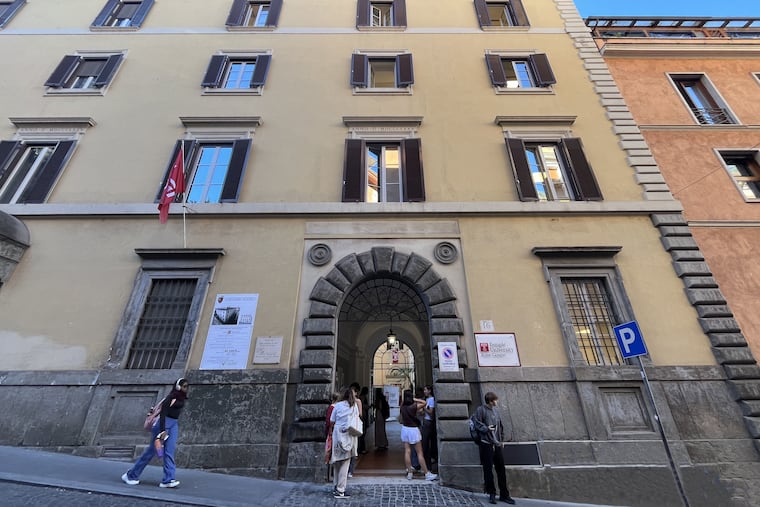
So Zahirzai enrolled last fall as a freshman at Temple’s Rome campus, which in fall 2024 relocated to a building with a courtyard and terrace near the famous Spanish Steps. She is studying international business.
“I needed a place to continue my education,” said Zahirzai, 22. “And Temple offered that, which I really like about it.”
Temple’s Rome campus could offer that opportunity to more students as it begins four-year degree programs next fall and as international enrollment on U.S. campuses slides. International enrollment declined 17% nationally last year amid changes in federal policies, including a pause of student visa interviews.
The Rome campus currently enrolls some students for their first academic year or semester at Temple, while others go for a semester abroad at some point during their college years.
The new four-year degree option will make Temple one of only three American-accredited universities to provide four-year degrees in Italy, said Emilia Zankina, dean of Temple’s Rome campus. She said several new students have already submitted deposits to enroll in a four-year degree program and a handful from the first-year program have said they will stay.
» READ MORE: With its 40-year-old Tokyo campus growing, Temple will open a new site in Japan
Over the next decade, Zankina, who has led the campus since 2020, envisions doubling enrollment, which currently stands at more than 300 students. Last spring, enrollment hit a high of 350. Temple this month also announced its Japan campus was expanding with a second site in Tokyo and last year opened a campus in Kyoto. Temple’s Japan enrollment has grown from 940 in 2015 to more than 3,400 this year.
» READ MORE: Temple misses enrollment projection; main campus student population slides again
The growth comes even while Temple’s U.S. campus enrollment has declined. The U.S. campus enrolls fewer than 30,000 students this year, down from its high of more than 40,000 in 2017.
“Growth is imperative at Temple, given the diminution in the domestic enrollment,” said Temple president John Fry. “We’re set for some nice growth, while we continue to build the base here in North Philadelphia.”
He envisions the Japan campuses reaching more than 5,000.
And Fry is in the early stages of exploring the possibility of more international sites for Temple. Zankina, who is also Temple’s vice provost for global engagement, and Fry plan to visit India and Taiwan in April. Fry said he is potentially interested in Central and South America, too.
» READ MORE: Here’s a look at its Tokyo campus through the years.
“We would want to do this thoughtfully,” he said. “If we do expand, we would execute it in the same way as we did in Japan and Rome and not overextend ourselves.”
Temple, he said, would only want to go into countries that value the university’s brand and education and want it.
Revenue generated from the enrollment growth in Japan stays there for use by Temple’s Japan campuses, but the Rome campus budget is tethered to that of the main campus, said Fry, who has visited campuses in both countries.
Temple opened its site in Rome 60 years ago, beginning with just 24 undergraduates and 12 graduate students. Charles Le Clair, former professor and dean of what is now the Tyler School of Art and Architecture, was the founder.
Now, a few hundred students each semester come from Temple’s main campus and other colleges and universities for a semester-abroad experience at Temple Rome. About 40% are non-Temple students. Fry noted he met students from Swarthmore College and Colgate University who were enrolled when he visited.
Julia Barth, a senior psychology major at Temple, studied at the Rome campus for the spring 2025 semester.
“I loved it,” said Barth, 21, of Langhorne. “It was the best thing I ever did. I miss it like every day.”
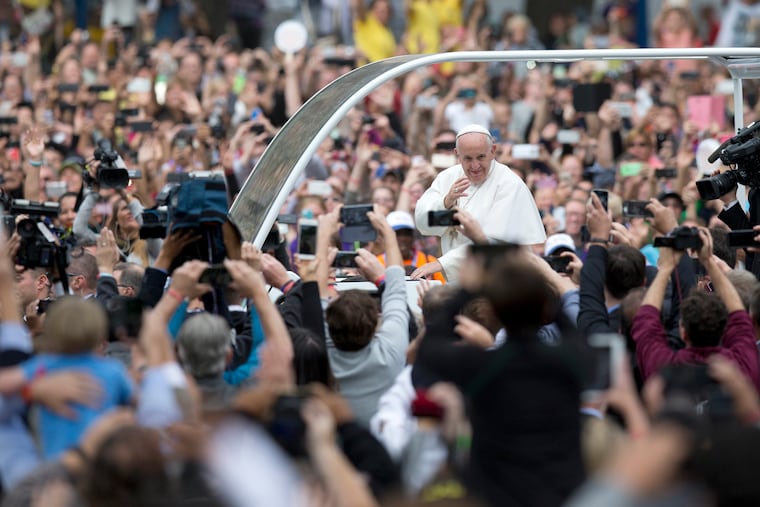
Barth was there when Pope Francis died, and said she made good friends, traveled, and enjoyed the food. For one class about the Mafia, students flew to Sicily. She also took classes in Italian, painting, and photography.
Zankina hopes that with Temple offering four-year degrees, more students will want to stay longer.
Classes are in person and in a variety of subject areas, taught by faculty based in Rome, she said. Some faculty are Italian, some American, and some from other places, she said. The curriculum is the same as at the main campus, she said, with an Italian flavor. Most courses include weekend excursions.
“If it’s engineering, they go to see the Ferrari plant,” she said. “If it’s sociology, they go to Palermo to see class differences. For fashion, they go to Milan.”
The new campus building has a science lab with a 50-person dorm that opened in January 2025, and the school rents sports and recreational facilities and additional studio space for the arts, she said. It turns out part of the rented space had been used decades ago by the Fontana Sisters, a famous fashion house that dressed Jacqueline Kennedy, Audrey Hepburn, and Princess Grace of Monaco, among others, Zankina said.
“They rented us what was their salon where JFK was sitting with Jackie,” she said.
Temple Rome also has started increasing its adult study-abroad program, which this May expects to bring in 50 people from early adulthood to retirement age. Many are Temple alumni, Zankina said. It also has short-term programs, including pre-college programs hosting high school students from Italy and Philadelphia, she said.
And each year, 40 to 50 freshmen come to spend either their first semester or their first full year as Temple students on the Rome campus.
Zahirzai, who was born in the eastern part of Afghanistan but grew up in the capital, Kabul, said she likes the small classes and the opportunity to connect with her professors. She also enjoys the historical setting, the cooking and painting programs, and the chance to learn Italian. Some students struggled with the language, but it was her fifth language and came naturally, she said.
She had wanted to study in Afghanistan, but the Taliban banned women from studying at public and private universities. Zahirzai then had hoped to come to the United States through the refugee admissions program, but that was halted by the Trump administration early last year.
She is not sure if she will have enough scholarship funds to stay at Temple next year but is exploring the possibility. Annual tuition and fees total about $21,000. If she can afford it, she said, she would like to get her four-year degree at Temple Rome.
“I don’t want to leave here,” Zahirzai said. “I’m just looking for my options.”