UArts’ closure put almost 700 faculty and staff out of work. We caught up with some of them.
Sixty-one percent of teachers who are employed remain at colleges, while others were at for-profit and non-profit companies, K-12 schools, and government jobs.
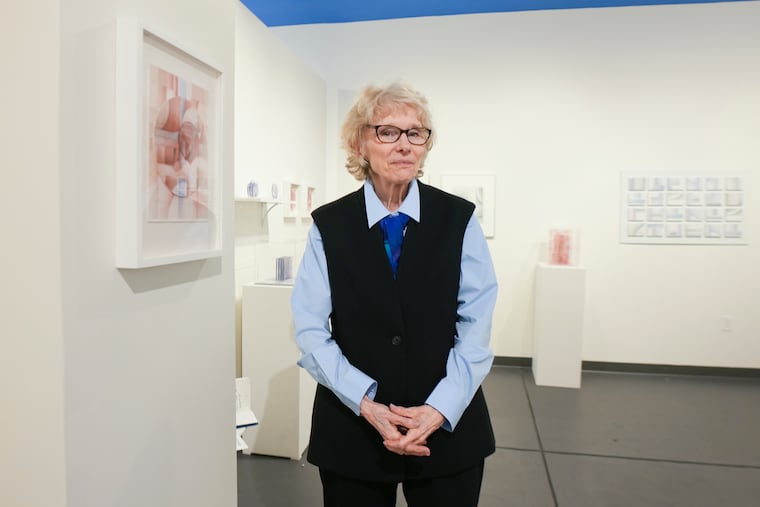
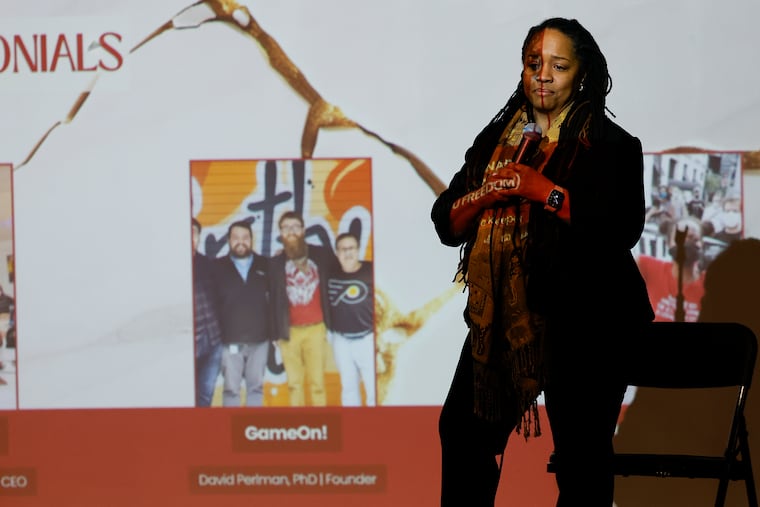
Diane Pepe taught at the University of the Arts for 35 years, right up until the day it abruptly closed in June 2024.
Her life felt upended, as did the lives of many faculty, staff, and students at the Center City Philadelphia arts school.
“I loved teaching,” she said. “Teaching was my life.”
Weeks later, her husband died. Joe Mooney, a prominent sculptor and artist, and Pepe had been married for 40 years.
» READ MORE: The University of the Arts is closing June 7, its president says
“Your whole world falls apart, double whammy,” she said. “I was in a fog for months, and I couldn’t work.”
Slowly, she found a way to express the impact of those two great losses in her professional and personal life through a new art series, Shattered.
And earlier this year, an exhibition of hers on memory was shown at Cerulean Arts Gallery in Philadelphia, culminating 10 years of her work researching the scientific process of memory and interpreting what she learned through her art. Many former UArts colleagues attended.
Pepe is one of almost 700 former UArts faculty and staff who have had to rebuild their careers after abruptly facing unemployment almost two years ago. Elisa Seeherman, formerly UArts’ director of career services, has kept track of the more than 200 UArts staff members — not including those who were solely faculty — through LinkedIn posts and other sleuthing. Six months after the closure, she found 50% had other jobs.
In her latest check this month, Seeherman said 75% are employed, and the other 25% either are unemployed or their status is unknown. Sixty-one percent of those employed remain at colleges, while others were at for-profit and nonprofit companies, K-12 schools, and government jobs.
» READ MORE: Tracking where UArts students have landed
Some have gone on to roles at local colleges, including Temple, Widener, and Pennsylvania State Universities, some even getting promotions.
Michele Kishita, whose multiple jobs at UArts included assistant director of the advising center, has become assistant dean of the College of Arts and Sciences at Widener. Kishita, a painter who got her bachelor’s and master’s degrees at UArts and worked there for more than 16 years, still mourns its loss but likes where she ended up.
“It was kind of a kick out of the nest in a lot of ways,” she said.
Jessica Kahle, who had been a UArts assistant dean and now is a program manager, now works in the same office at Widener as Kishita.
“I’m very happy with where I am,” Kahle said. “The thing that is hard is when you drive down Broad Street.”
She sees the former UArts buildings, which have been sold to other entities, some maintaining an art focus.
» READ MORE: Judge approves sale of UArts’ Terra Hall to Temple University for $18 million
A ‘roller coaster’ after UArts closure
Overseeing career services at UArts, where she worked for 26 years, Seeherman advised students on cover letters, interview skills, and other job-searching techniques. Suddenly, she was the one job-hunting.
“I had to really practice what I preach,” she said, and it was a “roller coaster.” The experience, she said, which included being “ghosted” and rejected, made her better at her job.
“I landed in the place I was meant to be,” said Seeherman, now associate director of career services at Penn State Great Valley in Malvern.
Her Penn State office is adorned with artwork by UArts students and faculty that she collected over the years.
“Every day, I am still looking at the art from the community that was so important to me,” she said.
It was particularly challenging for faculty to find new roles in the tight higher education job market. Some went from full-time professors to adjuncts or temporary one-year appointments.
Lauren Whearty had been splitting her time as an adjunct at UArts and Temple. She is still working at Temple’s Tyler School of Art and Architecture and looking to “figure out the other half of that income.”
Longtime UArts faculty member Laura Frazure, a sculptor, is an adjunct professor at several local universities, while her husband, Mark Campbell, who also worked at UArts for decades, recently opened a show of his sculptures and photography at Rosemont College’s gallery.
Michael Grothusen has a three-hour commute to Penn State’s main campus, where he is an assistant teaching professor of sculpture. He drives to State College on Mondays, stays three nights, and drives home to Erdenheim on Thursdays.
“It’s definitely a lifestyle switch, but it’s manageable,” said Grothusen, who taught at UArts for 28 years.
The year after UArts closed, he taught part-time at three schools.
“That was something a lot of us did right out of grad school,” he said. “It was 1994 all over again.”
But the Penn State job brought full-time employment and health insurance.
‘Still creating’
Pepe and some former colleagues, including Grothusen, still gather monthly for coffee or a meal and participate in arts shows specifically for UArts faculty and students. In June, Penn State Great Valley’s gallery will open an exhibit, Still Creating: The UArts Community Lives On, featuring UArts student, faculty, and alumni work.
“The majority have made peace with it all since it is fruitless to spend energy on an irreversible situation,” Pepe said.
After UArts closed, Pepe was not looking to teach full-time, but wanted to continue exhibitions. She needed new connections and support after losing her job and Mooney, whose sculptures remain on display, including a piece outside Moore College of Art and Design.
She found a way to express her deep losses in her art series Shattered. The work starts with “a sense of calm and quiet joy using images printed on paper and translucent acrylic plates,” she said. She then smashed and shattered the work using a hammer and glued them back together.
“As I adhered the pieces, the process resulted in a compositional that represents the strength and support of community and family who help me through devastating times and enable me to continue on,” she said.
She also refocused attention on her longstanding work exploring the connection between scientific processes and art. Over the last decade, the science of memory became a dominant theme of that work.
“Without memory, we could not walk, speak, read or write,” Pepe said in a brochure about her show at the Cerulean, which ended earlier this month — though the work is still available through the gallery.
During a sabbatical from UArts, she interviewed prominent scientists about their work in memory, including Nobel laureate Eric Kandel of Columbia, Daniel Schacter of Harvard, Ken Norman of Princeton, and Michael Kahana, who directs the computational memory lab at the University of Pennsylvania.
Kandel became known for his exploration of memory “one cell at a time,” Pepe said.
She saw an immediate connection to her own work.
“I describe my process as drawing one line at a time, building forms by layering and overlapping lines,” she said.
Her memory series began with layered colored pencil drawings that she said represent ideas or events in her life. Then she scanned them on a computer.
“The scanned images are printed on paper for the collages and on translucent acrylic plates or discs for the reliefs and sculptures,” she said. “Plates are often suspended as if to float on top of a printed base image.”
Pepe has done numerous exhibits over her career. This time was different.
Although she was very grateful for the support of her sons, “getting it all together without my husband and without the support of UArts was a very, very big event for me,” she said.
But she said she felt her husband’s presence — and that of UArts.
“There is a beautiful spirit that continues through the alumni association and on Facebook,” she said. “People are doing things and they stay connected.”