Philly principals say they need the $1-per-ride Uber tax to keep schools afloat
The proposed Uber tax is still in play, and budget details are expected to be hammered out soon, with first passage of a city budget in early June.
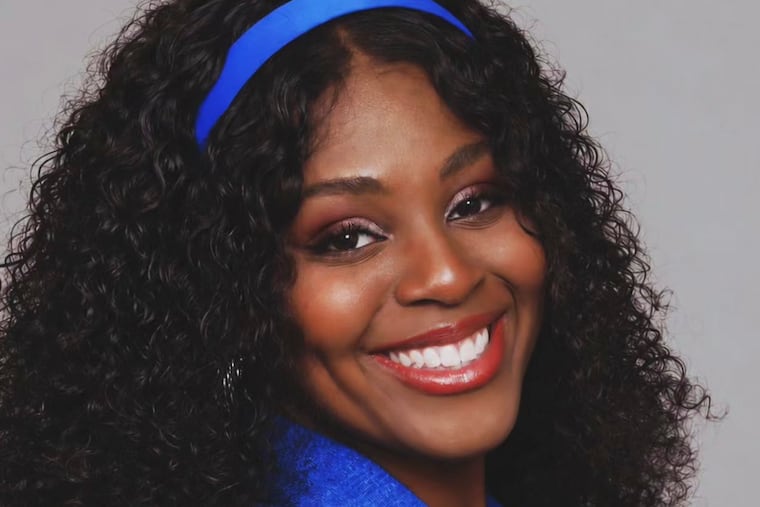
At Potter-Thomas Elementary in North Philadelphia, principal Nichole Willoughby is bracing for the loss of five staff members.
She does not want to contemplate what comes after cutting educators who help struggling students with reading and math, who teach English to newcomers to the U.S., her dean of students, and a kindergarten teacher — but she is on the precipice of having to do so.
“Without these positions, the impact will be immediate,” Willoughby said Tuesday. “Class sizes will increase. Targeted interventions will disappear. And our ability to fulfill our mission will become harder and harder each day.”
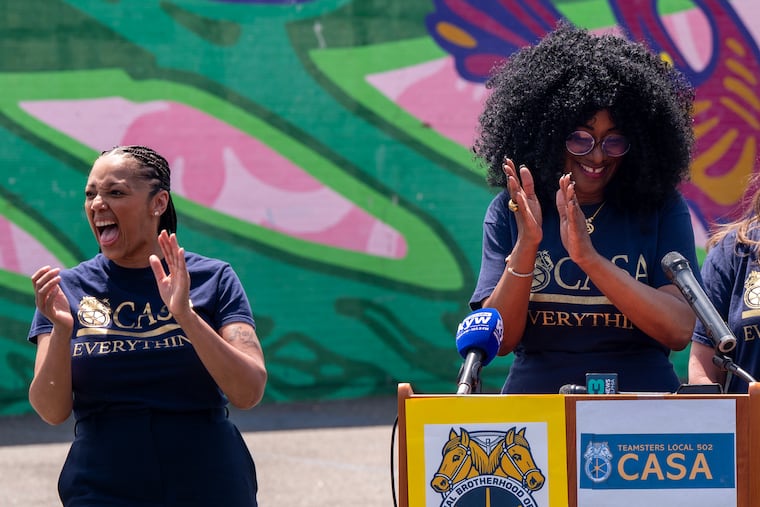
Willoughby and dozens of Philadelphia School District principals gathered in her schoolyard to send a message: They need a $1-per-trip rideshare tax to mitigate school-based cuts they say would be disastrous for students.
Mayor Cherelle L. Parker has proposed imposing a $1-per-ride tax on services such as Uber and Lyft to generate about $50 million to stave off the classroom cuts, including 148 teaching jobs and 119 climate staff positions.
The tax has proven unpopular with City Council, some of whose members said they might vote against it because they are upset the school board voted in April to close 17 schools. And it has attracted a fierce public pushback from Uber, whose representatives are privately floating an alternative: hiking the existing 1.4% state rideshare tax, which would take City Council out of the equation.
But the proposed tax is still in play, and budget details are expected to be hammered out soon, with first passage of a city budget in early June.
‘Can the Phillies play with six out of nine players?’
Several principals said they needed the politicians to figure it out. Superintendent Tony B. Watlington Sr. ordered schools to build 2026-27 budgets that do not assume the rideshare money. If the tax money does come through, the cuts will be restored, the superintendent said.
At Heston Elementary in West Philadelphia, Don Anticoli, the veteran administrator who is acting principal, is proud of the school’s accomplishments — improved attendance and test scores, and reduced suspensions.
The school is unlikely to continue posting improvements if the cuts go through, Anticoli said.
Heston had to cut its middle-grades science and social studies teachers, a kindergarten teacher, a French teacher, its middle-grades guidance counselor, a school climate liaison, and a school climate worker.
It also had to cut the hours of the remaining school climate staff, from six hours daily — which provides the workers with health benefits — to four hours, which means no health benefits.
“Can the Phillies work with six out of nine players? Can the Sixers play with three out of five players? Can the Eagles play with seven out of 11? No. Then why do we have to play with 37% less?” Anticoli said at the Tuesday news conference, organized by the principals’ union, the Commonwealth Association of School Administrators.
Megan Wapner, principal of James Rhodes Elementary in West Philadelphia, said her school is now being asked to absorb an 84% supply cut.
That will mean much more than fewer pencils and copy paper, Wapner said.
“These funds support food for food-insecure families, provide opportunities for students to attend trips and enrichment experiences, purchase clothing for students in need, and even allow us to wash clothes for students whose families do not have access to laundry services,” Wapner said. “These supports are often what allows students to come to school ready to learn with dignity and confidence.”
Destabilizing cuts
Olney High is set to lose a whopping 17 staffers, including most of the staff of its program for college-prep students. It is losing employees who have built meaningful connections with a community whiplashed by frequent changes at the school before the district took Olney back from a charter organization four years ago.
The cuts — even the threats of cuts — are tough to manage, said Michael Roth, Olney’s principal. They have made and will continue to make some educators look outside the district for work.
“We have to look at how destabilizing this is to some of the most excellent educators you could ever imagine,” Roth said. And, he said, in a city with ample school choice, the cuts could further erode public school enrollment.
KaTiedra Argro, principal of the Philadelphia High School for Girls, expressed frustration that the city is funding extended-day programs, but the district is fighting to keep essential staff.
“It is great that we want to offer extended days,” Argro said. “It is wonderful that we want to provide these life-changing programs after the final bell rings, but a safe, innovative, and extended school day means nothing, absolutely nothing, if a child has no way to get there, be safe, or electives that keep them inside of the school.”
Bottom line, Argro said: “The rideshare funding is not a luxury.”