Uber pitches alternative to Mayor Parker’s $1-per-ride tax as City Council searches for an exit ramp
Uber is floating a proposal to ax Parker’s $1-per-ride fee and substantially increase an existing 1.4% rideshare tax. But Mayor Parker says anything less than her plan "lets our children down."
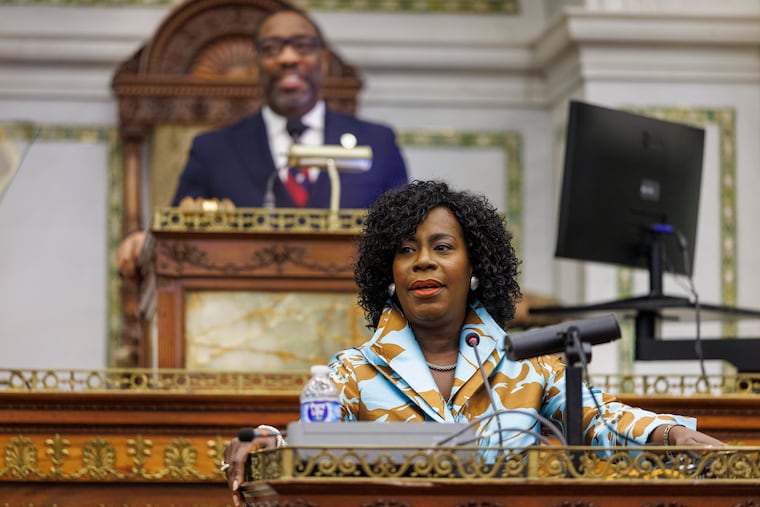
For weeks, Philadelphia City Council members have grumbled that Mayor Cherelle L. Parker put them in a politically tricky spot.
Many don’t like her proposed $1-per-ride tax on rideshare services like Uber and Lyft to help plug the School District of Philadelphia’s $300 million budget deficit. They also don’t want to be branded as voting against the interests of Philly students by turning down the revenue a year before they are all up for reelection.
Council members have been looking for an off-ramp. And Uber is offering them one.
The rideshare giant — which has aggressively lobbied against the proposed tax in both the public sphere and the halls of power — is floating a compromise proposal to axe Parker’s $1-per-ride fee and instead substantially increase the city’s existing 1.4% rideshare tax, according to three sources with knowledge of the negotiations who spoke on the condition of anonymity because they were not authorized to discuss the deliberations publicly.
» READ MORE: Uber has launched an all-out pressure campaign to oppose Mayor Parker’s $1-per-ride tax
The plan — which would require approval from the state, not Council — appears to have some traction in both City Hall and in Harrisburg, where, the sources said, lawmakers are examining whether a hike of the existing tax could raise the revenue the school district needs to avoid some of its more than 300 planned staff cuts.
Increasing that tax would likely have less of an impact on consumers — particularly those who take short, frequent rides in the city — than Parker’s flat $1-per-ride levy. For example, a 2-percentage-point hike on a $20 ride would amount to 40 cents.
And it could stave off a protracted battle between the city and Uber. The company has hinted at legal action by contending Parker’s new local tax violates state law, and it has retained Marcel S. Pratt, the city’s former top attorney, who is now a managing partner at the Ballard Spahr law firm.
However, even doubling the existing tax would likely not bring in as much revenue as Parker’s proposal.
The current tax on rides originating in the city is levied by the Philadelphia Parking Authority, which is governed by the state. Two-thirds of the revenue goes to the school district, while the parking authority keeps the other third.
Last year, the tax generated $6.3 million for the district, according to the city controller. Parker’s administration, meanwhile, estimates that a new $1-per-ride fee would bring in about $48 million annually and, coupled with a less controversial tax on cell phone tower properties, would raise about $50.4 million a year.
Joe Grace, Parker’s spokesperson, said in a statement that the administration is “laser-focused on working with City Council to achieve that” and that “anything less lets our children down.”
“We won’t allow ourselves to be distracted by budget gimmicks or tricky math,” Grace said.
Parker has in the past taken a somewhat unyielding approach to negotiations, often waiting until the last minute to bend, if she does at all. She has also been known to respond defensively to public pressure and tends to dig in when she is facing opposition.
The mayor also has plenty of allies who want her local $1-per-ride tax to be approved, including the Philadelphia Council AFL-CIO, the city’s largest umbrella organization of labor unions.
» READ MORE: A state board that oversees Philly’s finances examined Mayor Parker’s plan to fund schools with a new rideshare tax
And advocates, students, and teachers have appealed to Council members by laying bare the stakes of the budget deficit.
Donna Cooper, a volunteer with the organization Children First and a longtime schools advocate, said that counting on Harrisburg to approve a tax increase is perilous, and that Republicans could use the hike to justify reducing Philadelphia’s broader school allocation.
The Pennsylvania General Assembly is politically split, with Democrats narrowly controlling the House and the GOP holding the Senate. The divide can lead to stalled legislation and gridlock, such as last year’s long-delayed state budget.
“It’s highly risky for anybody in Council to think this is a solution,” Cooper said. “The path of least harm is to ignore the parley conversations in Harrisburg and for City Council to put their nose down, find the $50.4 million, and call it a day.”
‘Every possible option’
A plurality of City Council members have said they are uncomfortable with the mayor’s proposed tax, particularly after the school board last month approved a plan to close 17 schools.
One senior Council member said after the district approved its school closure and consolidation plan that on the proposed rideshare tax, the mayor “might have three [votes] — that’s being optimistic.”
Several members said this week that they would welcome a different way to generate revenue for the school district.
City Councilmember Isaiah Thomas, the Democratic majority whip and the chair of the Education Committee, said that he has heard about conversations in Harrisburg to raise the existing tax and that lawmakers “need to explore every possible option.”
And time is of the essence. If Parker’s rideshare tax moves forward, it must be approved as part of Council’s budget plan before the start of the new fiscal year on July 1. Under Council’s current calendar, lawmakers will look to strike a budget deal with the Parker administration by early June.
Throughout negotiations, members have been lobbied by Uber representatives who have urged them to oppose Parker’s plan.
Josh Gold, Uber’s senior director for policy and communications, said in a statement that the company has “always been willing to work with state and city leaders to find a compromise.”
Left unsaid: Raising the existing tax, rather than implementing a new $1-per-ride local levy, could benefit rideshare companies like Uber. If Philadelphia passes its own municipal tax, other localities across the state might try to follow suit.
A tricky road in Harrisburg
In theory, state legislators could tuck a provision to increase Philadelphia’s existing rideshare tax into this year’s fiscal code, the large catchall annual budget implementation bill. That means lawmakers would not have to take an up-or-down vote on a tax increase.
There would still be political hurdles.
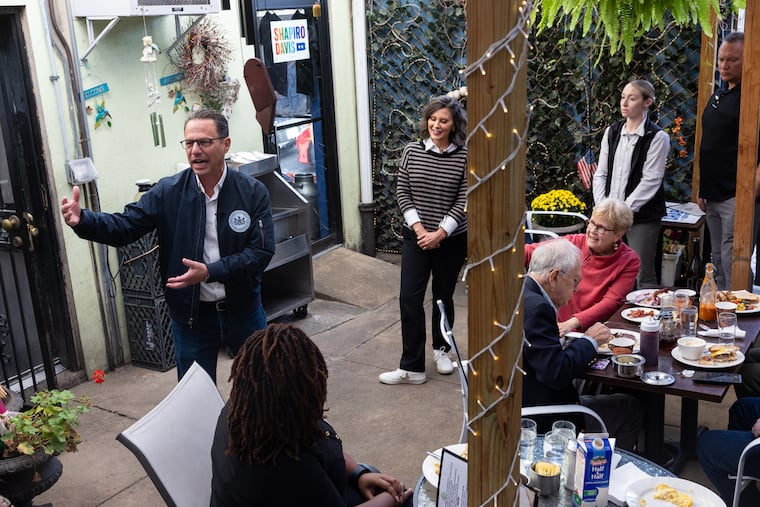
Democratic Gov. Josh Shapiro would have to sign any budget bill, which would first have to pass the divided legislature. The governor, who is running for reelection and is a rumored future presidential candidate, has expressed little appetite to raise taxes.
Rosie Lapowsky, a spokesperson for the governor, said in a statement that the administration ”will continue to have conversations with the mayor’s office and members of the General Assembly to assess these proposals and address the School District of Philadelphia’s needs.”
House Democrats often align with Shapiro. Republicans who control the state Senate are generally reticent to raise taxes, and did not respond to a request for comment on the new proposed rideshare tax plan this week.
However, GOP leaders in Harrisburg earlier this year indicated some openness to allowing Philadelphia leeway in taxing itself.
When Parker unveiled her budget proposal in March and included new tax provisions that would require state approval, Senate Majority Leader Joe Pittman, a Republican from Indiana County, said he would defer to Philadelphia’s delegation in Harrisburg on whether it recommends the tax increases the mayor has floated.
» READ MORE: Mayor Parker turns to Harrisburg — and GOP allies — to make her budget priorities work
And earlier this month, Senate President Pro Tempore Kim Ward applauded the school board’s vote to close schools as a belt-tightening measure and signaled that the district’s image may be improving in Harrisburg. GOP leaders have long accused the district of financial mismanagement.
“Accountability [and] fiscal responsibility are important for positive student outcomes in PA,” Ward posted on social media. “Optimistic decision-makers can work [with] us to ensure Philadelphia students are set up for success.”
Grace, Parker’s spokesperson, alluded to working with Harrisburg in a statement.
“When we go to Harrisburg as a united front for school funding,” he said, “we need Harrisburg to understand Philadelphia has skin in the game. Our kids are worth it.”
Staff writer Kristen A. Graham contributed to this article.