Philly School District officials say they won’t need to cut 340 classroom jobs if Mayor Parker’s Uber tax passes
School staff whose positions would be cut began applying for new jobs as the district's "site selection" window opened Wednesday. Mayor Parker called the potential cuts "destabilizing."
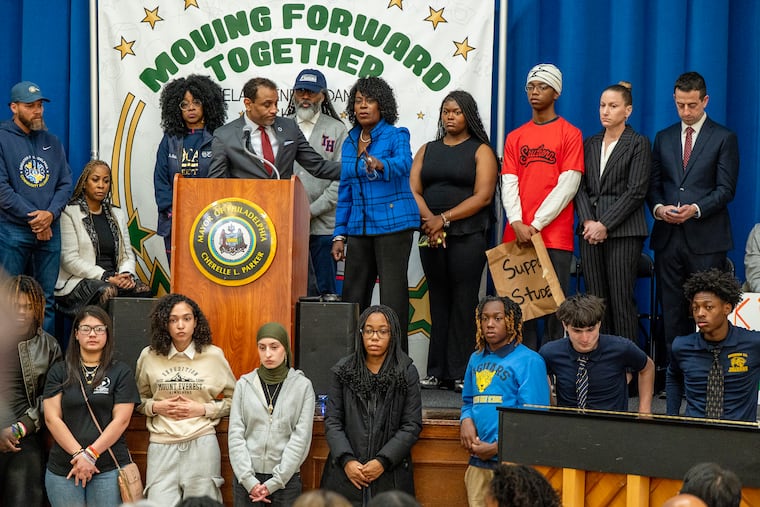
The Philadelphia School District will reverse its plan to eliminate 340 classroom-based jobs if Mayor Cherelle L. Parker’s $1-per-trip rideshare tax passes, officials said Wednesday.
Superintendent Tony B. Watlington Sr. has ordered the cuts in light of a $300 million structural deficit. In total, 148 teachers, 23 counselors, and 119 climate staff would lose positions as the district faces the end of federal COVID-19 relief funds and rising salary, benefit, and charter-school costs — and is unable to raise its own revenue.
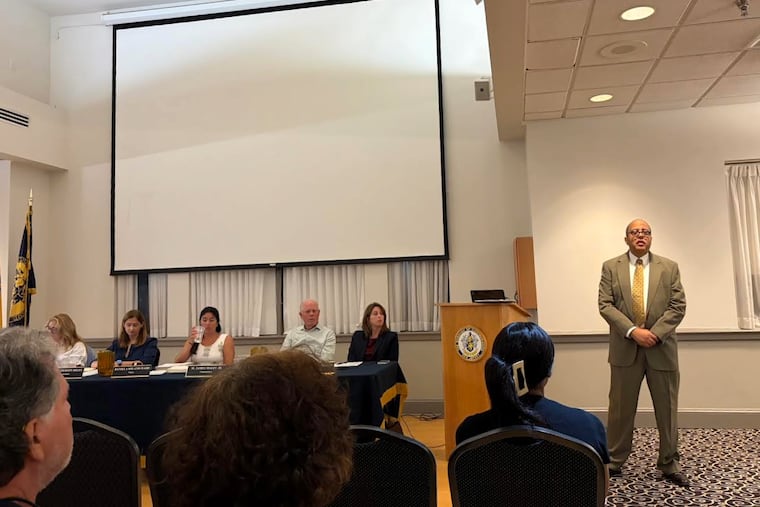
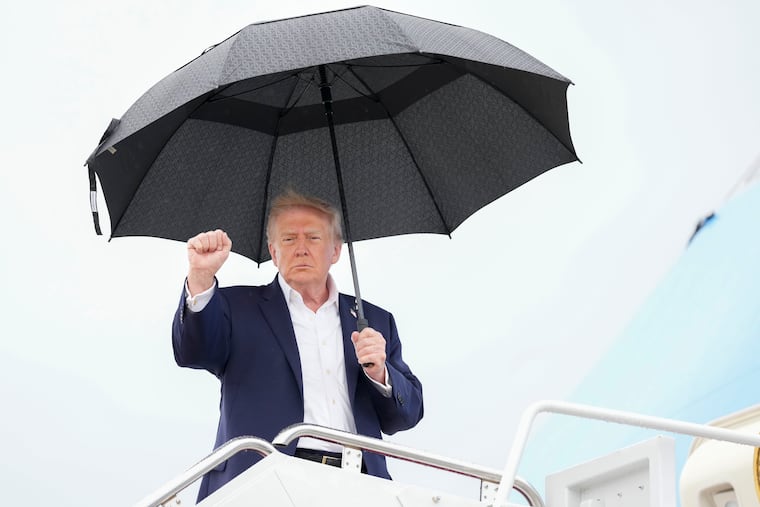
“It means destabilizing our schools and in essence setting us back,” the mayor said Wednesday of the budget cuts as she touted her proposal to avoid them and lobbied for the new tax at a City Hall news conference.
Parker wants to impose a $1-per-ride surcharge on Uber and Lyft trips, with the funds going to the school system. The proceeds, along with a small bump in the use-and-occupancy tax, are projected to net $50.4 million annually for the district if they are approved by City Council.
» READ MORE: Mayor Parker now wants a $1-per-ride tax for Ubers and Lyfts to lessen Philly School District classroom cuts
Initially, Watlington had said Parker’s plan would prevent some layoffs, but he’d still have to cut 100 school positions.
That’s no longer the case, he said Wednesday.
Parker said she had urged officials on both the city and district side to take a harder look at the numbers, and “they were able to make adjustments within their budgets to allow for zero school-based personnel cuts.
“But only if we can pass our plan to generate $50.4 million in new recurring revenue for the School District of Philadelphia.”
Even if the rideshare surcharge passes, the district will still cut building substitutes and make significant central-office trims, including eliminating some open positions and reducing contracts, Watlington said. The changes would go into effect in the 2026-2027 school year.
But the Uber tax is not a sure thing: Some members of City Council have already expressed skepticism, and the deep-pocketed California company itself has gone on the offensive against it, with both City Hall lobbying and direct communications to people who rely on the rideshare app. And if the tax does pass, there’s no guarantee it will raise the promised $50.4 million.
Uber officials have labeled the proposed surcharge as a tax on riders and drivers. They say that city law codifying the existing 1.4% rideshare fee calls for Uber and other companies to collect the tax “from the passenger” on the district’s behalf, a notion Parker disputes.
“In a moment of real affordability strain, adding a new $1 fee on top of the existing 1.4% rideshare fee creates a regressive double tax that will limit access to work, school, and essential services, even as thousands of jurisdictions across the country choose not to tax rideshare at all,” Uber spokesperson Jazmin Kay said in a statement.
Across the country, rideshare surcharges are common. More than 50 cities, including New York, Chicago, and San Francisco all have imposed similar taxes.
Pencil plans
Though Parker hailed the no-cuts-if-the-tax-passes news Wednesday, some damage is already done. Watlington has already directed principals to build their 2026-27 budgets without the Uber revenue. Many schools are bracing for major cuts. Officials have said no layoffs would be necessary because of attrition and an ongoing teacher shortage, and staff members would be moved into other open jobs if their positions are eliminated.
Debora Carrera, Parker’s chief education officer, underscored the pain Wednesday: McDaniel Elementary, in Point Breeze, has been planning to lose five teachers and five climate staff. Rhoads Elementary, in Mill Creek, stands to lose four teachers and 10 climate staff. Sullivan Elementary, in Frankford, would cut four teachers and four climate staff, she said.
“You need to understand the problem and how we can fix it,” she said.
Teachers whose positions would be cut were already given notice in the last few weeks. The district’s window for “site selection,” where staff apply and interview for open jobs, opened Wednesday — meaning some staff will likely have already accepted new jobs, in the district or elsewhere, even if the Uber tax passes and cuts are avoided. The city, which provides a large portion of the district’s funding, must pass a budget by the end of June. And the district is expected to approve its own budget for the next school year by the end of May.
Though school budgets now include cuts, “those plans are in pencil,” said Watlington, who kicked off hiring season at a pep rally at West Philadelphia High before the City Hall event. “If and when this funding source comes through, thanks to our mayor, we will take those pencil plans, we will erase them, and we will discard them.”
Inquirer staff writer Anna Orso contributed to this article.