Uber has launched an all-out pressure campaign to oppose Mayor Parker’s $1-per-ride tax
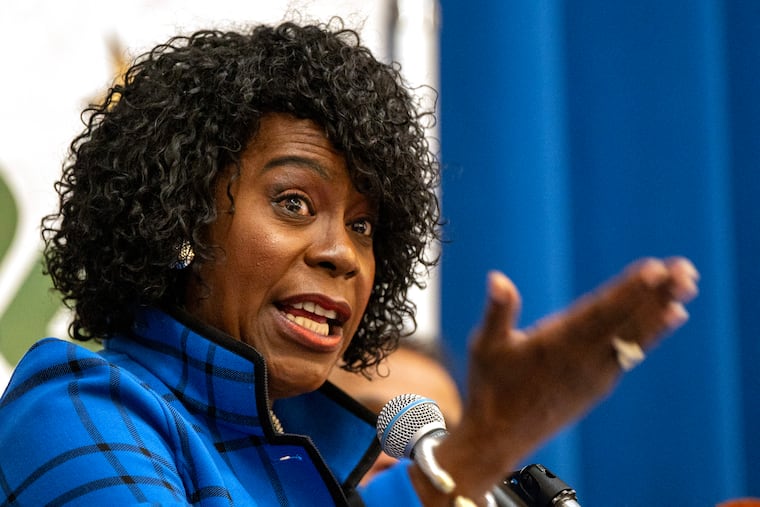
Mayor Cherelle L. Parker thinks she has public opinion on her side. A recent poll shows a majority of Democratic primary voters in Philadelphia approve of the tax.
Philadelphia Uber users are seeing a new banner message at the top of their receipts after hailing a ride: “Learn more,” it reads, “about Mayor Parker’s proposed tax that will make your trips more expensive.”
The message is explicit. And it is just one part of Uber’s increasingly in-your-face pressure campaign to try to kill a proposed $1-per-ride tax on rideshare services in Philadelphia.
Last week, the company emailed thousands of Philadelphia app users and directed them to contact the mayor’s administration and members of City Council to oppose the tax. A spokesperson for the company said more than 6,000 letters have been sent as of this week.
Through a mix of City Hall lobbying and consumer-facing communications, Uber is deploying an aggressive opposition strategy in Philadelphia that is part of a now-familiar playbook. As the tech giant has faced regulation and taxation across the country, it has recruited its users to be political advocates, and has tried to win over lawmakers by saying that new fees will harm working-class riders and drivers.
Now, Uber is bringing those tactics to Philly, where Mayor Cherelle L. Parker has proposed taxing rides that originate in Philadelphia. The fee, her administration says, would raise about $48 million annually and go to the Philadelphia School District, which is facing a $300 million fiscal cliff and may cut hundreds of jobs.
Rideshare services, like Uber and Lyft, are already taxed at 1.4% in Philadelphia. That fee, which is paid by riders, is imposed by the Philadelphia Parking Authority, and two-thirds of the revenue goes to the school district.
Whether the proposed additional tax becomes a reality will be largely up to City Council, which will consider the mayor’s plan in the coming months and must pass a budget by the end of June.
» READ MORE: ‘I don’t like it’: Some Council members are skeptical of Mayor Cherelle Parker’s $1 rideshare tax proposal
Parker and her administration have said the rideshare tax — one of several tax increases she is proposing in her annual budget plan — will be imposed on the rideshare companies.
But Uber is making clear that it is riders who will pay. The legislation that Council is considering to enable the fee says that rideshare companies “shall collect the tax … from the passenger.”
“At a time when Philadelphians are already stretched thin due to rising housing costs and everyday expenses, the mayor is proposing to make your Uber rides less affordable,” the company says on its website. “This new $1 tax would be passed directly onto you, the rider.”
» READ MORE: Who benefits — and who pays — in Mayor Cherelle Parker’s new Philadelphia budget plan
Parker, who has served in public office for more than 20 years, is no stranger to corporate lobbying, and she has been notably unyielding in negotiations with both Council and outside interests since she took office as mayor in 2024.
Administration officials say Parker plans to partner with school advocates on a messaging campaign of their own. The mayor and her allies will tell Council members and the public that multibillion-dollar corporations based out of town will have a small price to pay to support Philadelphia schoolchildren and prevent more than 300 district job cuts.
And the mayor will emphasize that dozens of jurisdictions across the country already tax rideshare services.
“I’m putting this proposal on the table because we need to do all that we can so that students don’t have to suffer from these devastating cuts,” Parker said when she unveiled the plan last month.
She also believes she has public opinion on her side.
A recent poll of Democratic primary voters in Philadelphia found that 60% approved of the tax and 35% disapproved, according to a polling memo obtained by The Inquirer. The survey was conducted by Brilliant Corners Research & Strategies and paid for by Parker’s campaign arm.
Support for the tax was strongest among progressives, who have traditionally not been part of the more centrist mayor’s political base.
But ahead of an expected final budget vote in June, Uber has months to lobby City Council members, several of whom have already expressed concern that the proposed tax could hurt low-income constituents.
That is a key point Uber is trying to convey to lawmakers. In written communications to Council members, the company is emphasizing that rideshare has become essential for some residents and says that, last year, more than two million rides in the city were used to access either healthcare or school.
“There’s a clear misconception among some policymakers about who uses Uber in Philadelphia,” said Uber spokesperson Jazmin Kay. “Our riders and drivers are overwhelmingly working-class, and this regressive tax would disproportionately burden them.”
At a recent Council meeting, a handful of company representatives chatted with Council members and their staffs. The company has also hired several veteran lobbyists who have relationships with Council members.
They distributed literature that framed the tax as regressive. Uber said more than half its Philadelphia rides originate in areas deemed “underserved” by the federal government.
Lyft has made a similar argument. In a letter sent to Parker on Thursday, the company said the tax “will fall hardest on riders who have no alternative, forcing them to make impossible choices between attending a doctor’s visit, getting to work, and stretching an already tight budget.”
Aside from the letter, Lyft has not taken similarly visible steps to oppose the tax. Meanwhile, Uber has taken other strides to win goodwill with the public.
On March 30, less than a week after Parker announced that she was proposing a $1-per-ride tax — an increase from an earlier plan to charge 20 cents per ride — Uber announced it would expand a program for seniors in the city. The company piloted its senior rides initiative that aims to ease the process of requesting transportation for older adults in West Philadelphia, and it is now expanding to Northeast Philly.
For Uber, deploying a mix of direct lobbying and intense public pressure is becoming a time-honored strategy.
Since its founding in 2010, the company has developed a reputation of aggressively opposing taxation and regulation efforts. Early on, Uber launched in cities across the country before seeking permission to do so — including in Philadelphia — and then opposed government restrictions on its operations.
More recently, the company has faced efforts to unionize its drivers, or to require the company classify them as employees instead of independent contractors.
One of the most prominent regulatory clashes took place in California, where gig economy businesses like Uber and Lyft pushed for a ballot measure in 2020 that effectively allowed them to classify drivers as independent contractors.
Ahead of the election, Uber pushed political messaging directly through its app, telling riders that wait times and prices would rise if the measure, Proposition 22, did not pass. Riders had to press a button reading “confirm” in order to get a ride.
The ballot measure passed.
Staff writer Jake Blumgart contributed to this article.