West Chester and other state schools got fake active shooter calls as swatting issues continue. Here’s how they responded.
West Chester University was among several Pennsylvania state universities that received active shooter calls on Sunday. Swatting has increased nationwide on college campuses.

West Chester University was among several Pennsylvania state universities that received active shooter calls Sunday that were quickly deemed to be fake.
The school did not immediately send out an alert to the campus community when the call came into West Chester Borough police about an active shooter in the university library. The incident — and varying responses at other campuses — highlighted the challenges that colleges face amid a recent uptick in fake threats, known as swatting.
“The first priority of WCU campus police is to immediately respond to a scene to protect lives and minimize danger,” said West Chester spokesperson Nancy Santos Gainer. “Once the situation was stabilized, campus police shifted focus to informing the community as quickly as possible.”
But a student said it was very disconcerting for students to see the police response at the library with no alert to the community about what was going on.
» READ MORE: Temple University police provide training on swatting incidents following spate of fake calls at colleges this year
“If there is any kind of shooter situation on campus, students should be made aware before it’s verified as fake,” said the student, who asked not to be named because of privacy concerns. “That’s important information for us to know in terms of safety.”
Under the federal Clery Act, which requires universities to report crime, schools must send out an emergency alert once an immediate threat to health and safety on campus is confirmed, said Laura Egan, interim associate executive director at the Clery Center, a national nonprofit based in Fort Washington and aimed at helping colleges meet the requirements of the law. Campuses could have a variety of methods to make that confirmation, she said.
Given the spate of hoax calls that have come into schools since the new semester began, colleges should review their procedures for responding to emergencies, she said.
“This is an ideal time for campuses to be really certain of what their internal procedures are for confirming the existence of a significant emergency,” she said. “And if you’ve kind of bypassed that requirement in the past or thought, well Geez, we know an emergency when it happens … it’s certainly turning out to be not true anymore.”
She said campuses probably will issue a notification more often than not unless there is “overwhelming evidence” that there is no need.
» READ MORE: Villanova students process trauma as school seeks ‘return to normalcy’ after active shooter hoax
“Unfortunately, there’s not a lot of room to make a mistake that people feel good about in this arena,” she said.
And there already have been shootings and mass casualty incidents on campuses this school year, she pointed out.
But she also said she understands that colleges don’t want “to yell fire in a movie theater type of thing” or have people become desensitized to the notifications.
“Campuses are weighing a lot of influential factors in making their decisions,” she said.
» READ MORE: Police scanner shows panicked response to Villanova shooting ‘hoax’
Varying responses to false threats
Villanova University, which was the first local college to receive a fake active shooter call last month amid a spate of such calls nationally, said it sent out an alert immediately. Fear and panic set in for about 90 minutes as heavily armed police patrolled the campus during freshman orientation that August day, looking for a potential shooter.
“University police, along with Radnor police, responded immediately to secure the area and an alert was sent out to campus community members to move to a secure location,” said spokesperson Krissy Woods. “They sent out an alert message immediately based on the anonymous call that was received.”
Since the Villanova incident in August, some schools, including Villanova, Drexel, and Temple, have undergone training about swatting calls and indicators of potential hoaxes.
Millersville University, which is in the Pennsylvania State System of Higher Education along with West Chester, has had training, too. When the fake call came in about a shooter at Millersville on Sunday, there were multiple signs it was a hoax, said Mary Dolheimer, a spokesperson for Millersville.
There was only one call, she said. It came in on a non-emergency line to Lancaster County communications, the caller was anonymous, and the caller mistakenly referred to the building that was named as the library, she said.
Local and university police went through the building that was named and the library floor by floor and determined it was likely a swatting call, she said.
Millersville, like West Chester, also chose to notify the campus community after the call was deemed fake.
“We’re prepared to respond appropriately and err on the side of caution,” she said.
But given the strong suspicion it was a swatting call, there was no need to panic the community, she said.
If multiple calls had come in or there was a strong suspicion that it was real, an alert would have been sent immediately, she said.
At Shippensburg University in Cumberland County, school officials also strongly believed the call to be fake, but did send out an alert before the call was proved a hoax because the strong state police presence was noticed and comments were circulating on social media, said spokesperson Megan Silverstrim.
The university told the campus that the call was believed to be noncredible and then issued updates as officials learned more, she said.
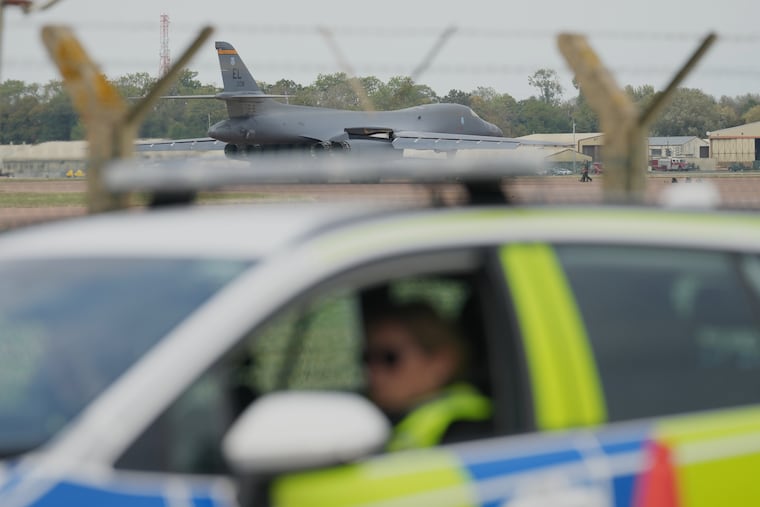
At West Chester, a campus police officer who was outside the library immediately entered the building and began clearing it, Santos Gainer said. Other officers arrived quickly and continued clearing the space, she said, and no shooter was found.
“University police were on site, investigated immediately and confirmed that no active shooter was present,” the university said in a message to the campus community after the incident.