This underfunded Delco school district is outperforming peers, a new study finds
The William Penn School District is making gains in math faster than similar districts, according to a new national Education Scorecard.
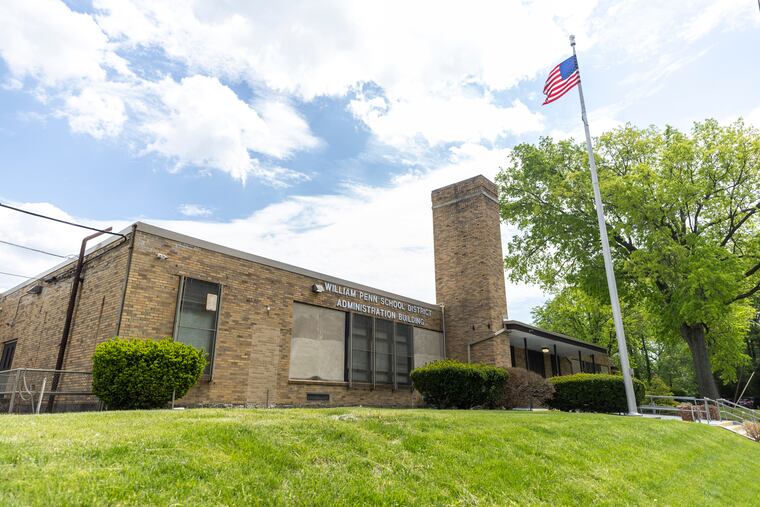
The William Penn School District, which became the face of underfunded Pennsylvania schools in a lawsuit that successfully challenged the state’s funding system, is making gains in math faster than similar districts, according to a new national analysis.
The Education Scorecard, released Wednesday by researchers at Harvard University, Stanford University, and Dartmouth College in partnership with the Associated Press, identified the Delaware County district as a “district on the rise,” along with 33 other Pennsylvania districts that showed significant improvements in math and reading.
Since 2022, the district’s third through eighth graders have gained an extra half year of learning, making it a standout compared with similar districts, which gained only about 0.1 grade levels, according to the analysis, which reviewed test scores through 2025. (Philadelphia also ranked as a district on the rise in math, while suburban districts like Central Bucks, Coatesville, Downingtown, and Rose Tree Media were also recognized for outperforming peers in math, reading, or both.)
Researchers noted that high-poverty districts like William Penn, which benefited from federal pandemic relief money, are recovering faster from pandemic learning losses than middle-income districts that did not get the same aid.
But William Penn is doing better than similarly poor districts, according to the analysis.
“We’ve really spent a lot of time focusing on data, and we are allowing that data to guide the actions we take,” William Penn Superintendent Eric Becoats said in an interview.
Here is what William Penn is doing to boost scores, and what researchers found about how other schools are faring:
William Penn’s focus on data, and other local gains
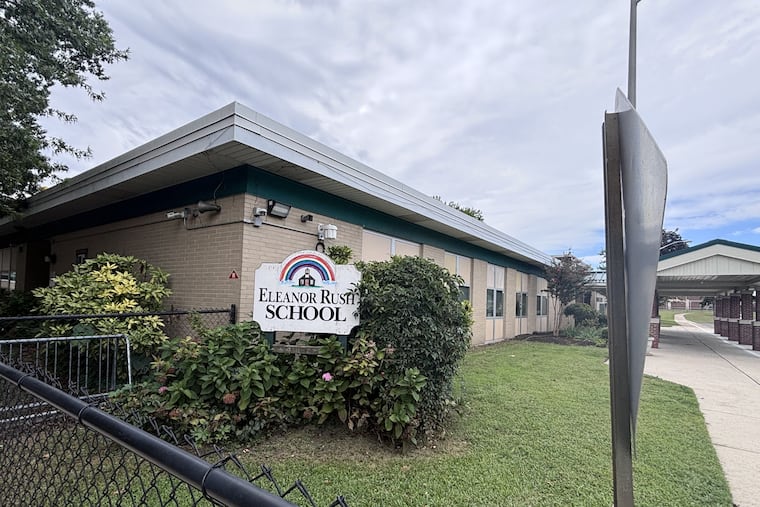
William Penn enrolls about 4,500 students from Aldan, Colwyn, Darby, East Lansdowne, Lansdowne, and Yeadon Boroughs. More than 80% of its students are considered economically disadvantaged.
Despite having one of the highest tax rates in the state, the district said its weak tax base did not provide enough money to adequately fund its schools — which led to winning a landmark Commonwealth Court ruling in 2023 and getting additional state money starting the following year.
Its students have bounced back faster in math since the pandemic than others in similarly poor districts, the report released Wednesday found.
Since hitting a low point in 2022, William Penn students have been improving in math, and last year surpassed their 2019 performance. Similar districts — the four other Pennsylvania districts that most closely match William Penn’s size, socioeconomic conditions, and racial and ethnic composition — are still below pre-pandemic levels.
The progress puts William Penn among 448 districts nationally that have made noteworthy improvements, according to the report.
Becoats, who became superintendent in 2020, said the district has put a system in place for assessing student work, and making adjustments to ensure kids are learning.
William Penn administers benchmark tests three times a year in reading and math, along with common assessments. Every school has designated time for teachers to come together and analyze students’ work, figuring out what tweaks they need to make in lessons, Becoats said.
The district has also hired staff focused on interpreting and responding to data, including a research supervisor who provides analyses to schools. Instructional facilitators support teachers, while academic interventionists work with small groups of students who need additional help.
“This is something we’ve built over time,” Becoats said. “You have to be able to show people the research and data behind why … and then you continue to move it forward.”
He added that “we’re not perfect, by a long shot.” The district’s students are still about 2.5 grade levels behind the national average in math.
William Penn is not alone among local districts highlighted by the new report. Philadelphia students gained close to half a grade level’s worth of learning in math since 2022.
In low-poverty districts, Downingtown students jumped more than a grade level in math, while Rose Tree Media saw gains in both math and reading that significantly outpaced peers.
Thomas Kane, an education economist at Harvard, described the districts on the rise as “places where it sure looks like good things are happening.”
Schools are still in a reading slump
While the report highlighted those districts as bright spots, schools nationally are still struggling with reading. Most states continued to see reading scores fall in 2025, according to researchers.
The slump predated the pandemic, with scores starting to fall in 2013.
“The pandemic was the mudslide that followed seven years of steady erosion in achievement,” Kane said in a phone call with reporters last week.
The “science-of-reading” movement that has swept through statehouses nationally — prompting lawmakers to require more phonics-based instruction, among other measures — appears to be connected to some gains, researchers said. While 32 states have improved in math since 2022, only seven states and Washington, D.C., saw any improvement in reading, and all embraced science-of-reading reforms, according to the analysis.
But some other states that passed significant science-of-reading laws — like Florida and Arizona — did not improve. (Pennsylvania, which has passed some reforms, has also not improved.)
“Evidence-based reading reform may be a necessary but insufficient path to improvement,” the report concluded.
The researchers posited that other factors may be driving down test scores, including a decline in test-based accountability and kids’ social media use.
One of the main arguments in favor of the latter explanation is that the gap between the top- and bottom-performing students began widening prior to the pandemic not just in the United States, but also in Canada and some European countries, Kane said.
The report recommends research into the outcome of school cell phone bans, though it notes that social media could have also affected students by interrupting sleep, “reducing reading time outside of school, increasing social anxiety, weakening executive function,” and other factors.
How money is playing a role
The researchers — who compared districts nationally by converting state test scores into a common measure — also found that progress since the pandemic has been “U-shaped,” with high- and low-income districts improving faster than those in the middle.
Kane attributed that trend to COVID-19 relief money, Without it, he said, researchers estimate there would have been no recovery in math in the poorest districts, and even larger losses in reading.
In William Penn, the district used the federal money to buy technology — it did not have one-to-one devices — and a new English language arts curriculum. It also invested in professional development to help teachers interpret student data, Becoats said.
Since winning the funding lawsuit, William Penn and other underfunded districts have received two installments of additional state aid, but seven more are owed under the state’s plan, which found schools needed an additional $4.5 billion.
William Penn has continued to face budget troubles. Last year, the district made cuts to balance its budget, including to academic interventionists Becoats credited with some of the achievement gains.
The district is hoping to restore some of those positions in next year’s budget, though it still faces challenges. Becoats said the district needs more state aid faster, with mandated costs growing “at phenomenal rates.”
The district needs to fix its aging buildings, and reducing class sizes would also help get kids reading by third grade, said Becoats, who is retiring in August.
“If we can put systems and supports in place for our students now, it will stop the bleeding as students get older into higher grades,” he said.